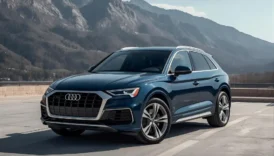
2021 Audi A3 Sportback: Key Features Overview

- 2021 Audi A3 Sportback: Key Features Overview
- What’s New / Model Updates
- 2021 Audi A3 Sportback Key Updates Overview
- Exterior Geometry Revisions
- Platform and Structural Enhancements
- Powertrain Calibration Updates
- Cabin Technology Advancements
- Chassis and Suspension Refinements
- Engine Options and Performance
- Engine Specification Overview
- TFSI Powertrain Characteristics
- TDI Efficiency-Oriented Engineering
- Transmission Behaviour and Ratios
- Performance Characteristics Summary
- Performance Metrics and Real-World Acceleration
- Thermal Management and Cooling Architecture
- Drive Select Calibration Differences
- Driving Experience and Handling
- Steering System Response
- Suspension Behavior on Variable Surfaces
- Driving Dynamics Parameter Summary
- Quattro Traction Characteristics
- High-Speed Stability Dynamics
- Brake Performance and Pedal Feel
- Interior Design and Comfort
- Ergonomic Layout and Material Execution
- Seating Comfort and Long-Distance Support
- Cabin Noise Isolation Strategies
- Comfort Equipment Highlights
- Climate System Performance
- Safety and Driver Assistance Systems
- Sensor Suite and Processing Hardware
- Assistance System Hardware Overview
- Adaptive Cruise and Lane Guidance
- Collision Mitigation Technologies
- Parking Assistance Functions
- Structural Safety Engineering
- Technology and Infotainment
- MMI Touch Interface Capabilities
- Virtual Cockpit Integration
- Connectivity and Smartphone Features
- Digital Feature Categories
- Audio System Architecture
- Over-the-Air Update Potential
- Fuel Efficiency
- Fuel Consumption Comparison Table
- TFSI Real-World Consumption Behaviour
- TDI Long-Distance Optimization
- Aerodynamic Factors Affecting Economy
- Dimensions & Practicality
- Cabin Space and Passenger Ergonomics
- Practicality Feature Summary
- Cargo Capacity and Modular Flexibility
- Accessibility and Daily Usability
- Exterior Dimensions and Urban Maneuverability
- Common Issues and Reliability
- Electronics and Sensor-Related Concerns
- Powertrain Durability Patterns
- Common Issue Overview Table
- Interior Fit-and-Finish Observations
- Software Stability Over Time
- Maintenance & Ownership Experience
- Scheduled Service Requirements
- Primary Maintenance Items
- Consumable Longevity and Wear Patterns
- Parts Availability and Serviceability
- Long-Term Operating Experience
- Frequently Asked Questions About 2021 Audi A3 Sportback
- Is the 2021 Audi A3 Sportback reliable for long-term ownership?
- How comfortable is the A3 Sportback on longer journeys?
- Does the 2021 A3 offer good fuel economy in real conditions?
- What technology features stand out in the 2021 A3?
- Are there any common issues to watch for?
- How well does the A3 perform in bad weather?
- What maintenance habits improve engine longevity?
- Is the A3 Sportback practical for families?
The 2021 Audi A3 Sportback represents a major evolution of Audi’s compact premium hatchback, built on the advanced MQB Evo platform and engineered to deliver improved efficiency, structural rigidity, and digital capability. Positioned as a cornerstone model in Audi’s compact lineup, it introduces upgraded TFSI and TDI powertrains, enhanced chassis electronics, and a fully redesigned cabin centered around Audi’s latest digital architecture. With its refined suspension tuning, expanded driver assistance suite, and sharper exterior geometry, the 2021 model aims to blend everyday usability with premium engineering depth, creating a more mature and technologically progressive interpretation of the A3 concept.
What’s New / Model Updates
The 2021 Audi A3 Sportback introduces substantial platform, powertrain and technological revisions as it transitions to the MQB Evo architecture. The model gains sharper aerodynamic profiling, an upgraded digital cabin environment, advanced connectivity layers and improved chassis electronics designed to elevate refinement and precision. These updates collectively move the A3 deeper into the premium compact segment with more structural rigidity, enhanced efficiency and broader driver-assistance capability.
2021 Audi A3 Sportback Key Updates Overview
| Area | Update Summary |
|---|---|
| Platform | Transition to MQB Evo, improved rigidity and lower NVH |
| Engines | Updated TFSI/TDI units with revised injection and turbo mapping |
| Electronics | New digital architecture, faster processing for assistance systems |
| Chassis | Recalibrated Adaptive Suspension, broader Drive Select range |
| Aerodynamics | Reduced drag, reshaped front fascia, enhanced airflow routing |
Exterior Geometry Revisions
Audi reworked the exterior with narrower LED signatures, deeper side sculpting and a more aggressive shoulder line intended to improve aerodynamic stability. Many drivers wonder how these geometric revisions influence high-speed airflow management, and the answer lies in the optimized grille porosity, refined underbody sealing and reshaped rear diffuser that collectively reduce turbulence while enhancing directional stability.
Platform and Structural Enhancements
The move to the MQB Evo platform increases torsional rigidity while reducing mass in key areas such as suspension mounts and firewall reinforcement. How does the platform upgrade improve real-world driving precision? The primary benefit comes from reduced flex under dynamic load, allowing more consistent steering feedback and cleaner suspension articulation across uneven roads.
Powertrain Calibration Updates
Both TFSI and TDI engines receive revised fuel injection pressure, enhanced turbo modulation and smoother S tronic shift logic. What specific gain does the updated calibration deliver during everyday driving? The technical advantage is improved throttle linearity and reduced turbo lag due to better boost pressure pre-control, especially noticeable at low to mid engine speeds.
Cabin Technology Advancements
A major interior update arrives through the enhanced Virtual Cockpit, larger MMI Touch interface and improved processing hardware for software-driven functions. How do these digital upgrades change user interaction quality? Faster command execution, sharper graphics rendering and expanded sensor fusion enable a more intuitive cabin workflow and greater functional depth.
Chassis and Suspension Refinements
Audi refined the Adaptive Suspension system with new damper valving and broader Drive Select parameters. What practical effect does this recalibration have in mixed road conditions? It results in more progressive damping transitions and better ride compliance, particularly when switching quickly between comfort-oriented and dynamic driving scenarios.
Engine Options and Performance
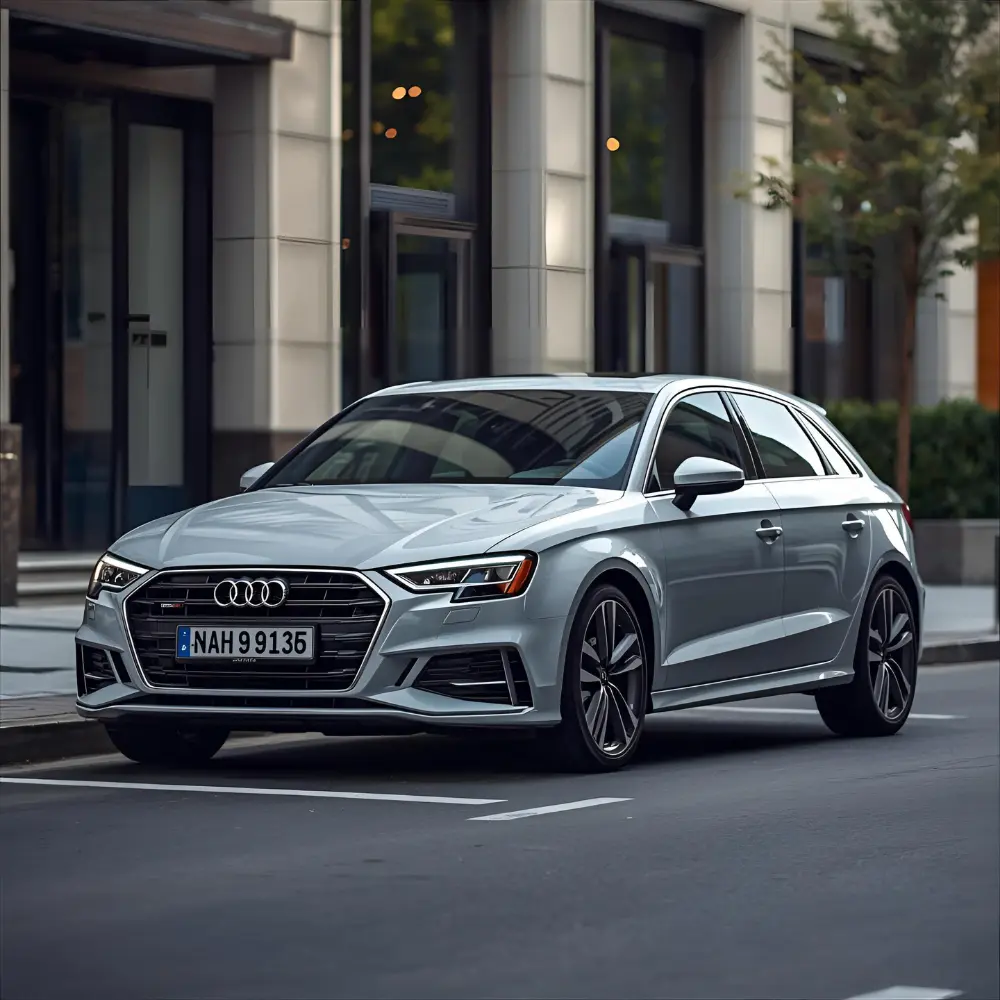
The 2021 Audi A3 Sportback offers a refined range of TFSI and TDI engines, each engineered to deliver improved efficiency, reduced emissions and smoother power delivery thanks to recalibrated injection systems and updated turbocharger management. This section focuses on the detailed mechanical behaviour of each engine type, the characteristics of the S tronic transmission and the real-world performance differences introduced by the new MQB Evo platform.
Engine Specification Overview
| Engine | Power | Torque | Transmission | Notes |
|---|---|---|---|---|
| 1.5 TFSI | 150 hp | 250 Nm | S tronic / Manual | Cylinder-on-demand efficiency focus |
| 2.0 TDI | 116–150 hp | 300–360 Nm | S tronic | Optimised for long-distance economy |
| 1.0 TFSI | 110 hp | 200 Nm | S tronic | Lightweight, urban efficiency |
TFSI Powertrain Characteristics
The TFSI lineup balances responsive boost delivery with controlled combustion efficiency, supported by particulate filters and enhanced cooling circuits. How does the 1.5 TFSI achieve both strong mid-range pull and low consumption? It combines Miller-cycle-inspired valve timing with a turbocharger running optimized pre-spool logic, allowing quicker torque buildup without excess fuel enrichment.
TDI Efficiency-Oriented Engineering
The TDI units in the A3 Sportback feature high-pressure injectors, low-friction internals and a dual-dosing SCR system to reduce emissions. What makes the 2.0 TDI particularly suited for long-distance driving? Its broad torque plateau enables low-RPM cruising, while reduced combustion noise and optimised thermal management maintain consistent efficiency on extended journeys.
Transmission Behaviour and Ratios
The S tronic dual-clutch transmission benefits from revised clutch cooling and shift mapping. How does the gearbox refinement influence the car’s drivability in dense traffic? The updated first-gear modulation reduces low-speed hesitation, enabling smoother take-off and more precise pedal control during stop-and-go conditions.
Performance Characteristics Summary
- Turbocharger pre-control improves transient response
- Gear ratio spread supports both efficiency and acceleration
- Reduced internal friction enhances cold-start refinement
- Broader torque curves improve real-world elasticity
Performance Metrics and Real-World Acceleration
Acceleration consistency has improved thanks to recalibrated launch mapping and traction control logic. What factor most affects the real-world 0–100 km/h results for the 1.5 TFSI? The key variable is boost stability during the first two gear shifts, where the updated control software maintains pressure more effectively to minimise torque drop-off.
Thermal Management and Cooling Architecture
An upgraded cooling module with electronically controlled pumps ensures optimal temperatures during high-load operation. How does the variable coolant flow system contribute to engine longevity? It stabilises thermal cycles, preventing hotspots around the turbo housing and reducing long-term stress on the aluminium block.
Drive Select Calibration Differences
Drive Select modifies throttle maps, shift algorithms and steering weight. Why does the car feel significantly sharper in Dynamic mode? The mode applies a more aggressive torque request curve and delays upshifts to keep the engine within the optimal boost window, enhancing both response and corner-exit strength.
Driving Experience and Handling
The 2021 Audi A3 Sportback delivers a more mature and composed driving experience thanks to enhancements in chassis rigidity, suspension tuning and steering calibration. The transition to the MQB Evo platform provides a stiffer foundation, while updated Adaptive Suspension logic, improved bushings and optimized weight distribution refine both comfort and agility. This section examines how these engineering decisions influence real-world dynamics across mixed driving conditions.
Steering System Response
Audi recalibrated the electric steering unit to provide smoother on-center stability and more progressive build-up of steering weight. Why does the steering feel more precise during mid-corner adjustments? The increased rigidity at the front subframe and updated steering software reduce micro-corrections, enabling cleaner inputs and better tyre contact consistency in dynamic situations.
Suspension Behavior on Variable Surfaces
The suspension uses revised damper internals and optimized compression rates to manage rapid surface transitions more effectively. How does the updated damping improve ride quality over uneven roads? The new valve architecture allows quicker absorption of high-frequency bumps, reducing vertical motion and maintaining chassis stability even when the road surface becomes unpredictable.
Driving Dynamics Parameter Summary
| Parameter | Effect on Driving | Technical Contribution |
|---|---|---|
| Steering Ratio | Quicker turn-in | Re-mapped electric assist curve |
| Damper Response | Improved comfort | New valve and piston design |
| Roll Control | Greater stability | Stiffer anti-roll bars |
| Traction | Enhanced on wet roads | Updated quattro logic (where equipped) |
Quattro Traction Characteristics
Models equipped with quattro benefit from an electronically controlled multi-plate clutch that distributes torque rearward under load. What makes the latest quattro tuning more confidence-inspiring in wet conditions? The system uses predictive slip algorithms tied to wheel-speed sensors and steering angle, allowing pre-emptive torque transfer before traction loss occurs.
High-Speed Stability Dynamics
High-speed composure has improved through aerodynamic refinement and stiffer mounting points for the suspension. How does the refined aero profile affect motorway stability? Reduced front-end lift and a cleaner underbody airflow prevent wandering at speed, keeping the A3 planted during long highway segments or strong crosswinds.
Brake Performance and Pedal Feel
The brake system receives better thermal resistance and more consistent pedal modulation through revised booster tuning. What contributes to the more linear brake feel during repeated stops? Improved fluid channeling and recalibrated booster assistance maintain pedal firmness, preventing the inconsistency commonly associated with heat build-up in compact-class brakes.
Interior Design and Comfort
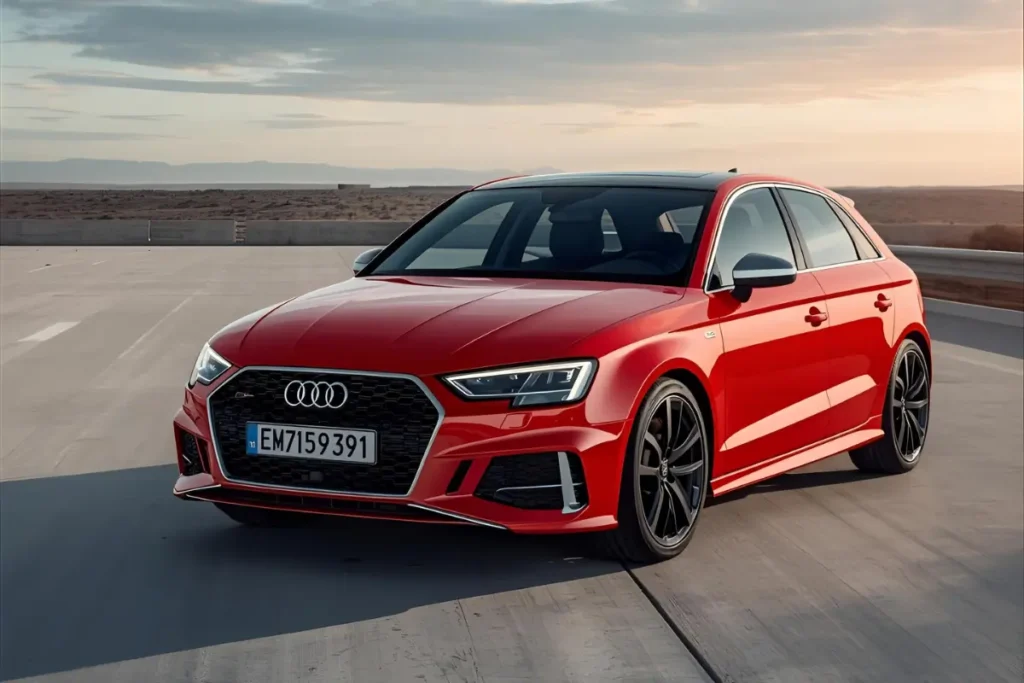
The interior of the 2021 Audi A3 Sportback adopts a more driver-focused architecture with a lower seating position, a redesigned dashboard topology and a comprehensive update to materials and digital interfaces. The cabin benefits from improved structural damping, refined seat ergonomics and advanced climate control logic, creating an environment that feels both premium and purposefully engineered for long-distance comfort. This section explores the detailed construction and usability characteristics of the A3’s interior.
Ergonomic Layout and Material Execution
Audi redesigned the cockpit with angled surfaces, integrated air vents and a more immersive Virtual Cockpit placement. How does this revised layout improve the driver’s operational efficiency? Key controls are positioned within a tighter reach radius, while tactile metal switches and higher-density soft materials reduce both distraction and cabin vibration transmission during dynamic driving.
Seating Comfort and Long-Distance Support
The seating structure uses new foam densities and firmer side bolsters to enhance body support over long trips. What makes the A3’s seats particularly effective during extended motorway driving? The combination of deeper lumbar adjustability and multi-layer cushioning distributes pressure more evenly, reducing fatigue and maintaining stable posture even over several hours.
Cabin Noise Isolation Strategies
Multiple insulation layers, acoustic windshield technology and revised door seals work together to create a quieter cabin. How does the improved isolation affect perceived comfort at higher speeds? Reduced wind resonance and suppressed road-frequency vibrations allow more relaxed conversation levels and a noticeably calmer ambient sound environment.
Comfort Equipment Highlights
- Multi-zone climate management with predictive temperature logic
- Enhanced sound-deadening materials in floor and firewall areas
- Optimized seat adjustability ranges for various body types
- Improved ambient lighting diffusion
Climate System Performance
The updated climate control system uses smart sensors to regulate temperature and humidity with greater accuracy. Why does the climate system maintain a more stable cabin temperature compared with the previous generation? Adaptive airflow algorithms adjust fan speed and vent distribution more precisely, ensuring that temperature deviations are corrected before occupants perceive discomfort.
Safety and Driver Assistance Systems
The 2021 Audi A3 Sportback integrates an expanded suite of active and passive safety technologies built on the new electronic architecture introduced with MQB Evo. Faster sensor processing, enhanced radar coverage and improved camera resolution allow the vehicle to interpret road scenarios with greater precision. This section evaluates the underlying hardware, system behaviour and real-world effectiveness of the updated safety package.
Sensor Suite and Processing Hardware
Audi upgraded the front radar module, multifunction camera and ultrasonic sensors to improve detection accuracy. How does the enhanced processing unit improve reaction times in complex traffic? The high-speed controller merges sensor data more rapidly, producing quicker object classification and enabling earlier intervention by braking or steering assistance systems.
Assistance System Hardware Overview
| Component | Function | Technical Improvement |
|---|---|---|
| Front Radar | Distance & ACC control | Wider field, longer range |
| Camera | Lane detection & traffic sign reading | Higher-resolution imaging |
| Ultrasonic Sensors | Parking & low-speed alerts | Improved obstacle differentiation |
| Control Unit | Data fusion | Faster processing bandwidth |
Adaptive Cruise and Lane Guidance
The adaptive cruise system maintains smoother distance management thanks to more granular acceleration control. What makes the updated lane guidance feel less intrusive than before? The steering corrections are now moderated through a softer assist curve, reducing abrupt wheel inputs and maintaining a more natural lane-centering effect on long highway runs.
Collision Mitigation Technologies
Automatic emergency braking benefits from improved pedestrian and cyclist detection, even in lower light. How does the A3 achieve earlier braking intervention in sudden hazards? Faster image interpretation combined with radar confirmation allows the software to identify threats at shorter intervals, initiating brake pressure more promptly.
Parking Assistance Functions
The parking system combines camera feeds with ultrasonic sensing to enhance spatial awareness during tight manoeuvres. Why does the A3’s parking assist feel more dependable in narrow spaces? The updated distance algorithms filter sensor noise more effectively, presenting clearer proximity readings and reducing false alerts.
Structural Safety Engineering
The body structure integrates strengthened A-pillars, revised crash load paths and an optimised subframe mounting design. How do these structural revisions contribute to occupant protection? Energy is channelled more efficiently through predefined deformation zones, reducing cabin intrusion and stabilising passenger cell integrity during high-impact collisions.
Technology and Infotainment
The 2021 Audi A3 Sportback advances its digital architecture with faster processors, an upgraded MMI Touch interface, enhanced Virtual Cockpit graphics and a more capable connectivity suite. The system operates on improved software layers designed to reduce latency, expand functional depth and create a more intuitive driver–vehicle interaction. This section details the hardware, interface logic and user-oriented technology enhancements that define the A3’s infotainment platform.
MMI Touch Interface Capabilities
The central MMI Touch display features refined haptic response, higher pixel density and reduced input lag. Why does the interface feel significantly more responsive than the previous generation? The new graphics processor and simplified menu architecture reduce command processing steps, allowing near-instant transitions between navigation, media and vehicle settings.
Virtual Cockpit Integration
Audi equips the A3 with the latest Virtual Cockpit generation, offering configurable layouts and sharper digital instrumentation. How does the new rendering engine improve the readability of performance data? Higher frame rates and revised anti-aliasing produce smoother animations, ensuring that speed, navigation and assistance information remain legible even during rapid acceleration or cornering.
Connectivity and Smartphone Features
The model supports Apple CarPlay, Android Auto, embedded eSIM services and cloud-enhanced navigation. How does the improved connectivity hardware affect real-time route guidance? Faster data transfer and expanded server integration enable more accurate traffic prediction, dynamically adjusting routes with minimal delay in congested areas.
Digital Feature Categories
- Navigation with cloud-supported traffic forecasting
- Full smartphone integration suite
- Voice-control system with natural-language processing
- Remote services enabled via Audi Connect
- Enhanced in-car data processing bandwidth
Audio System Architecture
The A3 offers advanced audio tuning with multi-channel processing and optional premium amplification. Why does the upgraded system deliver clearer mid-frequency performance? Revised speaker housings and improved signal equalisation minimise resonance, allowing voice frequencies and instrument detail to remain more precise at higher volumes.
Over-the-Air Update Potential
The electronic backbone supports selective software updates for infotainment and driver-assistance modules. What enables these OTA updates to be executed with greater reliability? Partitioned software modules and secure flash memory prevent system-wide disruption, allowing targeted improvements without interrupting core vehicle functions.
Fuel Efficiency
The 2021 Audi A3 Sportback benefits from optimised combustion strategies, improved aerodynamics and the efficiency-focused characteristics of the MQB Evo platform. Both TFSI and TDI powertrains employ advanced thermal management, reduced mechanical resistance and more precise fuel metering to improve real-world consumption. This section examines how these engineering decisions translate into measurable efficiency gains under varying driving conditions.
Fuel Consumption Comparison Table
| Engine | Urban Use | Highway Use | Combined | Efficiency Notes |
|---|---|---|---|---|
| 1.0 TFSI | Moderate | High | Very High | Lightweight design, low friction |
| 1.5 TFSI | Moderate | Very High | High | Cylinder-on-demand operation |
| 2.0 TDI | High | Very High | Very High | Strong efficiency at low RPM |
TFSI Real-World Consumption Behaviour
The TFSI engines leverage Miller-cycle-inspired valve timing and low-friction components. Why does the 1.5 TFSI often achieve lower-than-expected consumption on longer journeys? Cylinder deactivation reduces pumping losses at steady speeds, while the turbocharger operates in a highly efficient boost window during gentle acceleration.
TDI Long-Distance Optimization
The TDI engines deliver strong fuel economy due to high-compression combustion and extended torque availability. What allows the 2.0 TDI to maintain excellent consumption even at motorway speeds? Its ability to sustain low RPMs in higher gears minimises fuel demand, while dual-dosing SCR hardware ensures clean operation without added consumption penalties.
Aerodynamic Factors Affecting Economy
Aerodynamic refinements, including reshaped bumpers and a smoother underbody, play a meaningful role in reducing drag. How do these adjustments influence consumption during high-speed driving? Lower aerodynamic resistance decreases the power required to maintain cruising speed, directly improving highway mileage and reducing engine workload.
Dimensions & Practicality
The 2021 Audi A3 Sportback is engineered to maximise cabin usability within its compact footprint, benefiting from the packaging efficiency of the MQB Evo platform. Improved seat positioning, expanded shoulder room and a more versatile cargo layout enhance everyday practicality. This section analyses interior space distribution, loading flexibility and overall manoeuvrability in urban environments.
Cabin Space and Passenger Ergonomics
The redesigned cabin offers better knee clearance, a slightly wider shoulder zone and improved pedal alignment for the driver. Why does the A3 feel more spacious despite similar exterior dimensions? The optimised dashboard depth and relocated climate hardware free up legroom while allowing a more upright seating geometry.
Practicality Feature Summary
- Adjustable rear seat backrests for improved cargo flexibility
- Deep door pockets designed for large bottles
- Wider rear entry aperture for easier child-seat installation
- Split-folding rear bench with integrated load-through section
Cargo Capacity and Modular Flexibility
The cargo bay provides a flat loading surface and adjustable floor height, enabling easier placement of bulky items. What makes the A3’s boot layout particularly useful for mixed-use driving? The dual-level floor allows separate storage of smaller objects while maintaining a stable surface for larger luggage.
Accessibility and Daily Usability
Wide-opening doors and a low sill height improve access for both front and rear passengers. How does the revised door geometry enhance daily convenience? The reprofiled hinge points create a larger effective entry angle, making it easier to step in and out even in tight parking spaces.
Exterior Dimensions and Urban Maneuverability
Compact exterior proportions and a tight turning circle position the A3 as a highly manoeuvrable urban car. Why does the vehicle feel easier to place in dense traffic than its predecessor? Improved steering calibration at lower speeds and better visibility from slimmer A-pillars reduce blind zones and enhance low-speed control.
Common Issues and Reliability
The 2021 Audi A3 Sportback demonstrates solid reliability thanks to the structural and electronic improvements brought by the MQB Evo platform. Nonetheless, like many modern compact premium models, it presents a few recurring issues related to software integration, sensor calibration and wear components. This section examines these patterns with a technical, systems-oriented approach to clarify long-term ownership expectations.
Electronics and Sensor-Related Concerns
Some owners report intermittent behaviour from parking sensors or lane-assist functionality, often linked to environmental factors. Why do these electronic systems occasionally require recalibration after harsh weather conditions? Moisture and temperature shifts can alter sensor reading accuracy, requiring the control unit to reprocess baseline distance values before restoring optimal detection performance.
Powertrain Durability Patterns
The updated TFSI and TDI units are generally robust, but minor issues can arise from carbon accumulation or injector sensitivity. How does frequent short-distance driving contribute to carbon buildup in TFSI engines? Reduced exhaust temperature during brief trips prevents deposits from burning off, gradually affecting airflow and combustion efficiency if not periodically addressed.
Common Issue Overview Table
| Issue Category | Typical Symptoms | Technical Cause |
|---|---|---|
| Sensors | False alerts, reduced detection | Environmental interference, calibration drift |
| TFSI Intake | Rough idle, slight hesitation | Carbon buildup on intake valves |
| Software | Slow UI, feature delays | Outdated module or partial update |
| Suspension | Minor noise on bumps | Bushing wear or temperature hardening |
Interior Fit-and-Finish Observations
Certain vehicles exhibit minor rattles from door trims or dashboard panels over rough roads. What leads to these occasional noise intrusions despite strong build quality? Temperature cycling can cause differential expansion between plastic and metal components, creating micro-gaps that generate noise on irregular surfaces.
Software Stability Over Time
A small number of cases involve infotainment freezes or slow boot sequences, generally resolved through software updates. Why does software stability vary between vehicles with identical hardware? Differences in usage patterns, update timing and stored data quantity influence processing load, making some systems more prone to temporary slowdown until the next firmware optimisation.
Maintenance & Ownership Experience
The 2021 Audi A3 Sportback benefits from a well-structured maintenance schedule, durable core components and improved access to service points thanks to the MQB Evo platform. Consumable longevity, predictable service intervals and consistent part availability contribute to a stable ownership experience. This section focuses on service expectations, wear behaviour and long-term operating characteristics.
Scheduled Service Requirements
The A3 follows structured service intervals covering oil changes, filters, brake system checks and software updates. Why do modern MQB Evo–based models rely so heavily on software-related maintenance? Increasing electronic integration means many drivability and efficiency functions depend on optimised firmware, making periodic software checks essential for maintaining peak performance.
Primary Maintenance Items
- Engine oil and filter
- Air and cabin filters
- Brake fluid and wear inspection
- Transmission fluid (depending on usage)
- Software and module updates
- Coolant and auxiliary system checks
Consumable Longevity and Wear Patterns
Brake pads, tyres and suspension bushings show predictable wear behaviour when maintained correctly. What most influences brake wear on the 1.5 TFSI models? The braking system’s longevity depends heavily on driving style, as frequent high-load braking accelerates heat build-up and increases pad and disc degradation compared with steady motorway driving.
Parts Availability and Serviceability
MQB Evo shared components enhance part availability and streamline repairs. How does this shared-platform approach improve ownership convenience? Standardised mechanical layouts allow technicians quicker access to service points, reducing downtime and ensuring parts remain widely supported over the vehicle’s life cycle.
Long-Term Operating Experience
Owners generally report stable long-term operation with predictable running costs. What contributes to the A3’s reputation for dependable long-term performance? Robust powertrains, durable electronics architecture and well-sealed bodywork ensure the vehicle maintains refinement and driving stability even after high mileage.
Frequently Asked Questions About 2021 Audi A3 Sportback
Is the 2021 Audi A3 Sportback reliable for long-term ownership?
The model benefits from stronger platform rigidity, improved electronics and refined powertrains, resulting in a stable long-term reliability profile. Most issues that arise tend to be software-related rather than mechanical and are usually resolved through OTA updates or service checks. The durable suspension setup and efficient engines support consistent performance even after extended mileage.
How comfortable is the A3 Sportback on longer journeys?
Thanks to multi-layer seat cushioning, improved lumbar range and enhanced sound insulation, the A3 maintains excellent comfort during long drives. Cabin vibrations are minimized through structural damping, while the climate control system adjusts airflow intelligently to keep temperatures stable, especially in varying weather conditions and long motorway journeys.
Does the 2021 A3 offer good fuel economy in real conditions?
Both TFSI and TDI engines show strong efficiency due to advanced thermal management and aerodynamic improvements. Real-world consumption is particularly favourable for the 1.5 TFSI because cylinder deactivation reduces pumping losses at steady speeds. The 2.0 TDI excels on highways thanks to its wide torque band and low-RPM cruising ability.
What technology features stand out in the 2021 A3?
The upgraded MMI Touch, latest Virtual Cockpit, advanced connectivity suite and improved audio architecture elevate the digital experience. Fast processors and low-latency interface logic allow smoother transitions across menus, while Audi Connect services enhance navigation accuracy and remote functionality through cloud integration.
Are there any common issues to watch for?
Most issues relate to sensors, software or minor interior noises. Sensor recalibrations may be needed after severe weather conditions, and occasional infotainment slowdowns are typically resolved via firmware updates. Mechanical problems are comparatively rare thanks to well-proven TFSI and TDI engines and robust MQB Evo structural engineering.
How well does the A3 perform in bad weather?
Models equipped with quattro offer excellent traction on wet or slippery roads due to predictive torque distribution. Even front-wheel-drive variants benefit from improved stability control algorithms and refined suspension tuning that maintain balanced handling in rain or light snow.
What maintenance habits improve engine longevity?
Regular oil changes, proper warm-up routines and avoiding repeated short-distance trips significantly support engine health. The TFSI engines benefit from periodic high-temperature runs to prevent carbon buildup, while TDI units maintain optimal performance when driven long enough to complete regeneration cycles consistently.
Is the A3 Sportback practical for families?
Despite compact dimensions, the A3 offers a versatile cabin with strong legroom, an optimised seating posture and a flexible cargo floor. ISOFIX mounting points, wide-opening rear doors and practical storage areas support daily usability for small families without compromising premium cabin refinement.