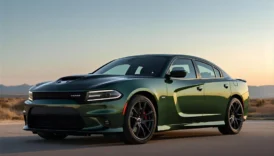
2021 Dodge Challenger: Essential Features Review

- 2021 Dodge Challenger: Essential Features Review
- What’s New for the 2021 Dodge Challenger
- Key Engineering Updates for 2021
- Interior and Technology Refresh
- Exterior and Aerodynamic Adjustments
- Package and Trim Enhancements
- Engine Options and Performance of the 2021 Dodge Challenger
- Engine Lineup Overview
- Technical Breakdown
- Real World Performance Behavior
- Driving Experience and Handling of the 2021 Dodge Challenger
- Real World Behavior
- Handling Systems and Driving Modes
- Chassis Engineering and High Speed Stability
- Interior Design and Comfort of the 2021 Dodge Challenger
- Cabin Layout and Seating Characteristics
- Material Quality and Craftsmanship
- Practical Storage and Everyday Usability
- Safety and Driver Assistance Systems in the 2021 Dodge Challenger
- System Functions and Sensor Technologies
- Structural Safety and Crash Management
- Real World Safety Behavior
- Technology and Infotainment Features of the 2021 Dodge Challenger
- Feature Analysis
- Infotainment and Connectivity Functions
- Real World Usability
- Fuel Efficiency Characteristics of the 2021 Dodge Challenger
- Real World Efficiency Behavior
- Efficiency Reference Table
- Factors Influencing Fuel Usage
- Dimensions and Practicality of the 2021 Dodge Challenger
- Dimensional Overview
- Practical Interior Space
- Cargo and Everyday Storage
- Practicality in Real World Use
- Common Issues and Reliability of the 2021 Dodge Challenger
- Known Issue Categories
- Powertrain and Mechanical Reliability
- Electronics and Sensor Behavior
- Real World Reliability Perspective
- Maintenance and Ownership Experience of the 2021 Dodge Challenger
- Key Maintenance Areas
- Ownership Experience in Daily Use
- Long Term Durability Considerations
- Frequently Asked Questions About the 2021 Dodge Challenger
- Is the 2021 Dodge Challenger reliable for long term ownership?
- How practical is the Challenger for everyday use?
- Does the Challenger perform well in bad weather conditions?
- Are HEMI engines expensive to maintain?
- Is the 2021 Challenger comfortable for long distance travel?
- What common issues should owners watch for?
- Is the Challenger a good performance car for beginners?
- How large is the trunk compared to other coupes?
The 2021 Dodge Challenger continues as one of the last true muscle coupes built on a rear wheel drive architecture, delivering a broad spectrum of performance capabilities through its diverse HEMI engine lineup. Its long wheelbase and wide stance contribute to exceptional straight line stability, while the cabin offers more space than typically found in the segment. Technology updates improve infotainment responsiveness, and structural refinements enhance braking and cooling efficiency on high output variants. The Challenger’s design blends heritage inspired styling with modern aerodynamic detailing, creating a coupe that balances everyday usability with track capable performance. The 2021 model year strengthens this formula through refined calibration, improved interior materials and expanded performance package availability.
What’s New for the 2021 Dodge Challenger
The 2021 Dodge Challenger receives targeted updates designed to refine performance capability, improve interior functionality and expand the availability of high output configurations. While the coupe retains its classic long hood and wide stance proportions, several mechanical and feature enhancements strengthen its modern muscle character. Aerodynamic detailing, brake system improvements and expanded Widebody options help increase stability and cooling efficiency, especially on HEMI powered variants.
Key Engineering Updates for 2021
The 2021 model year introduces a range of refinements that support thermal management, handling precision and daily usability.
- Wider availability of the Widebody package for enhanced grip
- Revised suspension calibration on performance trims
- Upgraded cooling pathways for high output engines
- Enhanced brake duct geometry for heat dissipation
- Updated software mapping for throttle and shift behavior
These updates improve acceleration consistency, braking endurance and steering response under demanding conditions.
Interior and Technology Refresh
Inside the cabin, the Uconnect system receives processing upgrades that deliver faster menu transitions and improved voice command accuracy. Material improvements on high touch surfaces offer a more refined tactile feel, while seat bolstering is recalibrated to enhance support during spirited driving. Optional performance pages provide deeper insight into engine behavior, temperatures and dynamic forces.
Exterior and Aerodynamic Adjustments
Subtle refinements to air inlets, front fascia shaping and wheel designs improve airflow around the vehicle. Widebody models adopt larger fender extensions and broader tire packages that significantly increase the contact patch. These changes provide measurable stability benefits at highway speeds and during cornering transitions.
Package and Trim Enhancements
The model lineup is reorganized to clearly distinguish between comfort oriented, performance focused and extreme output variants. Performance packages include larger brakes, revised suspension components and dedicated cooling systems, while aesthetic packages highlight the Challenger’s retro inspired design.
The 2021 Dodge Challenger maintains its classic muscle coupe identity while integrating modern engineering updates that enhance performance, control and daily usability.
Engine Options and Performance of the 2021 Dodge Challenger

The 2021 Dodge Challenger delivers one of the most comprehensive performance engine lineups in the modern coupe segment. With options ranging from efficient V6 power to extreme supercharged HEMI outputs, the Challenger accommodates a wide spectrum of driving preferences. Its rear wheel drive foundation supports balanced weight distribution, confident straight line acceleration and improved handling predictability.
Engine Lineup Overview
The 2021 Challenger offers the following engine choices:
| Engine | Displacement | Output | Performance Characteristics |
|---|---|---|---|
| Pentastar V6 | 3.6 liters | Up to 305 hp | Balanced efficiency, predictable power delivery |
| HEMI V8 | 5.7 liters | 375 hp | Strong torque, classic muscle driving feel |
| 392 HEMI V8 | 6.4 liters | 485 hp | Track capable power with robust acceleration |
| Supercharged HEMI V8 | 6.2 liters | 717–797 hp | Extreme output, rapid throttle response |
Technical Breakdown
High output variants receive reinforced cooling systems, upgraded drivetrain components and adaptive shift strategies for controlled power delivery.
Key engineering enhancements include:
- Strengthened intake airflow for supercharged models
- Adaptive transmission logic for improved acceleration timing
- High capacity radiators and intercoolers
- Upgraded differential housings on high torque trims
- Exhaust flow optimization for reduced backpressure
Real World Performance Behavior
The Pentastar V6 provides smooth, linear acceleration, suitable for drivers who want a grand touring feel without high fuel consumption. Its lighter engine mass enhances front end responsiveness, making it easier to maneuver in urban environments.
The 5.7 liter HEMI elevates performance with deeper torque reserves and more assertive sound characteristics. This configuration offers strong highway merging capability and a balanced daily driving experience.
The 392 HEMI transforms the Challenger into a muscle oriented performer with aggressive acceleration, rapid throttle response and robust braking requirements. When paired with the Widebody package, stability and lateral grip improve significantly.
Supercharged HEMI variants deliver extreme performance, utilizing boost pressure to generate massive power levels. These models rely on advanced cooling and drivetrain engineering to maintain consistent output during spirited driving or track use.
Across all configurations, the Challenger’s TorqueFlite transmission provides smooth, rapid shift timing that supports both relaxed cruising and aggressive acceleration. The 2021 Dodge Challenger remains one of the most powerful and diverse performance coupes available.
Driving Experience and Handling of the 2021 Dodge Challenger
The driving dynamics of the 2021 Dodge Challenger are shaped by its long wheelbase, rear wheel drive architecture and performance tuned suspension systems. Unlike many modern coupes designed with compact, agility focused platforms, the Challenger emphasizes stability, straight line composure and predictable handling at higher speeds. Its wide stance and substantial tire footprint contribute to confident road behavior, especially on performance oriented trims equipped with HEMI engines.
Real World Behavior
On the road, the Challenger maintains a planted, secure feel. The long wheelbase smooths out highway imperfections and reduces nervousness during high speed cruising. Steering response is calibrated to provide weight and precision without feeling overly light, offering confident turn in characteristics. Performance variants with larger brakes and firmer suspension settings deliver enhanced control during spirited driving, while still retaining acceptable comfort for daily use.
Widebody models benefit significantly from broader tires, increased track width and reinforced suspension geometry. These enhancements translate into stronger lateral grip and more predictable handling mid corner. While the Challenger is not engineered as a lightweight cornering machine, it excels in stability focused scenarios, particularly during acceleration transitions and high speed maneuvers.
Handling Systems and Driving Modes
Driving modes allow the Challenger to adapt its behavior to different environments. These modes modify throttle sensitivity, shift mapping, steering feel and traction control thresholds.
Key driving modes include:
- Auto mode for balanced daily driving
- Sport mode for sharper throttle and quicker shifts
- Track mode on high output variants for maximum performance
- Snow mode (AWD V6 models) for improved low grip stability
Each mode communicates with stability control systems to ensure predictable vehicle response. Braking performance benefits from large diameter rotors and high friction pads on performance trims, with brake cooling ducts helping maintain stopping power during repeated high load applications.
Chassis Engineering and High Speed Stability
The Challenger’s chassis incorporates high strength structural components to reduce flex and maintain alignment accuracy under heavy loads. Multi link rear suspension geometry balances traction and ride quality, while reinforced subframes enhance rigidity during performance driving. Combined with optional adaptive damping, the chassis adapts effectively to changing road surfaces.
In real world conditions, the 2021 Dodge Challenger offers a distinct performance feel that prioritizes power delivery, composure and muscle oriented stability. It provides an engaging drive with strong control characteristics, particularly for drivers who value straight line capability and confident high speed performance.
Interior Design and Comfort of the 2021 Dodge Challenger
The interior of the 2021 Dodge Challenger is engineered to provide a blend of retro inspired design, modern ergonomics and long distance comfort. Unlike many coupes that prioritize tight, minimalist cabins, the Challenger offers generous space, a broad seating layout and strong visibility. Its cockpit places essential controls within easy reach, supporting both relaxed cruising and performance focused driving. The structural design of the cabin emphasizes durability and a secure, insulated feel at highway speeds.
Cabin Layout and Seating Characteristics
The Challenger’s front seats are shaped to balance lateral support with long term comfort. Higher output trims with HEMI engines offer enhanced bolstering, firmer padding and optional performance seats designed for spirited driving. Rear seating is more accommodating than in most large coupes, providing usable legroom and a comfortable seatback angle for shorter and medium height passengers.
Key comfort focused elements include:
- Dual zone climate control with optimized airflow
- Optional heated and ventilated front seats
- Enhanced cabin insulation for reduced wind and road noise
- Leather wrapped steering wheel with contoured grip zones
- Wide cabin dimensions supporting relaxed driving posture
Material Quality and Craftsmanship
Interior materials receive targeted upgrades for 2021, particularly on high touch areas. Soft touch surfaces on the dashboard, center console and door panels improve tactile feel, while available stitching accents enhance visual refinement. Performance trims incorporate metallic or carbon fiber style trim elements that complement the coupe’s aggressive character. Sound deadening materials are strategically placed to manage the acoustic signature of HEMI engines while maintaining a controlled cabin environment.
Practical Storage and Everyday Usability
Despite being a performance coupe, the Challenger offers impressive practicality. The center console includes deep storage compartments suitable for personal items and electronic devices. Door pockets provide functional utility, and cupholders are positioned securely to minimize movement during spirited driving. The trunk capacity exceeds that of many competitors, allowing room for luggage, sports gear or shopping without compromising passenger comfort. Rear seatbacks fold to increase cargo length when needed.
The cabin’s structural openness, intuitive controls and durability oriented materials create a comfortable environment for both daily commuting and performance driving. Overall, the 2021 Dodge Challenger achieves a balance of muscle car heritage, modern comfort and practical usability rare in the segment.
Safety and Driver Assistance Systems in the 2021 Dodge Challenger
Safety engineering in the 2021 Dodge Challenger combines strong structural design, modern driver assistance technologies and improved braking capability across performance trims. Although the Challenger emphasizes muscle oriented dynamics, its safety framework is built to support confident daily driving and stable behavior under demanding conditions. High strength steel reinforcements, advanced airbag coverage and visibility oriented design elements contribute to overall occupant protection.
System Functions and Sensor Technologies
The Challenger uses a combination of radar, ultrasonic and camera based sensors to monitor surrounding traffic and assist the driver. These systems are calibrated to intervene progressively, ensuring smooth assistance rather than intrusive corrections.
Key safety and assistance features include:
- Forward collision warning with active braking support
- Adaptive cruise control with distance regulation
- Blind spot monitoring with rear cross path detection
- Lane departure warning with visual and audible alerts
- Rear parking sensors with dynamic distance cues
- Automatic high beam control
- Rearview camera with wide angle visibility
Each system enhances situational awareness and helps mitigate driver fatigue during long trips or dense traffic conditions.
Structural Safety and Crash Management
The Challenger’s unibody incorporates high strength steel in core structural zones, including door beams, roof rails and front crash structures. Crumple zones are designed to dissipate impact forces before they reach the cabin, while reinforced pillars maintain structural integrity during side impacts. Airbag coverage includes front, side and curtain airbags to protect occupants across both rows.
Widebody trims benefit from improved stability due to a broader footprint, helping maintain control during sudden lane changes or emergency maneuvers. Performance brake packages, including large diameter rotors and improved cooling ducts, enhance stopping power and reduce fade under repeated high load braking.
Real World Safety Behavior
In everyday driving, visibility is supported by large side mirrors and a forward sightline that remains clear thanks to the long hood’s contouring. The coupe’s wide stance and predictable chassis responses contribute to secure behavior during evasive actions. All wheel drive availability on V6 variants provides added traction on wet or snowy surfaces, expanding the Challenger’s usability in challenging climates.
The 2021 Dodge Challenger integrates modern safety technology with a robust structural foundation and high capability braking systems, delivering a balanced safety profile that complements its performance oriented engineering.
Technology and Infotainment Features of the 2021 Dodge Challenger
Technology in the 2021 Dodge Challenger focuses on delivering intuitive control, strong connectivity and performance oriented data monitoring. The Uconnect infotainment platform remains a highlight of the model, known for its reliability, user friendly layout and rapid response times. For 2021, system processing and graphics performance are improved, ensuring smoother transitions and clearer display output across all trims.
Feature Analysis
The available 8.4 inch touchscreen is angled slightly toward the driver, improving reach and minimizing glare during daytime operation. Smartphone integration is seamless, allowing navigation, media and communication functions to operate through familiar interfaces. On performance oriented variants, dedicated performance pages provide real time monitoring of engine output, g force data, temperatures, timers and configurable settings for driving modes.
Key technology features include:
- Uconnect infotainment with upgraded processing speed
- Apple CarPlay and Android Auto compatibility
- High bandwidth Bluetooth connectivity
- Optional premium audio systems with enhanced clarity
- Integrated performance pages for HEMI and track focused models
- USB and USB Type C charging options
- Available Wi-Fi hotspot support
Infotainment and Connectivity Functions
Navigation systems offer clear mapping, improved traffic interpretation and faster rerouting logic. The audio system, especially in premium configurations, uses tuned cabin acoustics to deliver balanced sound. Connectivity options support multiple devices simultaneously, ensuring both driver and passengers maintain charge and access to digital media.
Real World Usability
Daily use benefits from intuitive physical controls positioned beneath the touchscreen, allowing quick adjustment of climate or audio settings without relying solely on the display. The interface delivers minimal input delay, and voice command accuracy is enhanced for hands free operation. For long distance travel, the combination of multiple charging ports, strong radio reception and stable streaming quality increases comfort and convenience.
The 2021 Dodge Challenger integrates modern infotainment with performance oriented digital tools, creating a cockpit that supports both practical commuting and data driven driving experiences.
Fuel Efficiency Characteristics of the 2021 Dodge Challenger
Fuel efficiency in the 2021 Dodge Challenger varies considerably based on engine choice, driving environment and vehicle configuration. The model’s emphasis on performance, rear wheel drive dynamics and high displacement HEMI engines naturally influences consumption. However, engineering strategies such as optimized transmission calibration, low friction components and cylinder deactivation on select V8 engines help maintain reasonable efficiency during steady state driving.
Real World Efficiency Behavior
The Pentastar V6 offers the most balanced efficiency profile. Its lightweight construction and smooth torque delivery reduce engine load during urban commutes, while the TorqueFlite eight speed automatic keeps rpm levels low during cruising. All wheel drive variants see slight efficiency reductions due to additional driveline components.
The 5.7 liter HEMI incorporates cylinder deactivation technology, allowing the engine to run on fewer cylinders during low load conditions. This feature engages seamlessly, improving fuel efficiency during highway driving while maintaining strong acceleration when needed.
The 392 HEMI delivers significant performance capability but consumes more fuel due to its larger displacement and aggressive throttle calibration. Drivers using this configuration for daily commuting should expect increased consumption, particularly in stop and go environments.
Supercharged HEMI engines are engineered for extreme performance, resulting in the highest fuel usage within the lineup. High boost levels, increased airflow demands and performance focused tuning contribute to this consumption profile.
Efficiency Reference Table
| Engine | Typical Consumption Trend | Efficiency Notes |
|---|---|---|
| Pentastar V6 | Most efficient | Low rpm cruising and reduced friction |
| 5.7 HEMI | Moderate | Cylinder deactivation aids highway use |
| 392 HEMI | Less efficient | Performance oriented output |
| Supercharged HEMI | Least efficient | High boost and airflow requirements |
Factors Influencing Fuel Usage
Real world efficiency depends on several operational elements:
- Driving style and throttle modulation
- Vehicle load, passengers and cargo weight
- Urban vs. highway usage ratios
- Tire size, tread pattern and rolling resistance
- Ambient temperature affecting warm up cycles
- Use of performance driving modes
Drivers aiming to optimize efficiency benefit from smooth acceleration, steady cruising speeds and proper maintenance of air filters and tire pressure.
The 2021 Dodge Challenger offers a spectrum of fuel efficiency behaviors, giving owners flexibility to choose between balanced daily drivability and extreme performance depending on engine selection and driving habits.
Dimensions and Practicality of the 2021 Dodge Challenger

The 2021 Dodge Challenger is engineered as a large performance coupe, offering dimensions that prioritize stability, interior space and long distance comfort. Unlike smaller sport coupes, the Challenger’s footprint delivers a roomier cabin and a more planted feel at speed. Its long wheelbase and wide track enhance both straight line composure and overall ride quality, while the spacious trunk and functional seating layout add everyday usability.
Dimensional Overview
The table below highlights the Challenger’s key dimensions and their practical implications.
| Dimension Category | Measurement Type | Practical Impact |
|---|---|---|
| Overall Length | Approximately 198 inches | Enhances stability and cabin spaciousness |
| Wheelbase | Approximately 116 inches | Improves ride comfort and rear legroom |
| Width | Approximately 75 inches | Supports strong lateral grip and shoulder room |
| Height | Approximately 57 inches | Low center of gravity for performance handling |
| Trunk Capacity | Approximately 16.2 cubic feet | Strong cargo capability for a coupe |
Practical Interior Space
The interior layout benefits significantly from the long wheelbase, offering more rear passenger room than typically found in muscle coupes. Adults can use the rear seats for shorter trips, and medium height passengers may find them reasonably comfortable during longer journeys. The wide cabin design ensures ample shoulder and hip room, while the front seats provide supportive bolstering without restricting movement.
Cargo and Everyday Storage
One of the Challenger’s standout practical features is its large trunk, which accommodates luggage, sports equipment or weekly groceries with ease. The flat load floor simplifies packing, and foldable rear seatbacks allow for extended cargo length when transporting larger items. Interior compartments such as the center console, door bins and cupholders provide additional everyday storage conveniences.
Practicality in Real World Use
Despite being a performance coupe, the Challenger’s size makes it surprisingly suitable for daily driving. Visibility is aided by large mirrors and a wide windshield, while the cabin’s open layout reduces the sense of confinement often associated with two door vehicles. The suspension tuning, particularly on non–Widebody models, maintains comfort over long distances without compromising overall stability. All wheel drive availability on V6 trims extends the model’s usability in regions with rain or snow.
The 2021 Dodge Challenger blends performance oriented dimensions with practical engineering, resulting in a coupe that offers strong everyday utility while preserving its muscle car heritage.
Common Issues and Reliability of the 2021 Dodge Challenger
Reliability in the 2021 Dodge Challenger is supported by its proven engine families, sturdy rear wheel drive architecture and durable suspension components. While the model is generally dependable when maintained properly, certain recurring issue categories appear across real world ownership experiences. These typically relate to electronic modules, wear components on performance trims and the increased thermal demands associated with HEMI engines.
Known Issue Categories
A number of commonly recognized concerns may arise depending on usage patterns and mileage:
- Occasional infotainment system lag or temporary touchscreen freeze
- Sensor related alerts triggered by battery voltage fluctuations
- Suspension bushing wear on high mileage or rough road–driven vehicles
- Brake wear accelerated on 392 HEMI and Widebody variants
- Heat related stress on cooling components during aggressive driving
- Minor cabin rattles on stiffly sprung performance models
Powertrain and Mechanical Reliability
The Pentastar V6 is widely regarded for its stability and predictable maintenance profile. It typically experiences minimal long term issues aside from routine components such as water pumps or ignition coils. Oil control is strong across the V6 and HEMI range, though V8 engines may exhibit slight oil usage under heavy load or performance driving.
The TorqueFlite eight speed automatic transmission is engineered for long term durability, with smooth shift logic and strong internal components. Any irregular shifting behavior usually stems from software adaptation rather than mechanical faults and can generally be resolved with recalibration.
Electronics and Sensor Behavior
The Challenger relies on several electronic modules for driver assistance and system monitoring. Weak battery voltage can trigger false warnings for blind spot monitoring, parking sensors or traction control. Regular battery health checks and software updates help maintain system accuracy and reduce intermittent alerts.
Real World Reliability Perspective
When serviced according to factory guidelines, the 2021 Dodge Challenger maintains dependable performance across a wide range of driving styles. High output engines and widebody variants naturally place more stress on brakes, tires and cooling systems, making proactive maintenance essential. Owners who adhere to fluid change intervals, monitor brake wear and keep electronic modules updated typically experience stable long term reliability.
The model’s durable mechanical foundation and proven engines position it as a reliable performance coupe with manageable long term upkeep when maintained attentively.
Maintenance and Ownership Experience of the 2021 Dodge Challenger
The 2021 Dodge Challenger offers a stable ownership experience built around robust mechanical components, predictable service intervals and strong long term durability when maintained proactively. Its Pentastar V6 and HEMI engines are known for resilience, but performance oriented configurations require attentive upkeep due to increased thermal loads, higher brake stress and greater suspension demand. When serviced consistently, the Challenger supports high mileage operation with reliable daily performance.
Key Maintenance Areas
Routine maintenance plays a central role in preserving engine health, transmission smoothness and chassis integrity. Performance trims, especially 392 HEMI and supercharged variants, benefit from more frequent inspections due to elevated output and component stress.
Essential service considerations include:
- Scheduled engine oil and filter replacement
- Cooling system inspections for leaks and degraded coolant
- Transmission fluid checks for vehicles driven aggressively
- Brake rotor and pad monitoring on Widebody and HEMI models
- Suspension bushing and alignment checks at higher mileage
- Battery voltage and charging system monitoring for electronic stability
Ownership Experience in Daily Use
The Challenger performs consistently in everyday driving when maintained according to manufacturer recommendations. Seat comfort and material durability hold up well over long term use, and the cabin remains relatively quiet thanks to effective sound insulation. The Uconnect system benefits from periodic software updates that enhance connectivity and responsiveness. Owners appreciate the car’s strong highway comfort, predictable steering feel and stable chassis behavior.
Long Term Durability Considerations
Longevity depends on driving style and environmental factors. High output engines generate significant heat, making coolant condition and oil quality critical for sustained durability. Widebody models with larger tires and upgraded brakes may experience faster consumable wear, particularly under sporty driving. Regular alignment checks help maintain steering precision and maximize tire life.
With proper upkeep, the 2021 Dodge Challenger proves to be a dependable performance coupe capable of delivering both excitement and long term usability. Owners who remain attentive to fluid condition, brake health and electronic updates typically experience trouble free operation well into higher mileage.
Frequently Asked Questions About the 2021 Dodge Challenger
Is the 2021 Dodge Challenger reliable for long term ownership?
Yes, the 2021 Dodge Challenger is generally reliable when maintained according to recommended service intervals. The Pentastar V6 and HEMI engines are durable, and the TorqueFlite transmission provides long term stability. Regular maintenance of cooling, brakes and suspension components ensures predictable performance, especially on high output trims that operate under higher thermal loads.
How practical is the Challenger for everyday use?
Despite being a performance coupe, the 2021 Dodge Challenger offers impressive practicality. Its spacious cabin, usable rear seats and large trunk make it suitable for commuting, weekend trips or light family use. Wide cabin dimensions enhance comfort, and the long wheelbase contributes to smooth ride quality. For a two door performance model, practicality is one of its strongest attributes.
Does the Challenger perform well in bad weather conditions?
All wheel drive versions equipped with the Pentastar V6 perform confidently in snow and wet conditions. AWD improves traction and stability during acceleration and cornering. Stability control systems assist in maintaining grip, and the car behaves predictably with proper winter tires. Rear wheel drive HEMI models require more careful throttle management in slippery environments.
Are HEMI engines expensive to maintain?
Maintenance on HEMI engines is manageable when service intervals are followed. These engines benefit from regular oil changes and cooling system checks due to higher operating temperatures. Drivers who frequently use performance modes may experience quicker wear on brakes and tires. With proper care, HEMI engines deliver long service life without excessive maintenance demands.
Is the 2021 Challenger comfortable for long distance travel?
Yes, the 2021 Dodge Challenger provides strong long distance comfort thanks to supportive seats, a spacious cabin and effective sound insulation. The long wheelbase smooths out highway imperfections, and climate control distribution maintains consistent cabin temperature. Even performance trims maintain acceptable comfort for extended trips.
What common issues should owners watch for?
Typical concerns include occasional infotainment lag, sensor alerts caused by weak battery voltage, and bushing wear on high mileage vehicles. Brake wear may accelerate on 392 HEMI and Widebody models due to increased performance demands. Routine inspections and timely software updates help prevent most minor issues.
Is the Challenger a good performance car for beginners?
The 2021 Dodge Challenger offers a wide range of trims suitable for different skill levels. The Pentastar V6 and 5.7 HEMI models provide approachable performance with controlled handling characteristics. Higher output 392 HEMI and supercharged variants require more experience due to their significant power and torque. Drivers can choose a configuration that aligns with their comfort level.
How large is the trunk compared to other coupes?
The Challenger’s trunk is one of the largest in the performance coupe segment. With over 16 cubic feet of space, it easily accommodates luggage, sports gear or grocery loads. Foldable rear seats allow for even longer items, making cargo capacity a standout advantage over many competitors.