2021 Honda Civic: Smart Design and Everyday Features
- 2021 Honda Civic: Smart Design and Everyday Features
- What’s New for the 2021 Honda Civic: Model Overview and Key Updates
- Refreshed Styling and Trim Enhancements
- Driving Refinements and Efficiency Gains
- Technology and Safety Upgrades
- Engine Options and Real-World Performance Review
- Engine Lineup Overview
- Driving Feel and Transmission Response
- Real-World Performance and Refinement
- Driving Dynamics, Ride Quality, and Handling Experience
- Chassis and Suspension Engineering
- Steering, Braking, and Cornering Stability
- Real-World Ride and Comfort Impressions
- Interior Design, Materials, and Comfort Features
- Cabin Layout and Material Refinement
- Seating, Space, and Acoustic Comfort
- Everyday Comfort and Practical Usability
- Safety Innovations and Honda Sensing Technologies
- The Honda Sensing Suite
- Structural Safety and Passive Protection
- Real-World Safety Performance
- Technology and Infotainment: Inside the Honda Display Audio System
- Display Audio Interface and Connectivity
- Sound and Multimedia Experience
- Usability and Digital Evolution
- Fuel Efficiency and Real-World Consumption Analysis
- Engine Efficiency and Transmission Optimization
- Real-World Performance and Economy Balance
- Eco Performance Perspective
- Dimensions, Cargo Space, and Everyday Practicality
- Exterior Dimensions and Cabin Space
- Cabin Functionality and Storage Solutions
- Everyday Usability and Ergonomic Design
- Common Issues, Reliability, and Long-Term Durability
- Powertrain and Component Durability
- Reported Issues and Preventive Measures
- Real-World Ownership Confidence
- Maintenance, Service Intervals, and Ownership Experience
- Scheduled Maintenance and Smart Monitoring
- Ownership Experience and Cost Efficiency
- Long-Term Ownership Perspective
- Frequently Asked Questions About the 2021 Honda Civic
- What engines are available in the 2021 Honda Civic?
- How fuel-efficient is the 2021 Honda Civic in real-world conditions?
- What safety features come standard with the 2021 Civic?
- Is the 2021 Civic reliable for long-term ownership?
- How much does it cost to maintain a 2021 Honda Civic?
- Does the 2021 Honda Civic have good interior space?
- What infotainment features does the Civic offer?
- Is the 2021 Honda Civic good for highway driving?
- Are there any common issues with the 2021 Civic?
- Why is the Honda Civic still one of the best-selling compact cars?
The 2021 Honda Civic continues to prove why it remains one of the most trusted and best-selling compact cars in the world. Blending reliability, efficiency, and modern comfort, it offers a driving experience that perfectly balances practicality with innovation. The updated design brings sharper styling, refined aerodynamics, and a driver-focused cabin, while under the hood, efficient VTEC engines deliver smooth performance and low emissions. Combining advanced safety technologies, intuitive infotainment, and everyday usability, the Civic upholds Honda’s legacy of engineering excellence and real-world value.
What’s New for the 2021 Honda Civic: Model Overview and Key Updates
The 2021 Honda Civic represents the culmination of Honda’s years of refinement in compact car engineering, combining sharper exterior design, refined driving dynamics, and upgraded technology across all trims. It continues to serve as a benchmark for the segment—balancing reliability, efficiency, and comfort in a way that few competitors can match. While it’s not a full redesign year, the 2021 Civic introduces several subtle yet meaningful updates that enhance both the driving experience and daily usability.
Refreshed Styling and Trim Enhancements
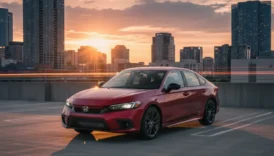
Visually, the 2021 Civic receives a more cohesive look, with smoother front-end detailing and revised headlight housings. The LED daytime running lights and streamlined bumper design improve aerodynamic flow, contributing to a quieter cabin and slightly improved fuel efficiency. New 17-inch alloy wheel designs and updated color choices such as Cosmic Blue Metallic and Molten Lava Pearl provide a fresher aesthetic appeal.
Inside, Honda has refined the Civic’s materials and ergonomics. The 7-inch Display Audio system now supports Apple CarPlay and Android Auto as standard on most trims, ensuring modern connectivity. Sound insulation has been improved through additional cabin damping materials, reducing wind and tire noise for a more composed driving feel.
| Model Comparison | 2020 Civic | 2021 Civic |
|---|---|---|
| Powertrain | 2.0L i-VTEC / 1.5L Turbo | Same, re-tuned for smoother response |
| Transmission | CVT | Improved CVT mapping for efficiency |
| Infotainment | 5-inch base screen | 7-inch touchscreen standard (CarPlay/Android Auto) |
| Safety | Honda Sensing optional | Honda Sensing standard across all trims |
| Cabin Materials | Fabric / partial leather | Enhanced soft-touch panels and stitching |
Driving Refinements and Efficiency Gains
The Continuously Variable Transmission (CVT) has been recalibrated for smoother transitions and more natural throttle response, especially in city driving. Engine noise is reduced at highway speeds thanks to revised sound-deadening materials and finer engine mounts. The 1.5-liter turbocharged i-VTEC engine remains one of the most efficient and responsive options in its class, while the 2.0-liter naturally aspirated version provides predictable linear power for urban commuting.
Technology and Safety Upgrades
Perhaps the most significant change for 2021 is the standardization of Honda Sensing—a suite of advanced driver-assistance technologies including Collision Mitigation Braking System (CMBS), Road Departure Mitigation, Lane Keeping Assist, and Adaptive Cruise Control. This update elevates the Civic’s safety credentials across all trims, making it one of the most secure compact cars in its category.
The 2021 Civic’s upgrades may seem evolutionary rather than revolutionary, but they collectively create a more polished, efficient, and connected driving experience. It remains a model of consistency—refined where it counts, reliable in execution, and smarter than ever before.
Engine Options and Real-World Performance Review
The 2021 Honda Civic continues to offer a versatile range of engine options that cater to both efficiency-focused drivers and enthusiasts who value responsive power delivery. With Honda’s hallmark i-VTEC technology, the powertrains are engineered for smoothness, longevity, and balanced performance. The 2021 model retains the same proven engines as the previous generation but benefits from subtle calibrations in throttle response, transmission mapping, and sound insulation.
Engine Lineup Overview
Honda offers two engines for the 2021 Civic lineup: a 2.0-liter naturally aspirated i-VTEC and a 1.5-liter turbocharged i-VTEC. Both engines employ variable valve timing to optimize airflow and combustion efficiency across different load conditions. The 2.0-liter engine, standard on lower trims, emphasizes reliability and fuel economy, while the 1.5-liter turbo brings an added layer of refinement and mid-range torque for effortless overtaking and highway cruising.
| Engine Specification | 2.0L i-VTEC | 1.5L Turbo i-VTEC |
|---|---|---|
| Displacement | 1,996 cc | 1,498 cc |
| Power Output | 158 hp @ 6,500 rpm | 174 hp @ 6,000 rpm |
| Torque | 187 Nm @ 4,200 rpm | 220 Nm @ 1,700–5,500 rpm |
| Transmission | CVT (continuously variable) | CVT or 6-speed manual (Sport trim) |
| Drivetrain | Front-Wheel Drive (FWD) | Front-Wheel Drive (FWD) |
| 0–100 km/h | 8.5 sec (Turbo) | 9.8 sec (2.0L) |
Driving Feel and Transmission Response
The CVT transmission in the 2021 Civic has been reprogrammed for more natural response, mimicking traditional gear shifts under acceleration. The throttle mapping is tuned to deliver immediate yet controlled power, especially in the turbo variant, which provides a satisfying mid-range punch without turbo lag. Meanwhile, the naturally aspirated engine remains predictably linear—an appealing trait for those who prefer consistent power delivery over aggressive performance.
The Sport trim with its 6-speed manual transmission offers an engaging alternative, delivering crisp shifts and a mechanical connection often lost in automatic variants. Regardless of transmission, the Civic maintains its composed demeanor with precise steering and excellent on-center stability, making both city driving and long-distance cruising equally enjoyable.
Real-World Performance and Refinement
In everyday use, the 1.5-liter turbo engine delivers a balance of power and efficiency unmatched in its class. Acceleration feels confident, especially in passing maneuvers, while noise and vibration levels are impressively low even at highway speeds. The Active Noise Control (ANC) and engine mount redesign contribute to a more refined experience, confirming Honda’s focus on comfort without diluting the car’s lively personality.
Ultimately, the 2021 Honda Civic exemplifies what makes Honda’s engineering philosophy enduring—efficient powertrains that feel eager yet disciplined. The combination of smooth i-VTEC tuning, intelligent transmission calibration, and balanced torque delivery ensures the Civic remains one of the most enjoyable compact sedans to drive in real-world conditions.
Driving Dynamics, Ride Quality, and Handling Experience
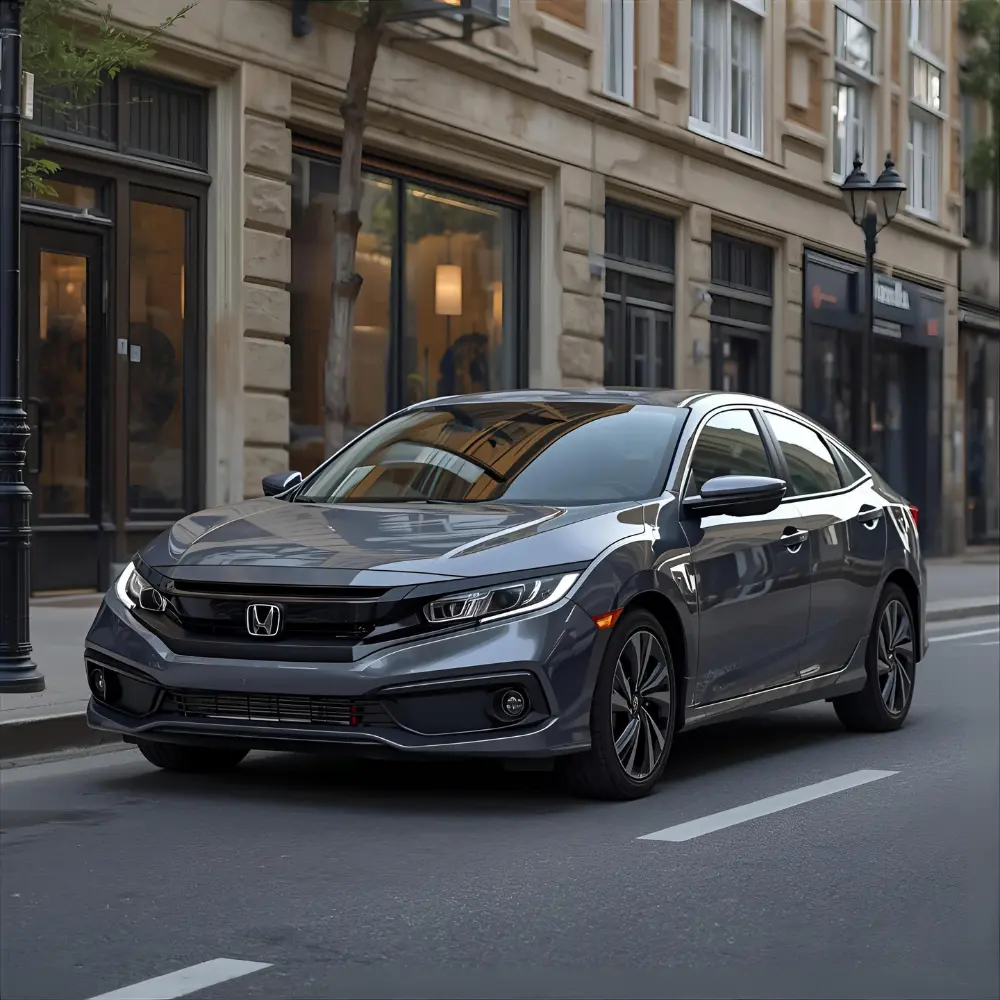
The 2021 Honda Civic maintains its reputation as one of the most balanced and confidence-inspiring compact cars to drive. It blends agility with stability, ensuring that daily commutes and spirited weekend drives feel equally rewarding. Honda’s focus on chassis refinement, steering precision, and suspension tuning results in a vehicle that behaves predictably while still offering genuine driver engagement — a rare combination in this segment.
Chassis and Suspension Engineering
The Civic’s chassis is built on a rigid unibody structure with strategic use of high-tensile steel, enhancing torsional stiffness without increasing overall weight. This solid foundation gives the car its composed road manners, while the MacPherson strut front and multi-link rear suspension provide a supple yet controlled ride. The 2021 model benefits from revised bushing geometry and damper tuning, which further reduce body roll and improve impact absorption on uneven surfaces.
Honda’s engineers have also improved ride isolation by refining the subframe mounts and adding acoustic damping materials to key suspension points. This attention to detail ensures that even over rough roads, the Civic feels composed and quiet — ideal for long-distance driving as well as city commuting.
Steering, Braking, and Cornering Stability
The dual-pinion electric power steering system delivers direct and consistent feedback, allowing drivers to precisely place the car through turns. In tight corners, steering weight builds naturally, providing confidence without being overly heavy. The front brake discs are ventilated for heat management, while the rear solid discs maintain balanced braking performance under repeated stops. Anti-lock Braking (ABS) and Electronic Brakeforce Distribution (EBD) work seamlessly with the Vehicle Stability Assist (VSA) system, maintaining composure under sudden maneuvers or slippery conditions.
Driving Highlights:
- Rigid unibody construction with high-tensile steel reinforcements
- MacPherson strut front and multi-link rear suspension for balanced comfort
- Dual-pinion electric steering for improved accuracy and feedback
- Refined NVH insulation minimizing road and wind noise
- Predictable braking dynamics with EBD and VSA integration
Real-World Ride and Comfort Impressions
On the road, the 2021 Civic feels both planted and nimble. The steering is quick to respond, making lane changes effortless, while the suspension absorbs imperfections gracefully without sacrificing control. Even at highway speeds, the Civic maintains impressive composure — aided by its long wheelbase and optimized aerodynamics.
Honda’s engineers have struck a careful balance: the Civic is engaging enough to satisfy enthusiasts yet refined enough for everyday drivers. Its ability to transition smoothly between comfort and control defines its dynamic versatility. Whether navigating tight city streets or carving through winding roads, the 2021 Honda Civic consistently delivers a driving experience that feels premium, predictable, and genuinely enjoyable.
Interior Design, Materials, and Comfort Features
The 2021 Honda Civic delivers a cabin experience that reflects Honda’s mastery in combining practicality with refined design. While compact on the outside, the Civic’s interior feels spacious, ergonomic, and technologically modern — making it one of the most comfortable cars in its class. Every element has been carefully engineered to support both daily commuting and long-distance driving comfort, creating a space that feels more premium than its price segment suggests.
Cabin Layout and Material Refinement
The dashboard design follows a clean, horizontal layout that enhances visibility and gives the cabin a wider sense of space. The center stack houses the 7-inch Display Audio touchscreen, positioned at eye level for minimal distraction. Physical volume and climate controls remain, preserving user-friendliness and tactile precision — an area where many rivals rely too heavily on touch-only interfaces.
The use of soft-touch plastics, brushed metallic accents, and contrasting seat stitching adds a subtle luxury feel. In higher trims, leather upholstery and heated front seats come standard, while mid-level versions use high-grade woven fabric that balances durability and comfort.
Seating, Space, and Acoustic Comfort
The driver’s seat offers 8-way power adjustment, allowing fine-tuned ergonomics for different body types. Rear passengers enjoy excellent legroom and head clearance — a long-standing strength of the Civic’s design. Honda’s clever packaging and low-floor layout create one of the most spacious cabins in the compact class.
| Interior Measurement | Sedan | Hatchback |
|---|---|---|
| Front Headroom | 991 mm | 955 mm |
| Rear Legroom | 950 mm | 916 mm |
| Cargo Volume | 428 L | 727 L (with seats up) |
| Seat Adjustability | Manual / 8-way Power | Manual / 8-way Power |
| Rear Folding Seats | 60:40 split-fold | 60:40 split-fold |
Noise insulation has also been upgraded with additional floor damping panels and acoustic windshield glass, significantly reducing tire and wind noise at highway speeds. Cabin airflow, managed by dual-zone automatic climate control, keeps temperature evenly distributed while maintaining quiet fan operation.
Interior Highlights:
- 7-inch Display Audio touchscreen with physical controls
- Soft-touch dashboard and premium stitching details
- 8-way power-adjustable driver’s seat for optimal ergonomics
- Enhanced acoustic insulation for cabin quietness
- Dual-zone climate control with rear air vents
Everyday Comfort and Practical Usability
The Civic’s design philosophy emphasizes intuitive usability. Door bins, center console trays, and deep cupholders maximize storage practicality without cluttering the design. The steering wheel controls are ergonomically grouped, while paddle shifters on certain trims provide added control for enthusiastic drivers.
The 2021 Honda Civic proves that practicality and comfort aren’t mutually exclusive. With intelligent use of materials, spacious design, and technology seamlessly integrated into daily life, it continues to set the standard for compact-car interior excellence.
Safety Innovations and Honda Sensing Technologies
Safety has always been central to Honda’s engineering philosophy, and the 2021 Honda Civic continues that legacy by making its full suite of Honda Sensing technologies standard across all trims. This advancement reflects Honda’s mission to democratize driver-assistance safety, ensuring that every Civic owner benefits from cutting-edge protection and awareness systems.
The Honda Sensing Suite
At the heart of the Civic’s safety profile lies Honda Sensing, an integrated package of active driver-assistance features designed to reduce collision risk and improve situational awareness. The system uses a millimeter-wave radar and a monocular camera mounted at the windshield to continuously monitor the road environment. This dual setup allows the vehicle to identify other cars, pedestrians, and lane markers with impressive precision.
Key components include:
- Collision Mitigation Braking System (CMBS) – Applies automatic braking when a potential frontal collision is detected.
- Lane Keeping Assist System (LKAS) – Gently steers the vehicle back into its lane if it begins to drift unintentionally.
- Adaptive Cruise Control (ACC) – Maintains a set distance from the vehicle ahead, adjusting speed automatically.
- Road Departure Mitigation (RDM) – Detects when the vehicle is about to leave the road and applies corrective steering or braking.
Structural Safety and Passive Protection
Beyond electronics, the Civic’s safety starts with its Advanced Compatibility Engineering (ACE) body structure, which disperses crash energy more evenly throughout the frame. This design minimizes cabin deformation during impacts and protects occupants across a variety of collision scenarios. The reinforced side-impact beams and front crash zones absorb energy effectively, while the rear subframe design ensures consistent structural integrity in multi-directional impacts.
The airbag system has also been updated to include dual-stage front, side curtain, and front side airbags, offering comprehensive protection. In addition, active head restraints minimize whiplash injuries, particularly during rear-end collisions.
Key Safety Highlights:
- Standard Honda Sensing across all trims
- CMBS, LKAS, RDM, and ACC with radar and camera support
- ACE body structure improving impact absorption
- Multi-airbag configuration with side curtain protection
- Tire Pressure Monitoring System (TPMS) and Vehicle Stability Assist (VSA) standard
Real-World Safety Performance
On the road, the Civic’s systems perform intuitively without feeling intrusive. Adaptive Cruise Control works smoothly in stop-and-go traffic, while Lane Keeping Assist provides gentle corrections without oversteering. In safety tests conducted by international agencies, the 2021 Civic achieved top ratings, highlighting its balance of active and passive safety features.
Ultimately, the 2021 Honda Civic exemplifies Honda’s approach to accessible safety innovation — integrating advanced technology and robust structure to protect both driver and passengers. Its comprehensive suite ensures that safety remains a core value, not a luxury option.
Technology and Infotainment: Inside the Honda Display Audio System
The 2021 Honda Civic brings technology and convenience together in a user-friendly interface designed for modern connectivity. Unlike many competitors that rely on overly complex digital systems, Honda’s approach emphasizes simplicity and reliability. The Display Audio infotainment system serves as the control hub for entertainment, communication, and vehicle settings, offering a cohesive experience that enhances daily driving.
Display Audio Interface and Connectivity
At the center of the dashboard sits a 7-inch Display Audio touchscreen, standard across most trims, with intuitive menus and crisp graphics. The interface now includes physical volume and tuning knobs, reintroduced after driver feedback, ensuring quick adjustments without distraction.
Connectivity is seamless with Apple CarPlay and Android Auto, both available via USB connection. Users can mirror smartphone apps for navigation, calls, or music directly on the screen. The Bluetooth HandsFreeLink system supports wireless audio streaming and voice command integration, allowing hands-free access to essential functions.
Higher trims include HondaLink, a telematics platform that provides real-time vehicle data, maintenance notifications, and remote access features such as fuel level and service alerts. Paired with the myHonda+ mobile app, the Civic becomes part of an intelligent, connected ecosystem that extends beyond the driver’s seat.
Sound and Multimedia Experience
The Civic’s audio system has been tuned for balanced acoustics across all seating positions. The standard 8-speaker setup delivers clear midrange tones and solid bass response, while the premium 10-speaker system available on top trims introduces a more immersive soundstage. The addition of Active Noise Cancellation (ANC) ensures cabin clarity even at higher speeds, minimizing unwanted background interference.
Tech Highlights:
- 7-inch Display Audio touchscreen with physical controls
- Apple CarPlay and Android Auto integration
- HondaLink telematics with remote diagnostics
- Bluetooth HandsFreeLink for calls and media
- Premium 10-speaker audio system with Active Noise Cancellation
Usability and Digital Evolution
Honda’s software philosophy prioritizes ease of use. The home screen layout is fully customizable, allowing drivers to reorder app tiles according to preference. System updates can be performed through USB or dealership connections, ensuring long-term functionality without hardware replacement.
Additionally, the Civic’s infotainment seamlessly integrates with the vehicle’s multi-information display (MID) behind the steering wheel, giving real-time navigation prompts, fuel economy data, and driver assistance alerts within line of sight.
In essence, the 2021 Honda Civic’s infotainment system is a reflection of Honda’s design ethos — human-centered, functional, and forward-looking. It doesn’t overwhelm the user with complexity but enriches every drive with clear, connected intelligence.
Fuel Efficiency and Real-World Consumption Analysis
Fuel economy has long been a defining strength of the Honda Civic, and the 2021 model reinforces that legacy with improved calibration, advanced engine management, and aerodynamic optimization. Whether equipped with the 2.0-liter i-VTEC or the 1.5-liter turbocharged i-VTEC engine, the Civic remains one of the most fuel-efficient cars in its segment — achieving impressive real-world results that validate Honda’s engineering consistency.
Engine Efficiency and Transmission Optimization
The 2021 Civic benefits from optimized CVT (Continuously Variable Transmission) mapping that minimizes unnecessary rev fluctuation and maintains the engine at its most efficient rpm range. The 1.5-liter turbo variant particularly excels in long-distance efficiency, as its broad torque curve allows the car to sustain highway speeds at lower engine revolutions.
Meanwhile, the 2.0-liter naturally aspirated engine continues to perform well in urban environments, offering smooth throttle response and low maintenance requirements. Honda’s use of friction-reducing piston coatings, variable valve timing (i-VTEC), and electronic wastegate control in the turbo engine contributes to consistent thermal and fuel efficiency even under load.
| Fuel Economy (Combined) | 2.0L i-VTEC | 1.5L Turbo i-VTEC |
|---|---|---|
| City | 8.2 L/100 km | 7.4 L/100 km |
| Highway | 6.0 L/100 km | 5.8 L/100 km |
| Combined (Official) | 7.2 L/100 km | 6.7 L/100 km |
| Real-World Average | 7.5–7.8 L/100 km | 6.8–7.0 L/100 km |
| CO₂ Emissions | ≈165 g/km | ≈150 g/km |
Real-World Performance and Economy Balance
In daily driving, the Civic’s engines demonstrate remarkable consistency between official figures and real-world results — something many rivals struggle to match. The Eco Assist system, standard across trims, provides visual feedback to encourage efficient driving behavior. Drivers can further enhance economy by activating ECON Mode, which adjusts throttle mapping and climate control load to conserve energy without compromising comfort.
The 1.5-liter turbo engine shines during highway cruising, maintaining low rpm at steady speeds while delivering quick torque response when needed. In urban conditions, the Idle Stop feature reduces unnecessary fuel burn during traffic halts, making the Civic particularly efficient for commuters.
Efficiency Highlights:
- Optimized CVT mapping for reduced engine load
- Eco Assist and ECON Mode for adaptive efficiency control
- Low-friction engine components improving fuel combustion
- Aerodynamic underbody design reducing drag
- Idle Stop system enhancing city mileage
Eco Performance Perspective
The 2021 Honda Civic demonstrates how thoughtful engineering can yield both power and responsibility. It offers real-world economy that aligns closely with its official data, providing reassurance for buyers seeking reliability and predictability. While many competitors require hybrid systems to achieve similar figures, Honda achieves it through intelligent engine calibration, weight management, and aerodynamic refinement.
The result is a compact car that balances fun-to-drive dynamics with everyday efficiency — a hallmark of the Civic lineage and a benchmark for others in its class.
Dimensions, Cargo Space, and Everyday Practicality
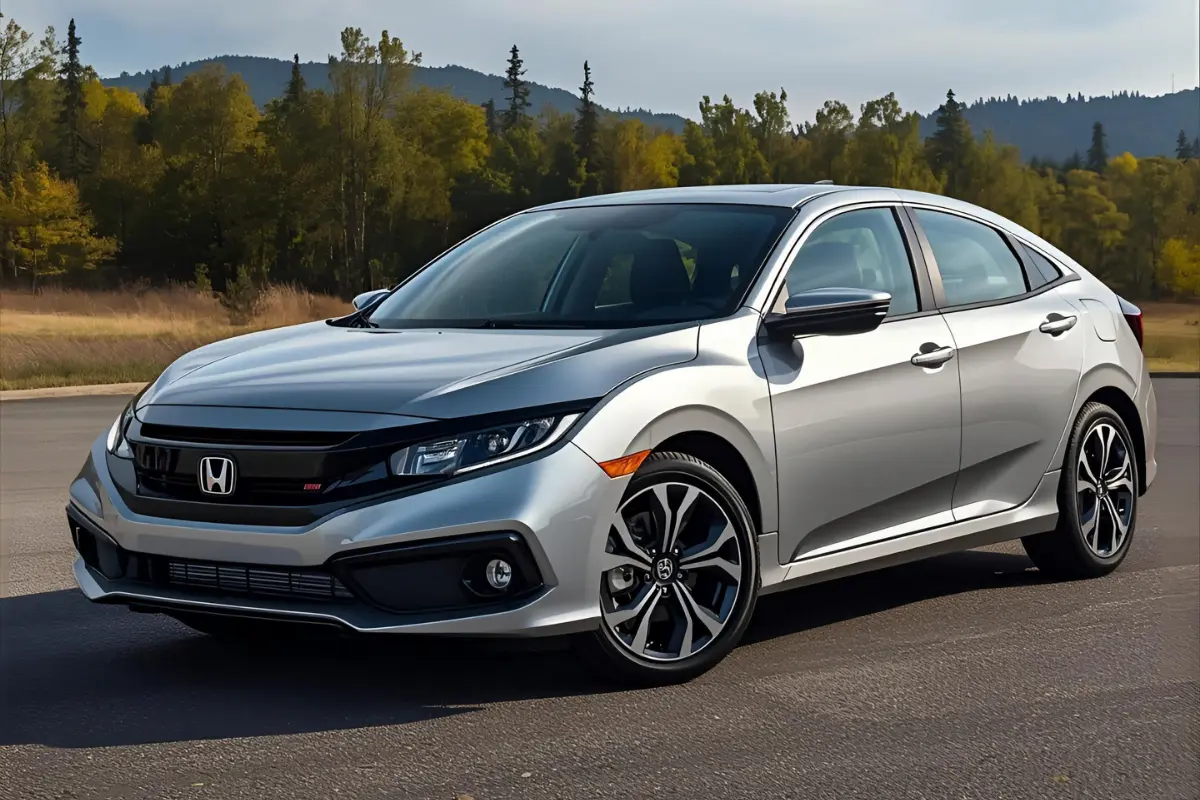
The 2021 Honda Civic continues to lead the compact segment not only in efficiency and comfort but also in real-world practicality. It offers generous interior space, versatile cargo configurations, and ergonomic usability that rivals larger vehicles. Honda’s engineers have maximized every millimeter of cabin and trunk space, ensuring that both the sedan and hatchback variants deliver outstanding daily usability without compromising design or driving dynamics.
Exterior Dimensions and Cabin Space
The 2021 Civic maintains its balanced proportions, striking the ideal blend between agility and stability. Its low stance and long wheelbase provide confident road presence while enhancing interior legroom. Despite its compact footprint, the Civic’s aerodynamic silhouette and low beltline design contribute to both aesthetic appeal and outward visibility — key elements in daily drivability and parking ease.
| Dimension Category | Civic Sedan | Civic Hatchback |
|---|---|---|
| Overall Length | 4,648 mm | 4,520 mm |
| Width (with mirrors) | 2,075 mm | 2,075 mm |
| Height | 1,415 mm | 1,435 mm |
| Wheelbase | 2,700 mm | 2,700 mm |
| Ground Clearance | 133 mm | 134 mm |
| Cargo Capacity | 428 L | 727 L (rear seats up) |
These dimensions illustrate how the Civic achieves space efficiency without increasing bulk. The wide track width ensures stability, while the short front and rear overhangs make maneuvering in tight urban areas remarkably easy.
Cabin Functionality and Storage Solutions
Inside, Honda’s signature “man-maximum, machine-minimum” design philosophy ensures that space benefits occupants rather than mechanical components. The flat floor design in the rear improves comfort for middle passengers, while wide-opening doors simplify entry and exit. The 60:40 split-folding rear seats expand utility further, allowing the Civic to accommodate larger cargo such as sports gear, luggage, or strollers.
Practical Highlights:
- Generous rear legroom comparable to midsize sedans
- Wide trunk opening for easier loading
- Low liftover height improving accessibility
- Ample cabin storage, including deep console bins and large door pockets
- Rear seatback release handles inside the trunk for convenience
Everyday Usability and Ergonomic Design
On the road, the Civic’s dimensions translate into excellent real-world comfort. The seating position offers an optimal balance between visibility and control, while the compact turning radius makes parking and urban driving effortless. For long journeys, the extended wheelbase ensures stability and reduced fatigue.
In essence, the 2021 Honda Civic proves that practicality can coexist with sophistication. It doesn’t rely on size to feel spacious — instead, it uses clever engineering, smart packaging, and thoughtful ergonomics to deliver unmatched functionality. Whether for daily commutes, family use, or long-distance travel, it remains one of the most versatile and user-friendly compact cars available.
Common Issues, Reliability, and Long-Term Durability
Few vehicles in the compact segment can match the 2021 Honda Civic when it comes to reliability and long-term dependability. Built upon decades of proven engineering, the Civic’s powertrain, electronics, and chassis systems have been refined to provide exceptional longevity with minimal mechanical issues. Honda’s focus on real-world durability ensures that every major component — from the i-VTEC engine to the CVT transmission — is designed to withstand extensive use with consistent performance.
Powertrain and Component Durability
The 2.0-liter naturally aspirated and 1.5-liter turbocharged engines are both well-proven units shared across multiple global Honda platforms. The turbocharged i-VTEC version uses a reinforced crankshaft and oil-cooling system to maintain temperature stability during prolonged high-load operation. The CVT (Continuously Variable Transmission) has been further optimized for heat management and clutch durability through advanced fluid channels and adaptive logic control.
| Component / System | Estimated Lifespan | 2021 Updates |
|---|---|---|
| Engine (i-VTEC family) | 8–10 years / 200,000+ km | Enhanced thermal efficiency |
| Transmission (CVT) | 7–9 years / 160,000 km | Improved cooling and clutch design |
| Suspension Components | 5–7 years | Refined bushing geometry |
| Brake System | 6–8 years | Regenerative wear reduction (Eco Assist) |
| Electrical / Sensors | 10 years+ | Upgraded ECU and sensor calibration |
Reported Issues and Preventive Measures
The 2021 Civic has a reputation for exceptional reliability, though some minor issues have been noted in earlier models and have since been addressed. These include early fuel dilution in older turbo units (resolved via ECU updates) and intermittent infotainment freezing on pre-2020 trims (fixed with updated Display Audio firmware). Owners of the 2021 model benefit from improved software logic and upgraded fuel injector seals, virtually eliminating prior concerns.
Common Concerns & Preventive Care:
- Regular oil changes every 10,000–15,000 km prevent turbo buildup
- Transmission fluid service every 60,000 km maintains CVT performance
- Use of OEM filters and fluids ensures optimal component protection
- Software updates (ECU, MMI, infotainment) prevent electronic errors
- Periodic suspension checks maintain ride quality and steering alignment
Real-World Ownership Confidence
Owners consistently praise the Civic for its low running costs and strong resale value. The car’s Advanced Compatibility Engineering (ACE) body structure reduces corrosion risk, while high-quality materials in suspension and powertrain components contribute to long-term reliability. Many Civics surpass 250,000 km with routine maintenance and minimal repairs, cementing its reputation as a long-lasting daily driver.
In summary, the 2021 Honda Civic delivers exceptional long-term durability supported by proven engineering, robust material quality, and a low incidence of mechanical failure. It stands as one of the most reliable compact sedans on the market — a benchmark for longevity and owner satisfaction.
Maintenance, Service Intervals, and Ownership Experience
The 2021 Honda Civic reinforces its reputation not just as a reliable compact car, but also as one of the easiest and most cost-effective vehicles to maintain. Honda’s engineering philosophy emphasizes preventive care, intuitive service monitoring, and the use of durable components that extend the life of every major system. The result is a car that requires minimal intervention and delivers years of dependable ownership with predictable running costs.
Scheduled Maintenance and Smart Monitoring
Honda’s Maintenance Minder System, standard on the 2021 Civic, uses onboard diagnostics to track driving conditions and automatically notify the driver when service is due. This proactive approach helps owners stay ahead of wear-related issues while optimizing service intervals to reduce unnecessary costs.
| Maintenance Category | Recommended Interval | Notes |
|---|---|---|
| Engine Oil & Filter | Every 10,000–15,000 km or annually | Use 0W-20 synthetic oil |
| Air & Cabin Filters | Every 20,000–30,000 km | Maintains clean airflow and HVAC performance |
| Transmission Fluid | Every 60,000 km | CVT fluid designed for long-term lubrication |
| Brake Fluid | Every 3 years | Ensures consistent braking response |
| Coolant Replacement | Every 5 years / 100,000 km | Includes corrosion protection check |
| Spark Plugs | Every 90,000 km | Iridium plugs for extended service life |
| Tire Rotation & Alignment | Every 10,000 km | Promotes even wear and handling balance |
The Civic’s Maintenance Minder also assigns service codes, allowing technicians to identify exact requirements without guesswork. This streamlined process improves transparency and reduces both cost and time during regular visits.
Ownership Experience and Cost Efficiency
Honda designed the Civic for owners who value both practicality and peace of mind. Routine maintenance is straightforward, with easily accessible service points under the hood and an engine bay designed for technician efficiency. The use of timing chains instead of belts eliminates the need for expensive replacements, while the CVT transmission requires less frequent fluid changes than traditional automatics.
Ownership Highlights:
- Maintenance Minder System for predictive servicing
- Low-cost consumables and accessible service parts
- Timing chain-driven engine eliminating belt replacement costs
- Long service intervals minimizing workshop visits
- Strong resale value due to proven reliability
Long-Term Ownership Perspective
In real-world use, Civic owners typically report exceptionally low unscheduled maintenance costs and long service life for critical components. The chassis corrosion protection, paint durability, and interior material quality all contribute to sustained value even after several years. Combined with Honda’s wide service network and affordable parts availability, the 2021 Civic remains one of the most economical and stress-free vehicles to own.
Ultimately, the 2021 Honda Civic demonstrates that true ownership satisfaction isn’t about luxury—it’s about trust, efficiency, and consistency. Its intelligent design minimizes maintenance while maximizing dependability, making it a benchmark for long-term peace of mind in the compact car segment.
Frequently Asked Questions About the 2021 Honda Civic
What engines are available in the 2021 Honda Civic?
The 2021 Civic offers two powertrains: a 2.0-liter i-VTEC engine and a 1.5-liter turbocharged i-VTEC engine. The 2.0L focuses on linear power and reliability, while the turbo variant delivers stronger mid-range torque and better highway acceleration. Both are paired with a CVT transmission, tuned for smooth and efficient performance.
How fuel-efficient is the 2021 Honda Civic in real-world conditions?
Real-world efficiency is one of the Civic’s highlights. The 1.5-liter turbo averages around 6.8–7.0 L/100 km, while the 2.0-liter variant maintains about 7.5 L/100 km. Thanks to features like Eco Assist, ECON Mode, and intelligent CVT tuning, the Civic achieves near-hybrid efficiency without sacrificing performance.
What safety features come standard with the 2021 Civic?
Every 2021 Honda Civic includes the Honda Sensing suite, featuring Adaptive Cruise Control (ACC), Lane Keeping Assist (LKAS), Collision Mitigation Braking (CMBS), and Road Departure Mitigation (RDM). Additional standard features include VSA stability control, ABS with EBD, and multiple airbags for comprehensive protection.
Is the 2021 Civic reliable for long-term ownership?
Yes. Honda’s i-VTEC engines and CVT systems have proven extremely durable. Most Civics easily exceed 200,000 km with only routine maintenance. The Maintenance Minder system ensures timely servicing, while Honda’s build quality and corrosion protection further enhance long-term reliability.
How much does it cost to maintain a 2021 Honda Civic?
Maintenance costs are modest due to Honda’s long service intervals and durable components. Oil changes are needed every 10,000–15,000 km, and CVT fluid replacement every 60,000 km. With timing chains instead of belts and affordable parts, annual maintenance costs remain below most competitors in the compact segment.
Does the 2021 Honda Civic have good interior space?
Yes. The Civic’s 2,700 mm wheelbase ensures generous legroom for both front and rear passengers. Cabin design prioritizes visibility and comfort, while smart packaging provides ample cargo capacity — 428 L in the sedan and 727 L in the hatchback.
What infotainment features does the Civic offer?
The 7-inch Display Audio touchscreen supports Apple CarPlay, Android Auto, and Bluetooth HandsFreeLink. Higher trims add HondaLink connectivity, remote access, and a 10-speaker premium sound system with Active Noise Cancellation, offering a refined digital experience.
Is the 2021 Honda Civic good for highway driving?
Absolutely. The Civic offers stable high-speed performance thanks to its rigid chassis, long wheelbase, and aerodynamic design. The turbocharged variant delivers confident passing power, while Adaptive Cruise Control and lane-centering features ensure relaxed long-distance travel.
Are there any common issues with the 2021 Civic?
The 2021 model has no major systemic issues. Earlier turbo models experienced fuel dilution, but Honda resolved this with updated ECU calibration. Infotainment glitches reported in older units were fixed with new software. Regular maintenance and official software updates keep the Civic trouble-free.
Why is the Honda Civic still one of the best-selling compact cars?
The Civic’s enduring success lies in its consistent blend of efficiency, comfort, safety, and value. It appeals equally to practical drivers and enthusiasts, combining fun-to-drive dynamics with long-term affordability. Its proven reliability and modern technology make it a benchmark in the compact segment.