2021 Honda Fit Features, Efficiency, and Practicality
- 2021 Honda Fit Features, Efficiency, and Practicality
- What’s New in the 2021 Honda Fit?
- Key Updates for 2021
- Trim and Market Variations
- Why These Updates Matter
- Engine Options and Performance Overview
- Petrol Engine Options
- Hybrid Powertrain (e:HEV)
- Transmission Options
- Real-World Performance
- Driving Experience and Handling Characteristics
- Steering and Ride Quality
- Handling Dynamics
- Urban Driving and Visibility
- Highway Comfort and Stability
- Overall Driving Feel
- Interior Comfort and Magic Seat Versatility
- Cabin Layout and Seating Comfort
- The “Magic Seat” System
- Practical Storage and Interior Details
- Overall Interior Experience
- Safety Systems and Driver Assistance
- Structural Safety and Standard Protection
- Honda Sensing Driver Assistance Suite
- Visibility and Active Safety Enhancements
- Real-World Safety Performance
- Infotainment and Connectivity
- Central Display and Interface
- Smartphone Integration and Connectivity Options
- Audio System and Additional Features
- Practical Tech Touches
- Overall Connectivity Experience
- Fuel Efficiency and Real-World Economy
- Petrol Engine Efficiency
- Hybrid Powertrain Efficiency (e:HEV)
- Real-World Economy Factors
- Highway vs. City Performance
- Long-Term Efficiency Benefits
- Common Problems and Reliability Insights
- Infotainment and Connectivity Glitches
- CVT Transmission Behavior
- Suspension and Interior Noises
- Hybrid System Observations
- Brake Wear and Sensor Maintenance
- Overall Reliability Outlook
- Maintenance Schedule and Ownership Practicalities
- Standard Maintenance Intervals
- Cost-Effective Ownership
- Ownership Experience
- Long-Term Benefits
- Dimensions, Cargo Capacity, and Everyday Usability
- Exterior and Interior Dimensions
- Cargo Capacity and Versatility
- Urban Maneuverability
- Everyday Practicality
- Frequently Asked Questions About the 2021 Honda Fit
- Does the 2021 Honda Fit support Apple CarPlay and Android Auto?
- How fuel-efficient is the 2021 Honda Fit?
- What are the most common issues with the 2021 Honda Fit?
- Is the 2021 Honda Fit reliable in the long term?
- How practical is the 2021 Honda Fit for families or daily use?
- What are the recommended maintenance intervals for the 2021 Honda Fit?
- Does the 2021 Honda Fit offer advanced safety features?
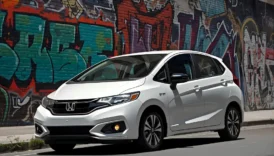
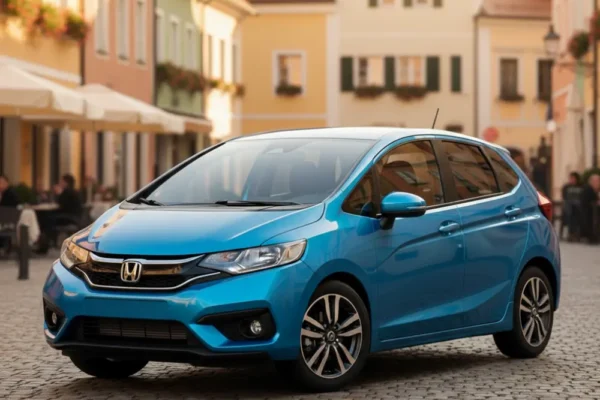
The 2021 Honda Fit (also known as the Honda Jazz in some markets) stands out as one of the most practical and intelligently designed subcompact hatchbacks on the market. Renowned for its versatile interior layout, excellent fuel economy, and surprising level of technology, the Fit delivers far more usability than its small footprint might suggest. In this comprehensive guide, we’ll explore its key updates, engine options, driving dynamics, interior comfort, safety features, common issues, and real-world ownership experience — giving you a complete picture of why the 2021 Fit remains a favorite among smart city drivers.
What’s New in the 2021 Honda Fit?
The 2021 Honda Fit introduces a series of updates that focus on refinement, interior flexibility, and efficiency, solidifying its reputation as one of the smartest subcompact hatchbacks available. While it doesn’t undergo a radical redesign, Honda carefully improves the Fit in ways that matter most to everyday drivers—especially those seeking a reliable, city-friendly car that punches above its weight in practicality and comfort.
Key Updates for 2021
- Refreshed Exterior Design: The 2021 Fit adopts a cleaner, more minimalist look with softer lines, a lower hood, and improved aerodynamics. Its LED headlights (available on higher trims) and updated grille give it a more modern appearance.
- Interior Refinements: Honda improved interior materials and ergonomics, with better seat padding, upgraded trim textures, and improved visibility through slimmer A-pillars.
- Enhanced Safety Features: More Honda Sensing driver-assistance technologies are now standard on many trims, including adaptive cruise control, lane-keeping assist, and collision mitigation braking.
- Updated Infotainment: The touchscreen system now supports Apple CarPlay and Android Auto, improving connectivity and usability for tech-focused drivers.
- Hybrid Option (Selected Markets): In some regions, the 2021 Fit is available with a two-motor hybrid system, providing improved fuel efficiency and smoother urban driving.
Trim and Market Variations
The 2021 Fit is offered in various trims depending on the region, typically including LX, Sport, EX, and EX-L in North America. In Europe and Japan, the hybrid versions feature the latest e:HEV technology, pairing a 1.5-liter engine with an electric motor for enhanced economy. Regardless of the trim, the Fit maintains its core strengths of space efficiency, ease of use, and reliability.
Why These Updates Matter
Rather than chasing performance or luxury, Honda focuses on making everyday driving better. The 2021 updates refine the Fit’s already excellent formula: it’s easier to drive, more comfortable, safer, and better connected than before. This ensures the Fit remains a top contender for drivers who prioritize practicality, value, and smart design in a compact hatchback.
Engine Options and Performance Overview
The 2021 Honda Fit prioritizes efficiency, smoothness, and everyday usability over outright performance, offering a range of powertrains that are well-suited to urban environments and light highway driving. Depending on the market, the Fit is available with conventional petrol engines and an advanced hybrid system, both engineered to deliver reliable performance with minimal running costs.
Petrol Engine Options
- 1.5-Liter i-VTEC Inline-Four
The primary engine option in most markets is a 1.5-liter naturally aspirated i-VTEC four-cylinder, producing 130 hp (97 kW) and 114 lb-ft (155 Nm) of torque. It can be paired with either a 6-speed manual transmission or a Continuously Variable Transmission (CVT). This engine is known for its smooth power delivery, high revving nature, and proven durability.- 0–100 km/h (0–62 mph): ~9.5–10.5 seconds (CVT)
- Designed for everyday commuting, city driving, and light highway cruising.
- 1.3-Liter i-VTEC (Selected Markets)
In some regions, a 1.3-liter engine with approximately 98 hp is available as the base option, paired mainly with CVT. While not fast, it offers excellent fuel economy and low emissions, making it ideal for urban use where efficiency matters more than outright speed.
Hybrid Powertrain (e:HEV)
For selected markets (notably Japan and Europe), Honda introduced the Fit e:HEV hybrid system, which combines:
- A 1.5-liter Atkinson-cycle petrol engine
- Two electric motors (one for propulsion, one for generating power)
- An intelligent single-speed transmission designed for smooth power transitions
This setup produces 109 hp and 253 Nm (187 lb-ft) of electric torque**, delivering strong low-speed acceleration and seamless operation in stop-and-go traffic. The hybrid system automatically switches between EV drive, Hybrid drive, and Engine drive, depending on speed and load, maximizing efficiency without driver intervention.
Transmission Options
- 6-Speed Manual: Engaging and efficient, available on lower trims and enthusiast-friendly markets.
- CVT: The most common choice, prioritizing smoothness and fuel economy. It includes features like G-Design Shift, which improves responsiveness compared to typical CVTs.
- e:HEV Single-Speed: On hybrid variants, this system eliminates traditional gear shifting, providing quiet and smooth acceleration.
Real-World Performance
The 2021 Fit is not designed to be sporty, but it offers responsive throttle behavior, predictable handling, and sufficient power for everyday driving. The hybrid version, with its instant electric torque, feels particularly lively in city conditions, often outperforming the petrol CVT model in urban acceleration. Across all variants, the engines are refined, economical, and renowned for their longevity.
Driving Experience and Handling Characteristics
The 2021 Honda Fit delivers a driving experience that emphasizes agility, comfort, and ease of use, making it a standout in the subcompact hatchback segment. While it doesn’t aim to be a performance car, the Fit excels in urban environments and provides surprising composure on highways, thanks to its lightweight structure and well-calibrated suspension. Honda’s engineering focus on predictable handling and excellent visibility makes the Fit especially appealing to city drivers and first-time car owners.
Steering and Ride Quality
The Fit features electric power steering tuned for lightness at low speeds and stability at higher speeds. This setup makes tight turns and parking in crowded city streets effortless, while still feeling secure and composed on faster roads. The steering is direct and responsive, giving the driver confidence when changing lanes or navigating winding roads.
The suspension system uses MacPherson struts in the front and a torsion beam at the rear, a layout typical for this segment. However, Honda’s tuning sets the Fit apart: it absorbs bumps and uneven surfaces impressively well for a small car. Road noise is minimal at city speeds, and while some noise enters the cabin on rough highways, overall refinement is excellent for its class.
Handling Dynamics
Weighing under 1,200 kg, the Fit benefits from its low curb weight and balanced chassis, allowing it to handle corners with surprising agility. Body roll is well-controlled, and the car remains stable during quick directional changes, making it feel nimble without being twitchy. The short wheelbase aids maneuverability, especially in urban settings where tight U-turns and quick parking maneuvers are common.
The braking system is responsive and confidence-inspiring, with predictable pedal feel. Hybrid models use regenerative braking, seamlessly blending electric regeneration with mechanical brakes to provide consistent deceleration while recovering energy for improved efficiency.
Urban Driving and Visibility
One of the Fit’s biggest advantages is outward visibility. The slim A-pillars, large windshield, and tall glasshouse design offer an expansive view of the road, making it easy to spot pedestrians, cyclists, and obstacles. This, combined with the tight turning radius, makes the Fit ideal for dense urban areas where maneuverability is key.
Highway Comfort and Stability
Despite its compact size, the 2021 Fit feels stable and composed at highway speeds. The suspension strikes a good balance between comfort and control, and the steering remains centered and predictable. Wind and tire noise are well managed, particularly in higher trims with better insulation.
Overall Driving Feel
The 2021 Honda Fit is designed to make driving simple, efficient, and enjoyable. Its light steering, nimble handling, excellent visibility, and comfortable ride make it one of the most well-rounded options in the subcompact hatchback category. While it won’t thrill performance enthusiasts, it shines in the real world, where ease of use and confidence matter most.
Interior Comfort and Magic Seat Versatility
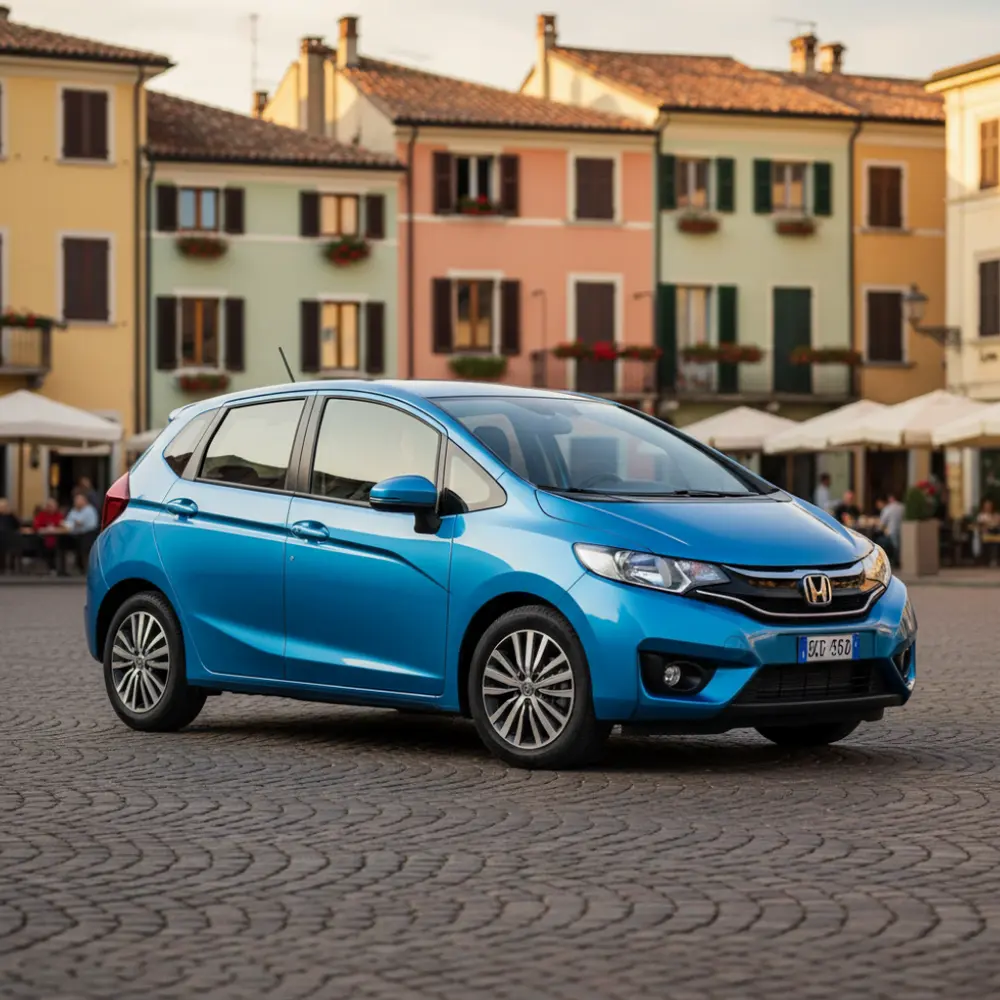
The 2021 Honda Fit is widely recognized for having one of the most versatile and intelligently designed interiors in the subcompact segment. Despite its compact exterior dimensions, the Fit delivers exceptional passenger space, clever storage solutions, and a flexible seating system that allows it to adapt to a wide variety of daily needs. Combined with improved material quality and thoughtful ergonomics for 2021, the cabin offers both comfort and functionality far beyond what many expect from a car this size.
Cabin Layout and Seating Comfort
The cabin design emphasizes maximum usable space. The upright seating position provides excellent visibility and gives a feeling of roominess, while the thin dashboard and large windows enhance the sense of openness.
- Front seats offer good padding and support, with plenty of headroom and legroom for taller drivers.
- Rear seats provide surprising comfort, with generous legroom and a flat floor that allows even adults to sit comfortably on shorter trips.
The materials have been upgraded for 2021, with soft-touch surfaces on key contact points and improved seat fabrics on most trims. Higher trims offer leather upholstery, heated front seats, and automatic climate control, adding a touch of refinement to the practical layout.
The “Magic Seat” System
The Fit’s biggest interior advantage is Honda’s Magic Seat system, a unique configuration that allows the rear seats to fold and flip in multiple ways to maximize cargo flexibility. This system enables four primary modes:
- Utility Mode: Rear seatbacks fold completely flat, creating a large, level cargo area. This opens up the trunk to up to 1,492 liters (52.7 cu ft) of space—class-leading for a subcompact.
- Tall Mode: Rear seat cushions flip up against the seatbacks, creating a tall vertical space behind the front seats—perfect for transporting tall items like plants or bicycles.
- Long Mode: The front passenger seat folds flat in combination with the rear seat, allowing items over 2.4 meters (8 ft) long to fit inside.
- Refresh Mode: The front seatbacks recline fully, and the rear seats can be adjusted to create a lounge-like space for relaxing on breaks.
This versatility is what sets the Fit apart—it’s essentially a small car with the cargo flexibility of a small van, making it ideal for active lifestyles, city dwellers, or anyone who frequently needs to carry irregular loads.
Practical Storage and Interior Details
Beyond the seating system, the Fit includes numerous storage compartments throughout the cabin. These include:
- Large door bins that can hold bottles and small bags
- A deep glovebox
- Cupholders positioned both in the center console and near the dashboard for easy access
- Multiple USB ports and 12V outlets for device charging
The flat floor design and wide door openings make entry and exit easy, even for elderly passengers or when installing child seats.
Overall Interior Experience
The 2021 Honda Fit’s interior is a masterclass in space efficiency and versatility. Whether you’re commuting daily, running errands, or planning weekend adventures, the cabin can adapt effortlessly to your needs. Combined with improved comfort and better materials for 2021, the Fit continues to set the standard for interior practicality in the subcompact hatchback class.
Safety Systems and Driver Assistance
The 2021 Honda Fit raises the bar for safety in the subcompact hatchback segment by offering a combination of advanced driver-assistance features, structural safety, and modern passive protection technologies. Honda’s focus on safety is evident through the widespread inclusion of Honda Sensing across many trims, making features that were once reserved for larger vehicles accessible to everyday drivers.
Structural Safety and Standard Protection
The 2021 Fit is built on a rigid yet lightweight platform that incorporates high-tensile steel, designed to efficiently absorb and redirect crash forces away from occupants. This strong base structure is paired with a suite of passive safety features, including:
- Front, side, and curtain airbags, covering all seating positions
- Anti-lock Braking System (ABS) and Electronic Brake Distribution (EBD)
- Vehicle Stability Assist (VSA) with traction control
- Brake Assist for added stopping power during emergency situations
- Tire Pressure Monitoring System (TPMS)
In crash tests, the Fit consistently performs well, earning top safety ratings in multiple markets thanks to its structural integrity and comprehensive airbag coverage.
Honda Sensing Driver Assistance Suite
A major highlight for 2021 is the expanded availability of the Honda Sensing suite, now standard or optional on most trims depending on the market. This suite includes:
- Collision Mitigation Braking System (CMBS): Uses forward radar and camera to detect obstacles and can automatically apply the brakes to prevent or reduce the severity of a collision.
- Road Departure Mitigation (RDM): Alerts and assists if the vehicle unintentionally drifts off the road.
- Adaptive Cruise Control (ACC): Maintains a safe following distance, reducing the need for constant manual speed adjustments.
- Lane Keeping Assist System (LKAS): Gently steers the car to keep it centered in its lane.
- Forward Collision Warning (FCW) and Lane Departure Warning (LDW) provide audio and visual alerts to prompt corrective action.
These systems work together to prevent accidents before they happen, offering a level of driver assistance that is rare in the subcompact segment.
Visibility and Active Safety Enhancements
One of the Fit’s underrated safety strengths is its excellent outward visibility, aided by its slim A-pillars, large windows, and high seating position. This design naturally helps drivers avoid hazards. Additionally, features like multi-angle rearview cameras, automatic high beams, and available parking sensors make maneuvering in tight spaces safer and easier.
Real-World Safety Performance
In real-world driving, the combination of driver assistance, strong structural design, and good visibility gives the 2021 Fit a reassuring level of safety. Honda’s active safety systems operate smoothly and unobtrusively, making them helpful without feeling intrusive. Whether in busy city traffic or on highways, the Fit provides a level of protection and assistance uncommon for its size and price point.
Infotainment and Connectivity
The 2021 Honda Fit combines intuitive technology with practical functionality, offering a well-designed infotainment system that meets the needs of modern drivers. While it may not be as flashy as some premium competitors, its straightforward interface, smartphone integration, and thoughtful placement make it easy to use in daily driving, especially for city commuters who value simplicity and reliability.
Central Display and Interface
At the center of the dashboard sits a 7-inch touchscreen infotainment display on most trims, positioned within easy reach of both driver and passenger. The system features large, easy-to-read icons, responsive touch inputs, and a clean menu structure that minimizes distraction while driving. Physical buttons and knobs are retained for critical functions like volume and climate control, striking a practical balance between touch and tactile operation.
Higher trims benefit from faster processors and improved graphics, ensuring smoother operation when navigating menus or switching between apps. The display is slightly angled toward the driver, improving visibility and reducing glare during daytime driving.
Smartphone Integration and Connectivity Options
For 2021, the Fit enhances its connectivity capabilities with standard Apple CarPlay and Android Auto support on most trims. This allows drivers to seamlessly mirror their smartphones on the central display to access navigation (Google Maps, Waze, Apple Maps), music streaming services, podcasts, and hands-free messaging apps.
- Wired connectivity is standard via USB ports.
- Bluetooth provides quick pairing and stable wireless audio streaming.
Multiple USB charging ports, including front and rear options on higher trims, ensure all passengers can keep their devices powered during trips.
Audio System and Additional Features
The standard 4-speaker audio system delivers clear sound for everyday use, while higher trims offer a 6-speaker setup that improves clarity and bass response. Steering wheel-mounted audio controls allow the driver to adjust settings without taking their hands off the wheel. Voice command functions support basic actions like making calls, changing tracks, or navigating to saved destinations, further reducing distraction.
Practical Tech Touches
Honda designed the Fit’s infotainment system with everyday usability in mind. Quick-access shortcut buttons, a logical menu flow, and responsive touch inputs make it simple for drivers of all tech levels. Even drivers who prefer not to rely on smartphone integration will find the native system straightforward and reliable.
Overall Connectivity Experience
The 2021 Honda Fit’s infotainment system may not be overloaded with advanced features, but it strikes the perfect balance between modern connectivity and user-friendly design. For drivers who want quick access to their digital lives without a steep learning curve, the Fit’s technology is intuitive, efficient, and perfectly suited to everyday driving.
Fuel Efficiency and Real-World Economy
The 2021 Honda Fit excels in fuel efficiency, one of the key reasons for its long-standing popularity among city drivers and cost-conscious buyers. Thanks to its lightweight design, efficient i-VTEC petrol engines, and in some markets, an advanced hybrid powertrain, the Fit delivers impressive real-world economy without sacrificing usability or comfort.
Petrol Engine Efficiency
The standard 1.5-liter i-VTEC petrol engine achieves excellent mileage, especially when paired with the CVT transmission, which is designed to keep the engine operating in its most efficient range.
- Manual transmission: Approximately 6.5–6.8 L/100 km (35–36 mpg US) combined.
- CVT: Around 5.8–6.2 L/100 km (38–41 mpg US) combined, depending on driving style and road conditions.
The smaller 1.3-liter engine offered in some markets is even more efficient, averaging 5.0–5.5 L/100 km (43–47 mpg US) in real-world use. This makes it an excellent option for city-focused buyers who prioritize low running costs.
Hybrid Powertrain Efficiency (e:HEV)
For regions where it’s offered, the e:HEV hybrid version is the most efficient model in the lineup.
- Combined fuel consumption: Around 3.5–3.8 L/100 km (62–67 mpg US).
- Electric-only operation: At low speeds, the hybrid system can run silently in EV mode, especially in traffic or short urban commutes.
- Regenerative braking recovers energy during deceleration, extending electric operation and improving overall efficiency.
This hybrid system automatically switches between electric, hybrid, and engine drive depending on conditions, without requiring input from the driver.
Real-World Economy Factors
In daily driving, the Fit’s efficiency is aided by several key factors:
- Light curb weight (approx. 1,100–1,200 kg) means less energy is needed for acceleration.
- The aerodynamic design reduces drag at higher speeds.
- Econ driving mode, available on many trims, adjusts throttle response and transmission mapping to prioritize fuel savings.
- Start-stop technology shuts off the engine at idle, saving fuel in stop-and-go traffic.
Highway vs. City Performance
In city driving, the CVT and hybrid versions excel due to their smooth power delivery and efficient low-speed operation. On the highway, the manual transmission provides slightly better control and responsiveness, though both petrol and hybrid versions remain impressively frugal at cruising speeds. Drivers consistently report real-world fuel economy figures close to, or even better than, official ratings.
Long-Term Efficiency Benefits
The Fit’s reliable powertrains and simple hybrid system mean that fuel economy remains strong even as the car ages. Regular maintenance, proper tire pressure, and gentle driving habits can easily keep the Fit operating at peak efficiency for well over a decade.
Common Problems and Reliability Insights
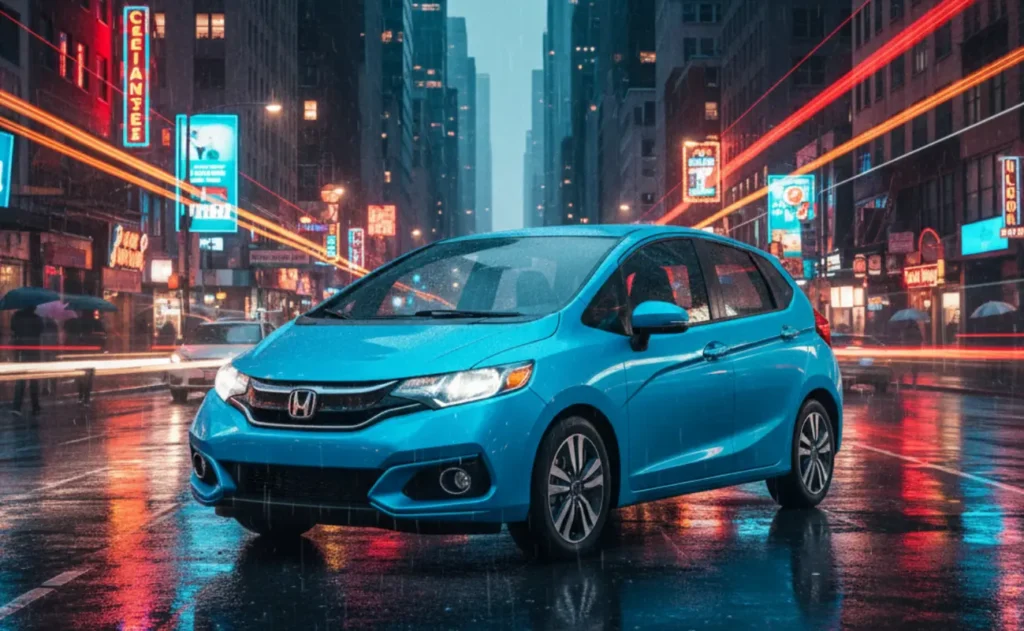
The 2021 Honda Fit has a well-earned reputation for exceptional reliability, low maintenance costs, and long-term durability. Its simple yet proven engineering and Honda’s attention to build quality mean major mechanical failures are rare. However, like any vehicle, there are a few recurring issues and ownership considerations worth being aware of. Most of these are minor and often related to wear components or software, rather than serious defects.
Infotainment and Connectivity Glitches
Some owners have reported minor software glitches in the infotainment system, such as:
- Slow response times when switching between Apple CarPlay/Android Auto and native menus
- Occasional Bluetooth pairing delays
- Random system reboots in early production units
These issues are typically resolved through dealer software updates or system resets and are not considered serious. Once updated, the Fit’s infotainment system is generally stable and easy to use.
CVT Transmission Behavior
For CVT-equipped models, a small number of drivers have mentioned slight hesitation or rubber-band effect during hard acceleration. This is a characteristic of CVTs rather than a defect, but delayed fluid changes or neglecting scheduled maintenance can lead to roughness or whining noises over time. Honda recommends regular CVT fluid changes (typically every 40,000–50,000 km) to keep the transmission operating smoothly.
Suspension and Interior Noises
Because of its light construction, some suspension creaks or interior rattles may appear over time, especially on rough roads. Common areas include the dashboard, door panels, or the cargo area. These are usually easy to fix through simple tightening or insulation and do not indicate structural problems. Regular maintenance and keeping interior panels clean help minimize these noises.
Hybrid System Observations
For hybrid models, there have been very few widespread issues, as Honda’s e:HEV system is relatively simple compared to plug-in hybrids. A handful of owners have mentioned charging control unit software updates early in ownership, but serious battery degradation has not been reported within the first few years. The hybrid components are designed for longevity and backed by long warranties in most regions.
Brake Wear and Sensor Maintenance
Like many small cars frequently driven in cities, the Fit’s brakes and sensors may require more frequent maintenance due to stop-and-go conditions. Brake pads can wear faster than expected in dense traffic, and parking sensors or cameras may need occasional cleaning or recalibration to maintain accuracy. These are normal wear considerations rather than reliability concerns.
Overall Reliability Outlook
In owner surveys and reliability studies, the 2021 Honda Fit consistently scores among the top of its class, with very low rates of major repairs. Its naturally aspirated engines, well-proven CVT, and simple hybrid system make it mechanically robust. Regular maintenance, fluid changes, and occasional software updates are typically all that’s needed to keep the Fit running smoothly for well over 150,000 km—and many examples exceed 300,000 km with minimal issues.
Maintenance Schedule and Ownership Practicalities
The 2021 Honda Fit is known for its low running costs, simple maintenance needs, and exceptional long-term durability. Honda has designed the Fit’s maintenance schedule to be straightforward, helping owners keep their vehicles in excellent condition without excessive expenses. Whether equipped with the petrol or hybrid powertrain, regular servicing is key to maintaining the Fit’s reliability and efficiency.
Standard Maintenance Intervals
Honda typically recommends servicing the Fit every 12 months or 15,000 km (9,300 miles), depending on local regulations and driving conditions. Key service items include:
- Engine oil and filter: replaced at every service interval
- Air filter and cabin filter: inspected regularly and replaced every 30,000–45,000 km depending on environment
- Brake fluid: replaced every 2 years
- Spark plugs: replaced around 100,000 km for the 1.5L i-VTEC engine
- Coolant: replaced approximately every 5 years or as needed
- CVT fluid (for automatic models): changed every 40,000–50,000 km to maintain smooth transmission operation
Hybrid models include high-voltage system inspections during routine servicing, but these checks are simple and rarely require component replacement in the early years.
Cost-Effective Ownership
The Fit’s simple engineering means parts and labor costs are relatively low compared to many competitors. Routine items like oil, filters, and spark plugs are inexpensive, and Honda’s global parts availability ensures quick, affordable service almost anywhere.
Additional tips to minimize costs:
- Stick to oil change intervals—clean oil is essential for the Fit’s high-revving engine longevity.
- Don’t delay CVT fluid changes, as this directly affects transmission health.
- Regularly clean sensors and cameras, especially in urban environments, to avoid false alerts.
- Rotate tires frequently to ensure even wear and prolong their life.
Ownership Experience
Honda makes everyday ownership easy through Maintenance Minder systems, which display service reminders on the dashboard. These alerts are based on driving patterns rather than fixed dates alone, making servicing more tailored and efficient. Owners can also use the HondaLink app in supported regions to track maintenance, receive alerts, and book service appointments.
The Fit’s compact size and simple design make DIY maintenance tasks like oil changes, filter replacements, or battery checks relatively easy for experienced owners, further reducing costs for those who prefer hands-on upkeep.
Long-Term Benefits
By following the recommended maintenance schedule, the 2021 Honda Fit can easily exceed 200,000–300,000 km with minimal major repairs. Regular servicing keeps the engine, transmission, and hybrid components operating smoothly, ensures optimal fuel efficiency, and helps maintain strong resale value. For budget-conscious drivers who want low ownership costs without compromising reliability, the Fit stands out as one of the smartest choices in its segment.
Dimensions, Cargo Capacity, and Everyday Usability
The 2021 Honda Fit is a prime example of how clever packaging can maximize space in a compact car. Its small exterior footprint makes it ideal for city driving, while its interior layout offers remarkable passenger room and cargo flexibility, easily surpassing many larger hatchbacks. This combination of agility and practicality is one of the Fit’s greatest strengths.
Exterior and Interior Dimensions
The 2021 Fit’s exterior is compact yet well-proportioned, measuring approximately:
- Length: 4,044 mm (159.2 in)
- Width: 1,694 mm (66.7 in)
- Height: 1,525 mm (60.0 in)
- Wheelbase: 2,530 mm (99.6 in)
Despite these modest dimensions, the interior is surprisingly spacious:
- Front headroom: 1,003 mm (39.5 in)
- Front legroom: 1,052 mm (41.4 in)
- Rear headroom: 953 mm (37.5 in)
- Rear legroom: 997 mm (39.3 in)
This makes the Fit one of the roomiest cars in the subcompact segment, easily accommodating four adults without feeling cramped. The tall roofline and large windows also enhance the sense of openness inside the cabin.
Cargo Capacity and Versatility
The Fit’s cargo area is class-leading thanks to its tall rear design and Honda’s innovative Magic Seat system.
- Cargo capacity (seats up): 470 liters (16.6 cu ft)
- Cargo capacity (seats down): up to 1,492 liters (52.7 cu ft)
With the rear seats folded flat in Utility Mode, the Fit provides a large, flat load floor suitable for luggage, furniture, or even small appliances. The Tall Mode allows transport of upright items like plants or bicycles, while Long Mode enables the storage of items over 2.4 meters (8 feet) in length — a feature usually found in much larger vehicles.
Urban Maneuverability
One of the Fit’s strongest advantages is its tight turning circle, typically around 5.0 meters, making U-turns and parking in crowded city streets effortless. Its light steering, short overhangs, and excellent outward visibility further enhance urban usability. Rear parking sensors and multi-angle cameras on higher trims provide extra confidence in tight spots.
Everyday Practicality
Whether used as a daily commuter, family car, or urban delivery vehicle, the 2021 Fit adapts easily to different lifestyles. Its wide rear doors, low loading lip, and flat floor make loading bulky items or installing child seats simple. Passengers enjoy generous space for a car of this size, and the flexible seating layout ensures the Fit can transition from passenger hauler to cargo carrier in seconds.
Frequently Asked Questions About the 2021 Honda Fit
Does the 2021 Honda Fit support Apple CarPlay and Android Auto?
Yes, most trims of the 2021 Honda Fit come equipped with Apple CarPlay and Android Auto, allowing drivers to seamlessly integrate their smartphones with the infotainment system. This enables easy access to navigation apps like Google Maps or Waze, streaming services, and hands-free messaging. The interface is simple to use, and wired connectivity ensures stable performance, making daily driving more connected and convenient.
How fuel-efficient is the 2021 Honda Fit?
The 2021 Honda Fit is exceptionally fuel-efficient, particularly the hybrid version. Petrol CVT models achieve around 5.8–6.2 L/100 km (38–41 mpg US), while manual versions are slightly higher but still frugal. The e:HEV hybrid variant delivers approximately 3.5–3.8 L/100 km (62–67 mpg US) in combined driving, making it one of the most economical non-plug-in small cars available. Its lightweight body and aerodynamic shape further enhance real-world efficiency.
What are the most common issues with the 2021 Honda Fit?
Overall, the 2021 Fit is extremely reliable. Minor issues include infotainment software glitches, occasional CVT hesitation, and small interior rattles over time, especially on rough roads. These problems are typically resolved through software updates, scheduled maintenance, or simple adjustments. The hybrid system has proven dependable, with minimal reports of battery degradation in early years. Regular fluid changes and timely servicing prevent most problems before they occur.
Is the 2021 Honda Fit reliable in the long term?
Yes, the Fit has a stellar reputation for long-term reliability. Its naturally aspirated engines are simple and robust, and the CVT transmission, when serviced regularly, is known to last well beyond 200,000 km. Many owners report exceeding 300,000 km with minimal repairs. The hybrid system is designed for durability, and Honda backs hybrid components with long warranties in many regions, adding extra peace of mind.
How practical is the 2021 Honda Fit for families or daily use?
Despite its compact size, the 2021 Fit is exceptionally practical. Its Magic Seat system allows for multiple cargo and seating configurations, accommodating everything from groceries to bicycles. Rear legroom is generous for adults, and the wide-opening doors make installing child seats easy. The large windows and excellent visibility enhance the driving experience, while the compact dimensions make it perfect for urban environments.
What are the recommended maintenance intervals for the 2021 Honda Fit?
Honda typically recommends servicing every 12 months or 15,000 km (9,300 miles). This includes oil changes, filter replacements, and brake fluid flushes every two years. CVT fluid changes are crucial every 40,000–50,000 km to maintain smooth performance. Hybrid models undergo routine high-voltage system checks but rarely require component replacement early on. Following the schedule keeps the Fit efficient, reliable, and preserves its strong resale value.
Does the 2021 Honda Fit offer advanced safety features?
Yes. The Honda Sensing suite is available or standard on many trims, offering features like Collision Mitigation Braking, Adaptive Cruise Control, Lane Keeping Assist, and Road Departure Mitigation. Combined with excellent structural safety and outstanding visibility, these technologies give the Fit a level of driver assistance uncommon in the subcompact category, making it a smart choice for safety-conscious buyers.