2025 Honda Ridgeline: Rugged Utility, Smart Features
- 2025 Honda Ridgeline: Rugged Utility, Smart Features
- What’s New for the 2025 Honda Ridgeline: Design, Chassis, and Updates
- Exterior Redesign and Styling Updates
- Chassis and Structural Improvements
- Trim and Equipment Updates
- Engine Options, Powertrain, and Off-Road Performance
- Engine and Transmission Overview
- i-VTM4 AWD and Terrain Capability
- Off-Road Engineering and Handling
- Driving Dynamics, Comfort, and Everyday Usability
- On-Road Comfort and Ride Stability
- Steering and Handling Precision
- Everyday Usability and Refinement
- Interior Design, Cabin Features, and Utility Functionality
- Cabin Layout and Material Quality
- Storage and Utility Innovation
- Comfort and Practical Functionality
- Safety and Driver Assistance: Updated Honda Sensing Suite
- The Updated Honda Sensing Suite
- Structural Safety and Crash Protection
- Real-World Safety Performance
- Technology and Infotainment: Connectivity and Smart Integration
- Infotainment and Digital Display Systems
- Smart Connectivity and User Interaction
- Practical Technology and Cabin Convenience
- Fuel Efficiency and Real-World Consumption
- Engine Efficiency and Official Ratings
- Real-World Consumption and Driving Efficiency
- Long-Term Fuel Performance
- Dimensions, Cargo Bed, and Practical Capabilities
- Exterior Dimensions and Overall Proportions
- Cargo Bed Design and Functionality
- Everyday Versatility and Payload Capacity
- Common Issues, Reliability, and Long-Term Durability
- Mechanical Reliability and Component Durability
- Build Quality and Structural Strength
- Long-Term Ownership Confidence
- Maintenance, Ownership Experience, and Service Intervals
- Recommended Maintenance Schedule
- Ownership Experience and Cost Efficiency
- Long-Term Service and Ownership Value
- Frequently Asked Questions About the 2025 Honda Ridgeline
- What engine powers the 2025 Honda Ridgeline?
- Is the 2025 Ridgeline good for off-road driving?
- How fuel-efficient is the 2025 Honda Ridgeline?
- How much does it cost to run or refuel the Ridgeline?
- What are the key safety features in the 2025 Ridgeline?
- How reliable is the 2025 Honda Ridgeline?
- What are the towing and payload capacities?
- Does the 2025 Ridgeline have good interior technology?
- How often does the Ridgeline require maintenance?
- Is the 2025 Honda Ridgeline worth buying?
The 2025 Honda Ridgeline builds on its reputation as one of the most versatile and refined midsize pickups on the market. Combining everyday comfort with genuine off-road capability, it delivers a unique balance of truck toughness and SUV-like drivability. The new model introduces updated exterior styling, enhanced i-VTM4 all-wheel-drive system, and a re-engineered chassis for improved handling and towing confidence. Inside, the Ridgeline continues to impress with premium materials, a redesigned infotainment interface, and advanced connectivity. With smarter technology and stronger performance, the 2025 Ridgeline evolves into Honda’s most capable and comfortable pickup yet.
What’s New for the 2025 Honda Ridgeline: Design, Chassis, and Updates
The 2025 Honda Ridgeline marks a significant evolution of Honda’s beloved midsize pickup, delivering the perfect blend of rugged performance and modern refinement. Honda has enhanced nearly every aspect of its design and engineering — from the chassis structure to cabin technology — to create a truck that performs equally well on highways, construction sites, and trails.
Exterior Redesign and Styling Updates
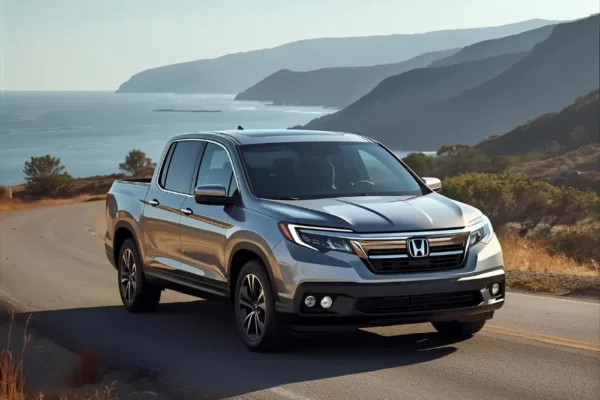
The Ridgeline’s new exterior commands attention with a bolder stance and tougher personality. The redesigned front fascia features a more upright grille, reshaped LED headlights, and a reworked bumper for improved approach angles during off-road driving. New air-curtain vents integrated into the front fascia optimize airflow around the fenders, enhancing both aerodynamics and fuel efficiency.
The 2025 update also introduces a more sculpted hood and wider track for better visual balance. At the rear, the dual-action tailgate remains a standout feature, complemented by the In-Bed Trunk — a sealed, weather-resistant storage compartment unique to Honda. New 18- and 20-inch wheel designs emphasize its rugged yet refined aesthetic, while additional paint finishes, including Sonic Gray Pearl and Radiant Red Metallic, refresh the model’s visual appeal.
| Feature | 2023 Ridgeline | 2025 Ridgeline |
|---|---|---|
| Front Grille | Chrome-accented | Upright, bold black-mesh design |
| Headlights | LED reflector | LED projector with DRL signature |
| Wheels | 18-inch alloy | New 18” & optional 20” designs |
| Chassis | Standard unibody | Reinforced front subframe and suspension mounts |
| In-Bed Trunk | Standard | Expanded 220L capacity |
| Infotainment | 8-inch touchscreen | Standard 12.3-inch display with Google Built-In |
Chassis and Structural Improvements
Built on Honda’s Global Light Truck Platform, the 2025 Ridgeline features re-engineered front and rear suspension geometry for improved stability and steering response. The hydraulic bushings at key mounting points reduce vibration, while revised damper valving ensures a smoother ride over uneven terrain. Honda also increased frame rigidity by 5% through the use of high-tensile steel reinforcements, optimizing both towing capacity and crash safety.
These refinements contribute to improved payload balance and better articulation during off-road use. The updated i-VTM4 all-wheel-drive system (Intelligent Variable Torque Management) delivers quicker torque vectoring across the rear axle, improving traction on gravel, mud, or snow.
Trim and Equipment Updates
The trim lineup continues with Sport, RTL, RTL-E, and Black Edition variants, but each now benefits from new cabin tech, including an expanded 12.3-inch digital touchscreen and 10.2-inch digital cluster. Honda has also introduced the TrailSport package for 2025 — a more rugged variant with all-terrain tires, skid plates, and tuned suspension for light off-roading.
The 2025 Honda Ridgeline represents a mature evolution of Honda’s pickup DNA — one that brings toughness, innovation, and comfort into a single cohesive package. Whether hauling, exploring, or commuting, it’s built to perform beyond expectations while embodying the refinement that defines every modern Honda.
Engine Options, Powertrain, and Off-Road Performance
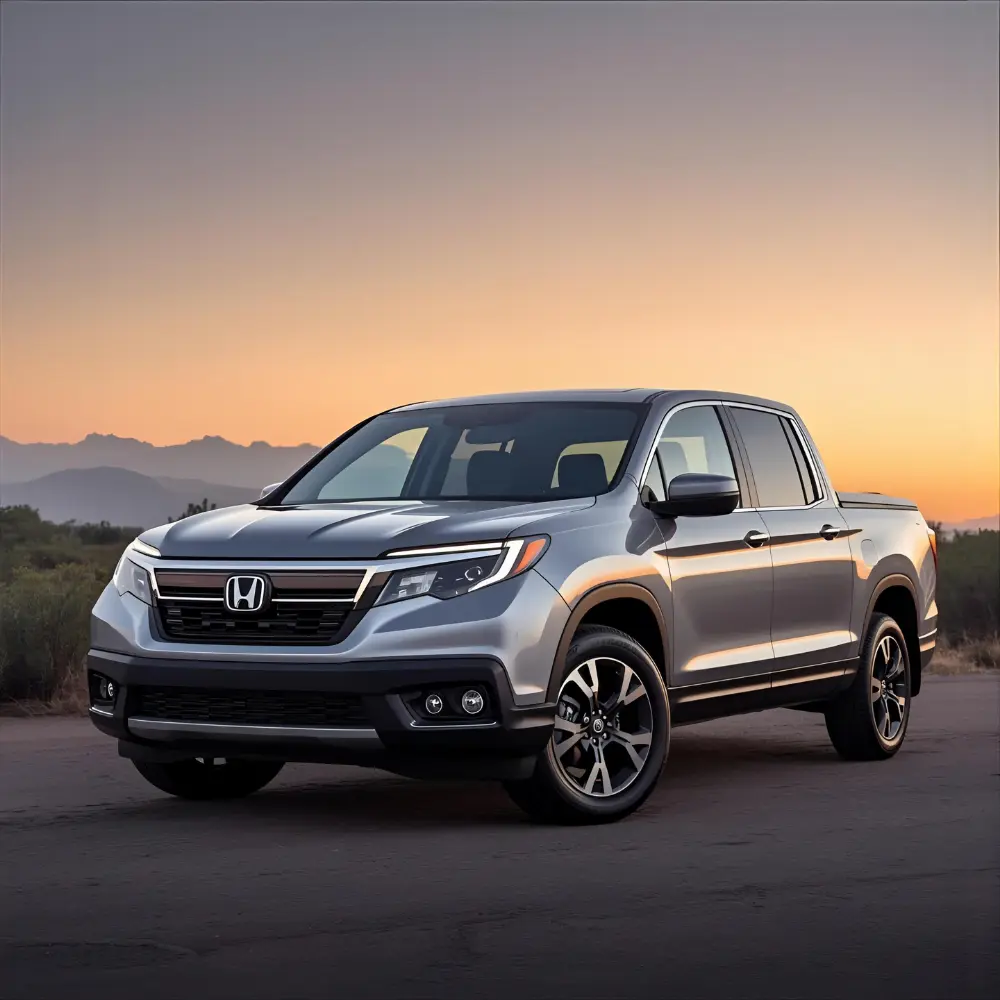
The 2025 Honda Ridgeline carries forward its reputation for smooth, confident performance by combining refined on-road manners with real off-road ability. Under its rugged exterior lies Honda’s proven engineering — designed to deliver durability, efficiency, and power in equal measure.
Engine and Transmission Overview
At the core of the 2025 Ridgeline is the familiar yet improved 3.5-liter V6 i-VTEC engine, now enhanced with refined tuning for smoother torque delivery and better fuel efficiency. The powertrain produces 280 horsepower and 355 Nm of torque, offering strong midrange pull for towing, hauling, and everyday driving.
This engine is paired with Honda’s 10-speed automatic transmission (10AT), which replaces the older 9-speed unit with faster shifts and smarter G-Shift control logic. The gearbox features paddle shifters for manual control and adaptive algorithms that predict gear selection based on throttle input and load.
| Specification | Details |
|---|---|
| Engine Type | 3.5L SOHC i-VTEC V6 |
| Displacement | 3,471 cc |
| Power Output | 280 hp @ 6,000 rpm |
| Torque | 355 Nm @ 4,700 rpm |
| Transmission | 10-speed Automatic (10AT) |
| Drivetrain | Standard i-VTM4 AWD |
| Fuel System | Direct Injection |
| Towing Capacity | Up to 5,000 lbs (2,268 kg) |
i-VTM4 AWD and Terrain Capability
One of the 2025 Ridgeline’s defining strengths is its updated i-VTM4 (Intelligent Variable Torque Management) all-wheel-drive system. The system continuously monitors wheel slip, throttle input, and steering angle to distribute torque precisely between front and rear axles — and even between individual rear wheels.
The 2025 update brings a faster-reacting control unit and enhanced torque-vectoring logic, which improves grip on loose surfaces such as gravel, snow, or wet pavement. Four selectable driving modes — Normal, Snow, Mud, and Sand — automatically adjust throttle sensitivity, torque split, and shift mapping.
Performance Highlights:
- 3.5L V6 i-VTEC engine with refined torque delivery
- 10-speed automatic transmission for smoother acceleration
- i-VTM4 AWD system with dynamic torque vectoring
- Selectable drive modes for diverse terrain types
- 5,000-lb towing capacity for utility versatility
Off-Road Engineering and Handling
While still unibody-based, the 2025 Ridgeline benefits from chassis improvements that make it more capable off the beaten path. The TrailSport variant introduces off-road-tuned suspension, steel skid plates, and all-terrain tires, increasing ground clearance and approach angle for trail use.
The Hill Start Assist and Downhill Brake Control systems ensure confidence on steep grades, while the electronic stability and traction management work seamlessly with the AWD system to keep control in challenging environments.
Whether navigating rough trails or cruising at highway speeds, the 2025 Honda Ridgeline delivers a harmonious balance of refinement and strength. It’s engineered not just to handle dirt roads but to master them — with the composure and quiet confidence that define every Honda performance platform.
Driving Dynamics, Comfort, and Everyday Usability
The 2025 Honda Ridgeline proves that a midsize pickup can deliver both rugged performance and refined comfort. Unlike traditional body-on-frame trucks, the Ridgeline’s unibody construction provides car-like handling without compromising durability. It drives with the poise of a premium SUV while maintaining the strength expected from a pickup — a defining characteristic that continues to set it apart from competitors.
On-Road Comfort and Ride Stability
At the heart of its composure lies Honda’s Global Light Truck Platform, which underpins models like the Pilot and Passport. This foundation gives the Ridgeline exceptional torsional rigidity, reducing body flex during cornering or towing. Its fully independent suspension system — MacPherson strut front and multi-link rear — ensures a smoother, more controlled ride compared to trucks using leaf springs.
Revised damper tuning and new hydraulic bushings in the 2025 model minimize road vibration, allowing the cabin to remain calm even on uneven terrain. Active Noise Cancellation (ANC) and enhanced sound insulation panels further reduce engine and tire noise, achieving sedan-like refinement.
Steering and Handling Precision
The Electric Power-Assisted Steering (EPS) system has been recalibrated for 2025 to offer a more natural, progressive feel. Steering effort remains light at low speeds for easier maneuvering, while becoming firmer on highways for improved stability. With a 5.8-meter turning radius, the Ridgeline navigates parking lots and city streets effortlessly despite its size.
The i-VTM4 all-wheel-drive system continues to play a key role in driving confidence. It automatically shifts torque between rear wheels, improving cornering control and traction during acceleration. The seamless interaction between VSA (Vehicle Stability Assist) and Torque Vectoring Control ensures that handling remains predictable and balanced, even in slippery conditions.
Driving Highlights:
- Unibody construction for SUV-like handling stability
- Independent suspension delivering premium ride comfort
- Electric Power Steering (EPS) with variable ratio feedback
- i-VTM4 AWD improving cornering grip and traction
- Active Noise Cancellation (ANC) ensuring quiet cabin dynamics
Everyday Usability and Refinement
The 2025 Ridgeline continues to excel as a daily driver. The elevated seating position provides a commanding view of the road, while wide visibility angles make urban driving stress-free. The cabin’s acoustic windshield and vibration-damping mounts isolate passengers from external harshness — a rare trait among midsize trucks.
On long trips, the Ridgeline behaves like a refined crossover: stable, composed, and effortless. Despite its pickup DNA, body control remains tight, and steering response feels intuitive. The suspension tuning achieves an ideal balance between comfort and durability, making it equally suited for towing trailers or transporting family members.
Ultimately, the 2025 Honda Ridgeline delivers the best of both worlds — the utility of a truck and the smoothness of an SUV. Whether commuting, hauling, or exploring, it offers a ride experience defined by precision, comfort, and everyday usability.
Interior Design, Cabin Features, and Utility Functionality
The 2025 Honda Ridgeline takes practicality and sophistication to new levels, offering an interior that blends rugged functionality with premium comfort. Honda has refined every detail of the cabin — from materials and storage to digital interfaces — ensuring the Ridgeline feels as refined as a luxury SUV while retaining the utility of a pickup.
Cabin Layout and Material Quality
For 2025, the Ridgeline’s cabin features a redesigned dashboard and center console, now anchored by a 12.3-inch touchscreen infotainment display and a 10.2-inch digital instrument cluster. The layout prioritizes accessibility, with intuitive controls, physical climate knobs, and a driver-focused orientation.
Premium soft-touch materials now extend across the dashboard and door panels, while contrast stitching and metallic trim elevate the aesthetic. Honda also added a new steering wheel design with improved grip texture and multifunction controls. Higher trims, such as RTL-E and Black Edition, receive leather upholstery, ambient LED lighting, and ventilated front seats, reflecting a more upscale character.
| Specification | Measurement / Feature |
|---|---|
| Seating Capacity | 5 passengers |
| Passenger Volume | 3,120 L |
| Front Legroom | 1,039 mm |
| Rear Legroom | 932 mm |
| Cargo Volume (Interior Storage)** | 82 L (under-seat + console) |
| Infotainment Display | 12.3-inch touchscreen |
| Digital Cluster | 10.2-inch TFT display |
Storage and Utility Innovation
Honda’s ingenuity shines in the Ridgeline’s interior storage design. The large center console accommodates laptops or small bags, while the rear seat bottoms flip upward, revealing a flat loading area ideal for tall cargo. The dual-action tailgate complements the interior by opening both downwards and sideways, allowing easy access to the In-Bed Trunk — a sealed storage compartment under the cargo floor.
In addition, new USB-C ports, 115V outlets, and an integrated wireless charging pad ensure full connectivity for modern lifestyles. The Tri-Zone Automatic Climate Control maintains ideal comfort across all seats, and the rear sliding window adds ventilation flexibility.
Interior Highlights:
- 12.3-inch infotainment display with simplified interface
- Wireless Apple CarPlay / Android Auto integration
- Heated & ventilated leather seats on upper trims
- Under-seat and center console storage for versatile cargo use
- Dual-action tailgate + In-Bed Trunk enhancing usability
Comfort and Practical Functionality
Despite its utilitarian purpose, the Ridgeline’s cabin remains quiet, refined, and ergonomically advanced. The Active Noise Cancellation (ANC) system works in harmony with acoustic glass to isolate road noise. Seat cushioning density has been optimized for long-distance comfort, while the rear bench angle provides natural posture support — a subtle but meaningful upgrade over earlier models.
Every touchpoint feels solid, functional, and user-centric. The result is a truck interior that doesn’t feel like a truck — instead, it mirrors the design maturity and comfort of a premium crossover, built for both work and leisure.
The 2025 Honda Ridgeline exemplifies Honda’s mastery of combining practicality with elegance. It’s an interior where form meets function — designed not just to carry people and gear, but to do so with unmistakable refinement and confidence.
Safety and Driver Assistance: Updated Honda Sensing Suite
The 2025 Honda Ridgeline enhances its reputation for driver confidence and family protection with the latest version of Honda Sensing, now featuring advanced hardware, smarter AI-based recognition, and improved real-time responsiveness. Combined with Honda’s rigid ACE (Advanced Compatibility Engineering) body structure, this pickup provides class-leading protection and driver awareness on every journey.
The Updated Honda Sensing Suite
For 2025, the Ridgeline adopts a wider-angle front camera and a new millimeter-wave radar system, improving object detection range and precision in various lighting and weather conditions. The system now leverages enhanced image processing algorithms powered by Honda’s next-gen microchip, providing faster recognition of pedestrians, cyclists, and lane markings.
Core Honda Sensing features include:
- Collision Mitigation Braking System (CMBS): Automatically applies brake pressure to avoid or mitigate frontal impacts.
- Adaptive Cruise Control (ACC) with Low-Speed Follow: Maintains distance in traffic and adapts smoothly to stop-and-go conditions.
- Lane Keeping Assist System (LKAS): Provides gentle steering input to keep the vehicle centered in its lane.
- Traffic Jam Assist (TJA): Adds semi-autonomous steering and braking at low speeds for congested conditions.
- Blind Spot Information System (BSI): Detects vehicles approaching from adjacent lanes using radar sensors.
- Rear Cross Traffic Monitor (RCTM): Warns of approaching traffic when reversing out of parking spaces.
Structural Safety and Crash Protection
Beyond electronic systems, Honda’s ACE body design remains a benchmark for impact protection. The structure disperses crash forces efficiently, protecting both occupants and other road users. The high-tensile steel frame reinforcements increase torsional rigidity, while crumple zones absorb energy during collisions.
The 2025 model adds standard front knee airbags, side curtain airbags with rollover sensors, and seatbelt pre-tensioners that activate automatically in rapid deceleration events. The multi-angle rearview camera and parking sensors improve visibility during urban driving and tight parking maneuvers.
Safety Highlights:
- Enhanced Honda Sensing suite with upgraded sensors and AI processing
- ACE body structure for optimized impact absorption
- Traffic Jam Assist and Rear Cross Traffic Monitor now standard
- Full airbag coverage, including new front knee airbags
- Improved radar and camera fusion for greater detection accuracy
Real-World Safety Performance
The Ridgeline’s composure on the road translates directly into safety confidence. The integration of Vehicle Stability Assist (VSA) and Traction Control ensures predictable handling on slippery surfaces. Meanwhile, the i-VTM4 AWD system contributes to stability during evasive maneuvers or steep descents.
Honda’s emphasis on human-centered safety is also evident in new Driver Attention Monitor functions, which detect fatigue or distraction and prompt rest breaks when necessary. Combined with a rigid safety cage and comprehensive electronic protection, the 2025 Ridgeline positions itself among the safest trucks in its segment.
Ultimately, the 2025 Honda Ridgeline demonstrates that true safety extends beyond technology — it’s built into the vehicle’s DNA. Every system, material, and calibration reflects Honda’s commitment to ensuring maximum protection, awareness, and confidence for every driver.
Technology and Infotainment: Connectivity and Smart Integration
The 2025 Honda Ridgeline delivers a major leap forward in in-cabin technology, focusing on user-friendly connectivity and seamless smart integration. Building on Honda’s latest digital ecosystem, the new Ridgeline offers faster processing, improved displays, and greater integration with cloud-based services — all designed to make driving more intuitive and enjoyable.
Infotainment and Digital Display Systems
The highlight of the 2025 model is its all-new 12.3-inch high-definition touchscreen, powered by Honda’s latest Digital Cockpit Interface. The system supports Google Built-In, giving users access to Google Maps, Assistant, and Play Store without needing a smartphone connection. For those who prefer traditional pairing, wireless Apple CarPlay and Android Auto remain standard.
Complementing the main display is a 10.2-inch digital instrument cluster, offering customizable readouts for navigation, safety systems, and off-road data such as pitch, roll, and torque distribution. The interface now runs on a faster Qualcomm Snapdragon processor, reducing latency during transitions or map zooming.
| Trim Level | Infotainment Display | Connectivity | Audio System |
|---|---|---|---|
| Sport | 12.3″ touchscreen | Wireless CarPlay / Android Auto | 7 speakers |
| RTL | 12.3″ touchscreen | + HondaLink App Integration | 9 speakers |
| RTL-E | 12.3″ touchscreen + Google Built-In | Wi-Fi hotspot, Alexa Built-in | 10 speakers |
| Black Edition | 12.3″ touchscreen (premium UI) | OTA updates + wireless charging | 12-speaker Bose® system |
Smart Connectivity and User Interaction
Honda’s infotainment OS emphasizes ease of use, featuring large icons, predictive voice recognition, and multi-user profiles. Each driver can store personal settings for seat position, mirror alignment, and infotainment layout — automatically loaded upon key detection. The HondaLink app has been upgraded for 2025, offering real-time vehicle tracking, remote start, climate pre-conditioning, and service scheduling.
The Ridgeline also supports Over-The-Air (OTA) software updates, ensuring that its infotainment and navigation systems stay current without dealership visits. Enhanced voice command capability allows drivers to control navigation, climate, or media simply by speaking natural-language phrases like “Hey Honda, play my driving playlist” or “Navigate to the nearest charging station.”
Tech Highlights:
- 12.3-inch HD touchscreen with Google Built-In interface
- 10.2-inch digital cluster with off-road and safety visuals
- Wireless smartphone integration with multi-user profiles
- OTA updates for system and map enhancements
- Upgraded HondaLink app for remote access and diagnostics
Practical Technology and Cabin Convenience
For daily usability, the 2025 Ridgeline includes multiple USB-C ports, Qi wireless charging, and a Wi-Fi hotspot supporting up to seven devices. A Bose® Centerpoint sound system (standard on Black Edition) delivers immersive clarity across the cabin. Additionally, the infotainment integrates EV route mapping for hybrid trims expected in later production years.
By uniting advanced infotainment, smart integration, and voice-driven functionality, the 2025 Honda Ridgeline demonstrates Honda’s continued focus on seamless digital ecosystems — ensuring that technology enhances the drive rather than distracting from it.
Fuel Efficiency and Real-World Consumption
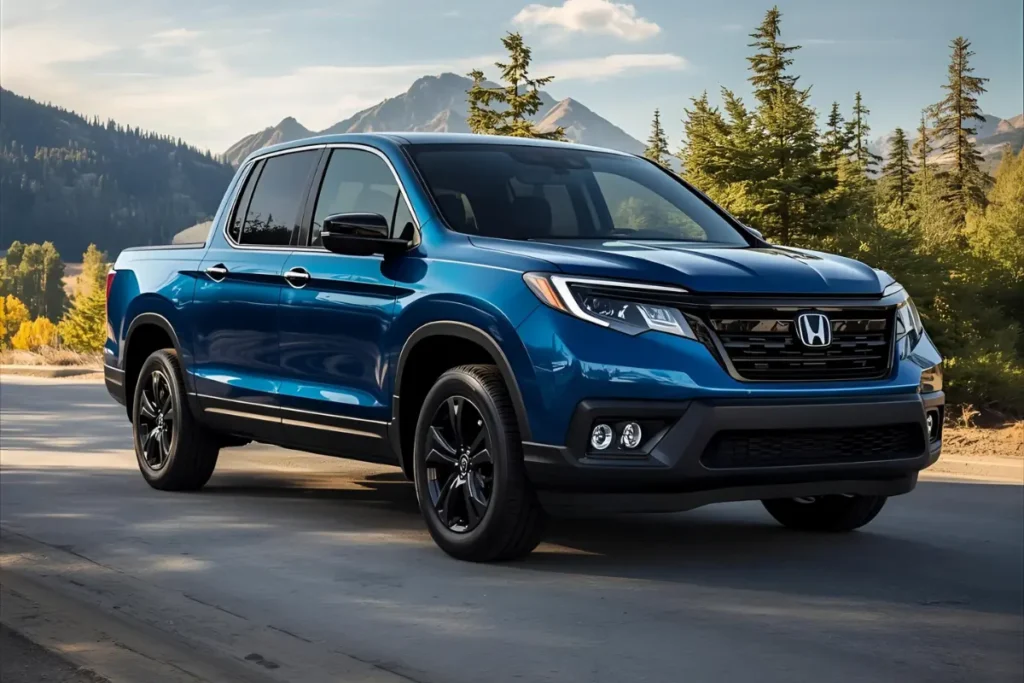
The 2025 Honda Ridgeline continues to prioritize efficiency in a segment often dominated by fuel-hungry trucks. Thanks to Honda’s engineering advancements in powertrain calibration, aerodynamics, and Variable Cylinder Management (VCM) technology, the Ridgeline manages to deliver a remarkable balance between performance and economy.
Engine Efficiency and Official Ratings
Powered by the proven 3.5-liter i-VTEC V6, the Ridgeline maintains its class-leading fuel efficiency among gasoline-powered midsize pickups. Paired with the 10-speed automatic transmission, the engine operates at lower RPMs during cruising, optimizing fuel burn and reducing vibration.
EPA estimates for the 2025 Ridgeline remain close to the previous model, offering impressive economy for a 280-hp truck.
| Driving Condition | Fuel Economy (EPA est.) | Metric Equivalent |
|---|---|---|
| City | 18 mpg | 13.0 L/100 km |
| Highway | 24 mpg | 9.8 L/100 km |
| Combined | 21 mpg | 11.2 L/100 km |
| Real-World Average | 20–22 mpg | 10.7–11.8 L/100 km |
Honda engineers focused on reducing parasitic losses through friction-optimized pistons, low-viscosity fluids, and electronic throttle mapping that moderates torque delivery in Eco Mode. The Active Grille Shutter system also contributes by regulating airflow to improve drag coefficients at higher speeds.
Real-World Consumption and Driving Efficiency
In practical use, the Ridgeline’s VCM system deactivates three cylinders during light-load conditions, such as steady highway cruising or downhill coasting. The transition between 6-cylinder and 3-cylinder modes is seamless, managed by electronic actuators and monitored via the digital cluster display.
Owners report consistent real-world figures of around 11 L/100 km during mixed driving, with Eco Mode activated. Fuel economy benefits are further enhanced by the truck’s unibody platform, which weighs less than traditional body-on-frame designs, reducing rolling resistance and improving acceleration efficiency.
Efficiency Highlights:
- Variable Cylinder Management (VCM) for optimized engine load
- 10-speed automatic transmission maintaining low cruising RPM
- Active Grille Shutters reducing aerodynamic drag
- Eco Mode with adaptive throttle response
- Lightweight unibody structure enhancing mileage efficiency
Long-Term Fuel Performance
Unlike many competitors that sacrifice refinement for economy, the Ridgeline achieves both. Over long-term ownership, its consistent efficiency results in lower running costs, especially for drivers balancing city commuting with light towing or weekend travel.
The combination of VCM, aerodynamic optimization, and intelligent transmission mapping ensures the 2025 Honda Ridgeline remains one of the most fuel-efficient gasoline pickups available. It proves that practical capability and fuel responsibility can coexist — making it as suitable for families as it is for work.
Dimensions, Cargo Bed, and Practical Capabilities
The 2025 Honda Ridgeline blends modern design with versatile practicality, offering the perfect balance between a comfortable daily driver and a capable utility vehicle. With carefully engineered proportions, a smartly designed cargo bed, and innovative storage solutions, the Ridgeline continues to redefine what a midsize pickup can achieve.
Exterior Dimensions and Overall Proportions
The Ridgeline’s unibody design maximizes usable space without the bulky dimensions of traditional trucks. Despite its sturdy stance, maneuverability remains a key strength — making it ideal for both urban and off-road environments.
| Specification | Measurement |
|---|---|
| Overall Length | 5,336 mm |
| Width | 1,996 mm |
| Height | 1,798 mm |
| Wheelbase | 3,178 mm |
| Ground Clearance | 205 mm (TrailSport: 222 mm) |
| Approach / Departure Angle | 20.4° / 22.6° |
| Turning Radius | 5.8 m |
| Bed Length | 1,626 mm (5.3 ft) |
| Bed Width (Between Wheel Arches) | 1,266 mm |
The balanced proportions provide excellent stability, while the 205 mm ground clearance enhances off-road readiness. The wide C-pillar design and short rear overhang optimize towing weight distribution and improve visual balance.
Cargo Bed Design and Functionality
The Ridgeline’s hallmark feature — the dual-action tailgate — continues to be one of its strongest advantages. It opens both downward and sideways, offering unmatched loading versatility. The In-Bed Trunk, now expanded to 220 liters, is waterproof, lockable, and even includes a drain plug for use as a cooler or wash compartment.
The bed itself is constructed from composite fiber-reinforced material, resistant to dents and corrosion. Integrated tie-down cleats, LED bed lighting, and 12V/115V power outlets enhance usability for work or recreation. Honda also includes molded wheel arches to fit 4×8-foot plywood sheets flat, a practical bonus for everyday tasks.
Practical Highlights:
- Dual-action tailgate with both downward and side opening
- In-Bed Trunk with 220L waterproof storage capacity
- Composite bed material resistant to corrosion and dents
- LED bed illumination and integrated power outlets
- TrailSport package with raised clearance and off-road tires
Everyday Versatility and Payload Capacity
Beyond clever engineering, the Ridgeline’s real-world usability sets it apart. Its payload capacity reaches 1,580 lbs (717 kg), while towing remains a confident 5,000 lbs (2,268 kg). The multi-link rear suspension ensures balanced weight distribution even under load, maintaining ride comfort and control.
Additionally, the low loading height (845 mm) and wide bed access make it easier to load motorcycles, camping gear, or tools without strain. Combined with the i-VTM4 AWD system, the Ridgeline easily transitions from weekday hauling to weekend adventures.
Practical, durable, and cleverly designed — the 2025 Honda Ridgeline proves that true utility can coexist with refinement. It’s more than just a pickup; it’s a multi-purpose tool engineered for life on the move.
Common Issues, Reliability, and Long-Term Durability
The 2025 Honda Ridgeline continues Honda’s legacy of building vehicles that stand the test of time. With a focus on quality engineering, material strength, and minimal maintenance needs, the Ridgeline has earned a reputation as one of the most dependable midsize pickups in its class. Honda’s meticulous attention to component durability and drivetrain refinement ensures the new Ridgeline remains a benchmark for reliability.
Mechanical Reliability and Component Durability
The Ridgeline’s 3.5-liter i-VTEC V6 engine has been used and perfected across multiple Honda platforms, renowned for its balance of power and endurance. Regular maintenance allows this engine to exceed 300,000 km without major repairs. Its 10-speed automatic transmission (10AT) — a robust unit shared with the Pilot and Passport — provides consistent, reliable shifting with little degradation over time.
Electrical systems have been upgraded for 2025, addressing minor concerns from previous generations such as infotainment reboot cycles and battery drain during extended idle periods. Software updates can now be installed Over-The-Air (OTA), reducing the need for service visits.
| Component | Estimated Lifespan | Maintenance Recommendation |
|---|---|---|
| Engine (3.5L i-VTEC) | 300,000+ km | Oil & filter every 10,000 km |
| Transmission (10AT) | 250,000+ km | Fluid change every 60,000 km |
| Suspension Components | 150,000 km | Inspect bushings, dampers |
| Braking System | 100,000+ km | Pads and rotors per wear cycle |
| Electrical System | 10+ years | Update software & monitor battery |
Build Quality and Structural Strength
Honda’s unibody chassis design gives the Ridgeline structural consistency and torsional rigidity superior to traditional body-on-frame trucks. This rigidity reduces long-term squeaks or structural fatigue, especially when towing or carrying heavy loads. The use of high-tensile steel, corrosion-resistant coatings, and sealed underbody protection extends the truck’s lifespan even in harsh environments.
The cabin materials have been tested under extreme temperature cycles, ensuring longevity for upholstery, dashboard components, and switchgear. Owners commonly report minimal interior wear, even after several years of use, reinforcing Honda’s focus on craftsmanship and long-term quality.
Reliability Highlights:
- Proven 3.5L V6 engine with exceptional lifespan
- 10AT transmission engineered for smooth, long-term operation
- Unibody structure minimizing fatigue and corrosion
- OTA software updates reducing maintenance needs
- High-quality materials maintaining interior integrity
Long-Term Ownership Confidence
The Ridgeline’s reliability reputation isn’t just theoretical — it’s backed by data. Owner satisfaction surveys consistently place it among the top-ranked trucks for durability and ease of ownership. Combined with Honda’s 5-year / 100,000 km powertrain warranty, it offers lasting confidence for both private and commercial users.
Even after years of hauling, off-road use, or heavy-duty operation, the Ridgeline retains its structural composure and drivetrain performance. Its resistance to mechanical failure and corrosion makes it an excellent long-term investment for drivers seeking a dependable, versatile pickup.
In essence, the 2025 Honda Ridgeline exemplifies the qualities that define Honda reliability — consistent engineering, low failure rates, and timeless mechanical resilience. It’s a truck built not just to perform today, but to last for decades.
Maintenance, Ownership Experience, and Service Intervals
The 2025 Honda Ridgeline maintains Honda’s tradition of simplicity and predictability in vehicle ownership. Known for its low running costs and excellent mechanical access, the Ridgeline is engineered to provide years of hassle-free service with minimal downtime. Honda’s Maintenance Minder system, paired with a durable drivetrain, ensures that routine care remains straightforward and affordable.
Recommended Maintenance Schedule
Honda’s Maintenance Minder monitors oil life, fluid levels, and component wear based on real-time driving conditions. The system notifies the driver when specific service items are due, allowing for flexible, condition-based maintenance instead of fixed intervals.
| Maintenance Task | Recommended Interval | Notes |
|---|---|---|
| Engine Oil & Filter | Every 10,000 km or 12 months | Synthetic oil required |
| Transmission Fluid | Every 60,000–80,000 km | Use Honda ATF Type 3.1 |
| Brake Fluid | Every 3 years | Replace to maintain hydraulic efficiency |
| Cabin & Air Filters | Every 20,000 km | Keeps HVAC system clean |
| Coolant | Every 100,000 km / 5 years | Use long-life Honda coolant |
| Spark Plugs | Every 160,000 km | Iridium-tipped plugs recommended |
| Tire Rotation | Every 10,000 km | Ensures even wear and ride comfort |
In practice, many owners report reduced service visits compared to traditional trucks due to the Ridgeline’s unibody construction and low-maintenance suspension design. Unlike body-on-frame trucks, there are no leaf springs or solid rear axles to service, further reducing mechanical complexity and cost.
Ownership Experience and Cost Efficiency
Honda’s focus on owner convenience extends to digital and structural features. The HondaLink app connects directly with the Maintenance Minder system, enabling remote scheduling, digital service records, and recall notifications. It also supports remote start, climate control preconditioning, and vehicle tracking, making everyday use more intuitive.
Ownership Highlights:
- Maintenance Minder system for intelligent service tracking
- HondaLink integration for remote diagnostics and scheduling
- Low-maintenance unibody platform reducing complexity
- Wide parts availability ensuring lower repair costs
- Excellent resale value due to reliability and durability
Long-Term Service and Ownership Value
Owners of previous Ridgeline models report impressive longevity — many surpass 250,000 km with minimal repair costs. This reputation continues in 2025 thanks to robust powertrain calibration, corrosion-resistant chassis coatings, and improved electrical system reliability.
Honda’s 5-year / 100,000 km powertrain warranty and 3-year general coverage offer additional peace of mind. For fleet users or long-distance drivers, extended maintenance plans are available through Honda’s certified network, ensuring comprehensive protection.
The 2025 Honda Ridgeline delivers a balanced ownership experience — intelligent in design, economical to maintain, and built for the long haul. It represents Honda’s refined philosophy of dependability and user-centered engineering, turning every kilometer into an exercise in effortless confidence.
Frequently Asked Questions About the 2025 Honda Ridgeline
What engine powers the 2025 Honda Ridgeline?
The 2025 Honda Ridgeline is powered by a 3.5-liter i-VTEC V6 engine producing 280 horsepower and 355 Nm of torque. It’s paired with a refined 10-speed automatic transmission (10AT) and the i-VTM4 all-wheel-drive system, offering responsive performance both on and off the road. This setup delivers smooth acceleration, excellent towing capability, and proven long-term reliability.
Is the 2025 Ridgeline good for off-road driving?
Yes. While not a hardcore rock crawler, the 2025 Ridgeline TrailSport trim offers meaningful off-road enhancements, including all-terrain tires, steel skid plates, higher ground clearance, and revised suspension tuning. Combined with the i-VTM4 AWD system and selectable terrain modes, it’s capable of handling snow, gravel, and light trail conditions with confidence.
How fuel-efficient is the 2025 Honda Ridgeline?
The Ridgeline delivers an EPA-rated 21 mpg combined (approximately 11.2 L/100 km). Real-world users typically achieve 20–22 mpg, depending on driving conditions and load. Features like Variable Cylinder Management (VCM) and Active Grille Shutters enhance highway efficiency, making it one of the most fuel-efficient V6-powered pickups in its class.
How much does it cost to run or refuel the Ridgeline?
Operating costs remain reasonable for a midsize pickup. With a 70-liter fuel tank, the Ridgeline typically provides 600–650 km of range per fill-up. Based on regional fuel prices, average fuel expenditure hovers around €10–12 per 100 km, depending on driving style and terrain.
What are the key safety features in the 2025 Ridgeline?
The 2025 Ridgeline comes standard with the upgraded Honda Sensing suite, including Collision Mitigation Braking, Adaptive Cruise Control, Traffic Jam Assist, and Blind Spot Monitoring. In addition, the truck features front knee airbags, rear cross-traffic alert, and an ACE body structure, ensuring outstanding occupant protection in all conditions.
How reliable is the 2025 Honda Ridgeline?
Extremely reliable. Honda’s 3.5L i-VTEC engine and 10AT transmission are proven across multiple models, offering long-term dependability. Most owners report years of trouble-free use with routine maintenance. Its unibody construction and corrosion-resistant coatings contribute to durability even under demanding use.
What are the towing and payload capacities?
The 2025 Ridgeline can tow up to 5,000 lbs (2,268 kg) and handle a payload capacity of 1,580 lbs (717 kg). The multi-link rear suspension provides balanced stability when carrying heavy loads, and the integrated trailer stability assist ensures confident towing performance.
Does the 2025 Ridgeline have good interior technology?
Absolutely. Every trim includes a 12.3-inch HD touchscreen with Google Built-In, wireless Apple CarPlay / Android Auto, and Wi-Fi hotspot capability. Upper trims add Bose® premium audio, OTA updates, and multi-user driver profiles. The system is intuitive, responsive, and designed for seamless integration.
How often does the Ridgeline require maintenance?
The Maintenance Minder system tracks oil life and wear items automatically, prompting service when necessary. Typical oil changes occur every 10,000 km or 12 months, while transmission fluid replacement is recommended every 60,000–80,000 km. With Honda’s durable components, long-term maintenance remains simple and cost-effective.
Is the 2025 Honda Ridgeline worth buying?
Yes — it remains one of the most balanced midsize trucks available. Combining SUV-like comfort, pickup utility, and Honda reliability, the Ridgeline appeals to drivers who want capability without compromise. Its build quality, real-world usability, and advanced technology make it an intelligent, enduring investment.