2022 Honda e: Urban Mobility and Smart Features
- 2022 Honda e: Urban Mobility and Smart Features
- What’s New for the 2022 Honda e: Design, EV Concept, and Updates
- Exterior Design and Urban Character
- Design Philosophy and Engineering Updates
- Trim and Equipment Adjustments
- Electric Motor, Battery, and Real-World Performance
- Powertrain and Output
- Battery Technology and Management
- Real-World Performance and Driving Feel
- Driving Experience, Handling, and Urban Agility
- Urban Dynamics and Steering Precision
- Driving Modes and Ride Feel
- Real-World Driving Experience
- Interior Design, Materials, and Digital Experience
- Cabin Layout and Material Quality
- Digital Interface and Connectivity
- Comfort and User Experience
- Safety and Driver Assistance: Advanced Honda Sensing EV Suite
- The Honda Sensing EV Platform
- Passive Protection and Structural Design
- Real-World Safety and Driver Assistance Behavior
- Technology and Infotainment: Inside the Digital Cockpit
- Display Architecture and User Interface
- Connectivity and Smart Integration
- Infotainment Experience and Practicality
- Charging, Range, and Energy Efficiency
- Battery Range and Real-World Efficiency
- Charging Convenience and Smart Management
- Sustainability and Energy Use in Practice
- Dimensions, Cabin Space, and Everyday Practicality
- Exterior Dimensions and Urban Proportions
- Cabin Space and Everyday Usability
- Urban Convenience and Real-World Functionality
- Common Issues, Reliability, and Battery Durability
- Mechanical and System Reliability
- Battery Health and Durability
- Real-World Ownership and Long-Term Confidence
- Maintenance, Ownership Costs, and Long-Term Usability
- Maintenance Schedule and Service Intervals
- Ownership Costs and Long-Term Value
- Real-World Usability and Ownership Experience
- Frequently Asked Questions About the 2022 Honda e
- What is the driving range of the 2022 Honda e?
- How long does it take to charge the Honda e?
- How much does it cost to charge the Honda e?
- What kind of motor does the Honda e use?
- How reliable is the 2022 Honda e?
- What warranty coverage does the Honda e offer?
- Does the 2022 Honda e support fast charging?
- How does the Honda e perform in cold weather?
- What are the maintenance costs of the Honda e?
- Is the Honda e suitable for long trips?
The 2022 Honda e represents the future of compact urban mobility — a fully electric city car designed to blend advanced technology with charming simplicity. With its retro-inspired design, rear-wheel-drive layout, and cutting-edge digital cockpit, the Honda e delivers a driving experience unlike any other in its class. Built specifically for urban environments, it offers silent operation, agile handling, and intuitive connectivity. As Honda’s first mass-produced EV for Europe and Japan, the 2022 Honda e showcases the brand’s commitment to sustainability, innovation, and intelligent design — redefining what a small electric car can achieve.
What’s New for the 2022 Honda e: Design, EV Concept, and Updates
The 2022 Honda e continues to evolve as one of the most innovative electric vehicles in the compact city-car segment. Since its debut, the Honda e has served as a design and technology flagship, showcasing Honda’s vision for sustainable, human-centered mobility. For the 2022 model year, subtle updates refine its design, enhance connectivity, and improve energy management efficiency — all while retaining the charming character that made it an icon among EV enthusiasts.
Exterior Design and Urban Character
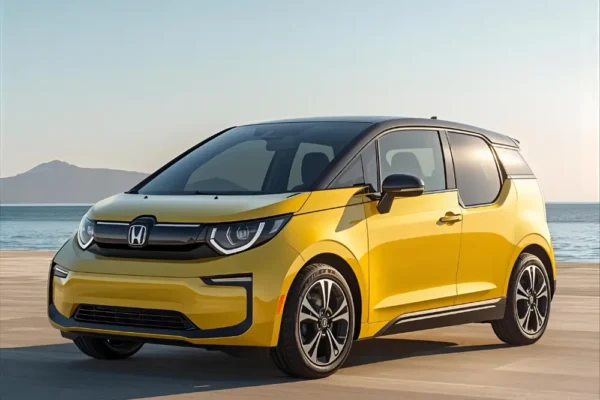
Visually, the Honda e remains a masterpiece of minimalist design. Inspired by the 1970s Honda Civic, its clean lines, circular LED headlights, and seamless body surfaces give it a retro-modern appeal. The absence of conventional door handles and mirrors — replaced by digital side cameras — contributes to both aerodynamics and futuristic aesthetics.
Honda updated the LED lighting signature for better visibility, while new wheel options and color choices (such as Premium Crystal Blue and Urban Yellow) enhance personalization. The charging port, positioned centrally on the hood, remains a signature feature that combines symmetry and accessibility — a detail praised for its ergonomic excellence.
| Feature | 2021 Honda e | 2022 Honda e |
|---|---|---|
| Digital Side Mirrors | Standard | Improved high-resolution display |
| Touchscreen Interface | Dual 12.3-inch | Updated software, faster response |
| Battery Management | 35.5 kWh | Improved heat management |
| Infotainment | Standard | Enhanced Honda Connect with OTA updates |
| Color Options | 5 | 7 (adds Urban Yellow & Crystal Blue) |
Design Philosophy and Engineering Updates
Built on a dedicated EV platform, the Honda e uses a rear-wheel-drive layout — an unusual but effective design for a city EV. This architecture allows for a 50:50 weight distribution, ensuring stability and agility at low speeds. For 2022, Honda improved battery cooling efficiency and refined the regen braking calibration for smoother one-pedal driving.
The Honda e’s emphasis on “human-focused technology” means every update serves real-world usability. For instance, the cabin now supports over-the-air (OTA) software updates, ensuring the infotainment and battery management systems remain current without dealer intervention. The updated Honda Connect app allows users to monitor charging, schedule climate pre-conditioning, and locate the car remotely.
Trim and Equipment Adjustments
The 2022 lineup continues with two primary variants — Honda e and Honda e Advance. The base version offers all essential EV technology, while the Advance trim adds Parking Pilot, heated steering wheel, and a 230-watt premium audio system by Honda Audio Premium. The suspension remains independent at all four corners, ensuring superior comfort for a car of its size.
With its combination of design purity, forward-thinking engineering, and human-centered technology, the 2022 Honda e remains a shining example of how electric mobility can be efficient, joyful, and emotionally engaging — proof that innovation can coexist with simplicity.
Electric Motor, Battery, and Real-World Performance
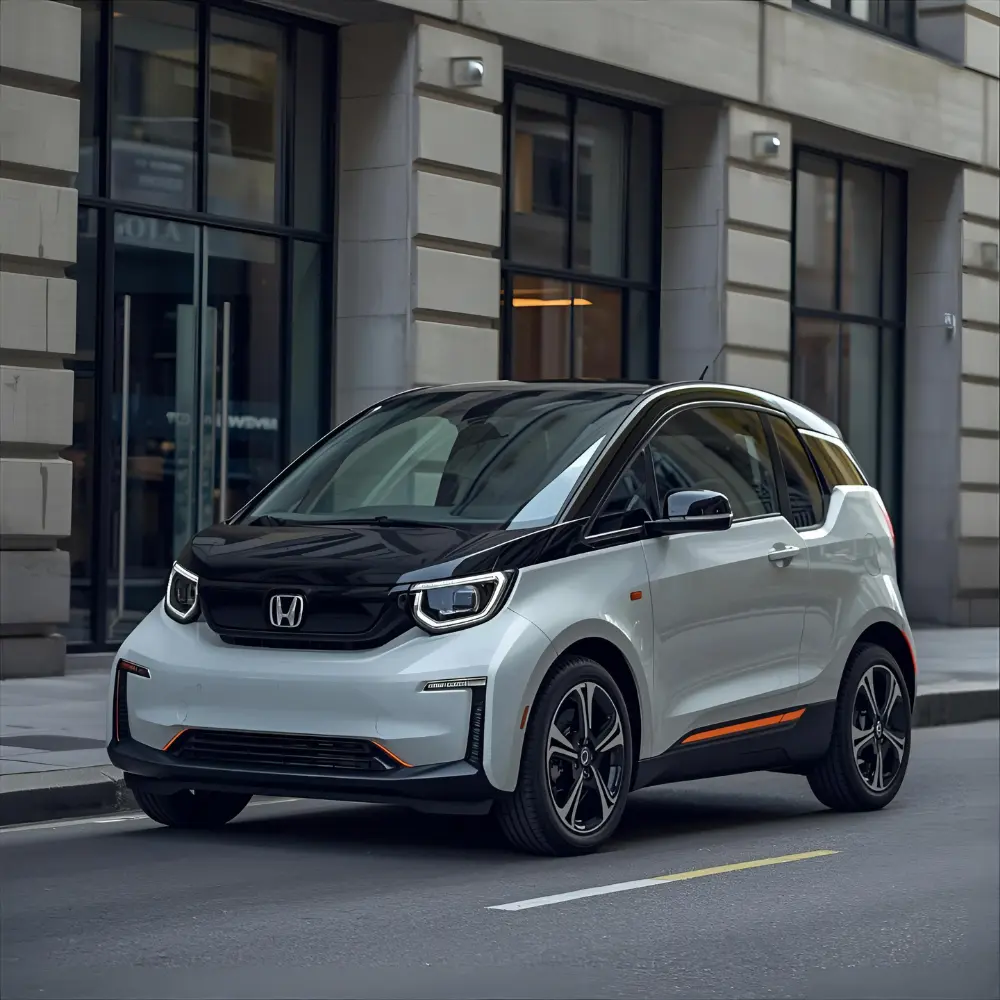
The 2022 Honda e delivers a driving experience that feels unlike any other compact EV. Combining a rear-mounted electric motor, low center of gravity, and precise steering calibration, it turns daily urban commuting into something surprisingly engaging. Unlike many front-wheel-drive city cars, the Honda e’s rear-wheel setup provides natural balance, agile handling, and instant torque response — all wrapped in a whisper-quiet electric package.
Powertrain and Output
Under its minimalist body, the Honda e houses a 35.5 kWh lithium-ion battery pack paired with a single permanent-magnet synchronous motor driving the rear axle. The powertrain is available in two outputs:
- Standard Honda e: 100 kW (136 hp)
- Honda e Advance: 113 kW (154 hp)
Both versions deliver 315 Nm of torque, enabling brisk, linear acceleration. The instant torque response gives the compact EV a 0–100 km/h time of 8.3 seconds (Advance) and 9.0 seconds (Standard), ideal for city and suburban driving.
| Specification | Standard | Advance |
|---|---|---|
| Motor Type | Permanent-Magnet Synchronous (RWD) | Same |
| Power Output | 100 kW / 136 hp | 113 kW / 154 hp |
| Torque | 315 Nm | 315 Nm |
| Battery Capacity | 35.5 kWh | 35.5 kWh |
| 0–100 km/h | 9.0 s | 8.3 s |
| Top Speed | 145 km/h | 145 km/h |
Battery Technology and Management
The battery pack is liquid-cooled and mounted low within the chassis to optimize balance and stability. The thermal management system uses refrigerant-based cooling, maintaining consistent cell temperature during both high-performance driving and fast charging. The Battery Management System (BMS) actively monitors voltage across all cells, ensuring longevity and safety.
The Honda e supports DC fast charging up to 50 kW, which recharges the battery from 0–80% in about 30 minutes, while standard AC charging (Type 2) at 6.6 kW replenishes a full charge in approximately 4.1 hours.
Real-World Performance and Driving Feel
The Honda e’s rear-wheel-drive configuration makes it one of the most agile EVs in its segment. The 50:50 weight distribution and short 4.3-meter turning radius deliver exceptional maneuverability in tight spaces. Instant throttle response, combined with precise electric power steering (EPS), provides intuitive handling rarely seen in compact electric cars.
Performance Highlights:
- Rear-mounted motor for improved agility and traction
- 50:50 weight distribution optimizing handling balance
- Fast charging (50 kW DC) reaching 80% in ~30 minutes
- Liquid-cooled 35.5 kWh battery for stable performance
- Instant 315 Nm torque for quick acceleration
In real-world use, the Honda e feels energetic and responsive at all speeds up to its electronically limited top speed of 145 km/h. Its quiet operation, smooth throttle modulation, and regenerative braking system — which allows one-pedal driving — make urban driving effortless.
Compact yet powerful, efficient yet engaging, the 2022 Honda e proves that electric mobility doesn’t have to be dull — it can be both emotional and intelligent.
Driving Experience, Handling, and Urban Agility
The 2022 Honda e redefines what a small electric vehicle can feel like on the road. Honda’s engineers approached its dynamics with the same precision seen in performance-oriented models, focusing on balance, control, and effortless drivability. The result is a compact EV that combines playful handling with smooth, silent refinement — a car that turns every city corner into an enjoyable driving moment.
Urban Dynamics and Steering Precision
The Honda e’s rear-wheel-drive layout sets it apart from most electric city cars. By positioning the electric motor at the rear, Honda achieved an ideal 50:50 weight distribution, which translates into precise handling and stable cornering behavior. The electric power steering (EPS) system offers an impressively tight turning circle of just 4.3 meters, allowing effortless maneuvering in narrow streets or crowded parking lots.
The low-mounted battery pack, integrated into the chassis, contributes to a remarkably low center of gravity. This gives the Honda e a planted feel, enhancing both ride comfort and confidence during quick directional changes. Its independent suspension on all four corners absorbs bumps smoothly while maintaining rigidity through turns.
Driving Modes and Ride Feel
The 2022 Honda e features two driving modes — Normal and Sport — each altering throttle response and steering sensitivity. In Sport mode, throttle mapping becomes sharper, and regenerative braking intensifies, supporting a more dynamic and responsive drive.
Driving Highlights:
- Rear-wheel-drive layout enhancing agility and traction
- 4.3-meter turning radius for superb maneuverability
- Low center of gravity due to battery placement
- Independent suspension system ensuring refined comfort
- Adjustable driving modes (Normal/Sport) with variable regen levels
Real-World Driving Experience
In daily urban environments, the Honda e feels nimble and fluid. The instant torque of its electric motor provides brisk acceleration from a standstill, perfect for quick lane changes or merging into traffic. The regenerative braking system enables intuitive one-pedal driving — drivers can decelerate smoothly by simply lifting off the accelerator.
At higher speeds, the car remains stable and composed, thanks to excellent weight balance and aerodynamic design. The cabin’s acoustic insulation and Active Sound Control (ASC) technology minimize outside noise, allowing the driver to focus fully on the environment. Even in tight European-style streets, the Honda e’s compact proportions and responsive steering make driving a stress-free experience.
Ultimately, the 2022 Honda e captures the essence of what urban electric mobility should feel like: quiet, balanced, and genuinely fun. Its agility, combined with a serene ride quality, makes it one of the most engaging city EVs ever built — proof that small can indeed be exciting.
Interior Design, Materials, and Digital Experience
The 2022 Honda e reimagines cabin design with a philosophy that merges digital innovation and human comfort. Inside, it feels like a blend of a modern living room and a high-tech workspace — minimalist, warm, and entirely focused on the driver’s interaction with technology. The atmosphere is serene yet advanced, capturing Honda’s “human-centric EV” design ethos.
Cabin Layout and Material Quality
The dashboard stretches horizontally across the cabin, housing a panoramic array of five digital screens — a design first for Honda. Two 12.3-inch touchscreen displays serve as the infotainment hub, flanked by 6-inch side camera screens that replace traditional mirrors. Ahead of the driver sits an 8.8-inch TFT instrument display, providing configurable driving data, navigation prompts, and battery range visualization.
Natural textures and eco-friendly materials define the space. The woven fabric upholstery and wood-effect trim give a warm, lounge-like feel, softening the technology-driven aesthetic. The flat floor and wide door openings enhance ease of entry and make the small cabin feel open and airy.
| Feature | Description |
|---|---|
| Dashboard Displays | 5 screens (dual 12.3” infotainment, dual side cameras, 8.8” driver display) |
| Upholstery | Recycled woven fabric with soft padding |
| Trim Finish | Wood-effect paneling for natural ambience |
| Steering Wheel | Two-spoke design with multi-function controls |
| Seating | Heated front seats, adjustable lumbar support |
Digital Interface and Connectivity
The Honda e’s dual-screen infotainment setup allows users to operate navigation on one screen while mirroring smartphone apps or entertainment on the other. Both screens support Apple CarPlay, Android Auto, and voice recognition powered by Honda’s AI assistant — activated by the command “OK Honda.” The system also supports screen swapping, allowing passengers to control media or maps without distracting the driver.
Interior Highlights:
- Five-screen digital dashboard integrating all driving data
- Voice-controlled AI assistant for natural commands
- Wireless Apple CarPlay / Android Auto support
- Honda Connect app for remote monitoring and climate control
- Smartphone-as-key function with proximity unlock
Comfort and User Experience
Though compact, the Honda e’s interior feels spacious due to its flat battery floor and short dashboard depth. Both front seats provide exceptional support, while the rear accommodates two adults comfortably for urban commutes. Climate control, ambient lighting, and ergonomic switch placement further enhance comfort.
The cabin ambiance is defined by silence — the absence of mechanical vibration allows subtle sounds like turn indicators and touch feedback to stand out, creating a calm yet connected experience. The digital side mirrors improve visibility during rain and low light, automatically adjusting brightness to match conditions.
Overall, the 2022 Honda e interior represents a fusion of sustainability and sophistication — a place where technology doesn’t dominate but harmonizes with human needs. It’s a digital ecosystem wrapped in simplicity, proving that compact EVs can feel both premium and personal.
Safety and Driver Assistance: Advanced Honda Sensing EV Suite
The 2022 Honda e might be compact in size, but it carries the full weight of Honda’s advanced safety engineering. Equipped with the Honda Sensing suite as standard, this small electric car integrates multiple sensor-based systems to protect occupants and pedestrians in busy city environments. Its intelligent combination of cameras, radar, and AI-driven assistance makes the Honda e one of the safest urban EVs available.
The Honda Sensing EV Platform
The Honda Sensing suite in the 2022 Honda e utilizes a wide-angle front camera combined with millimeter-wave radar to detect vehicles, pedestrians, and lane markings. Its functionality extends beyond conventional systems — adapting specifically for EV dynamics such as instant torque delivery and regenerative braking response.
Key systems include:
- Collision Mitigation Braking System (CMBS): Detects potential frontal collisions and applies brakes automatically if the driver fails to react.
- Lane Keeping Assist System (LKAS): Gently corrects steering input to maintain lane position.
- Road Departure Mitigation (RDM): Applies steering or braking when the vehicle begins to drift toward road edges.
- Adaptive Cruise Control (ACC): Maintains safe distance and adjusts speed smoothly using radar feedback.
- Traffic Sign Recognition (TSR): Displays recognized speed and warning signs directly in the digital cluster.
- Low-Speed Follow Function: Ideal for congested city traffic, automatically adjusting acceleration and braking.
Passive Protection and Structural Design
The 2022 Honda e uses a rigid high-tensile steel structure with strategically designed crumple zones that absorb impact energy efficiently. Its battery enclosure, mounted low and centrally, enhances crash protection by lowering the center of gravity and shielding the power unit. Dual front, side, and curtain airbags cover all occupants, while seatbelt pretensioners further reduce injury risk in collisions.
Safety Highlights:
- Standard Honda Sensing suite with EV-optimized calibration
- ACE body structure for superior energy absorption
- Advanced pedestrian protection design integrated into the hood
- 360-degree camera system with parking sensors
- Auto high-beam headlights and Cross Traffic Monitor
Real-World Safety and Driver Assistance Behavior
In daily driving, Honda e’s assistance systems work subtly and harmoniously. Adaptive Cruise Control operates smoothly in stop-and-go traffic, while Lane Keeping Assist ensures stability on narrow urban lanes. The Parking Pilot, available in the Advance trim, can autonomously steer the car into parallel or bay parking spots, minimizing driver stress.
The digital mirrors also enhance situational awareness, eliminating blind spots with ultra-wide camera views and automatic brightness adjustments. Together, these systems form a proactive safety net that enhances driver confidence in busy metropolitan areas.
Compact yet comprehensive, the 2022 Honda e demonstrates that safety innovation isn’t limited by size — proving that even a small EV can provide big protection through intelligent engineering and digital precision.
Technology and Infotainment: Inside the Digital Cockpit
The 2022 Honda e delivers one of the most technologically advanced interiors in its class, embodying Honda’s vision of a “digital living space on wheels.” The entire dashboard is dominated by connected displays, intuitive touch interfaces, and smart voice integration — transforming traditional in-car interaction into a seamless digital experience.
Display Architecture and User Interface
The cabin features a five-screen panoramic digital layout, including dual 12.3-inch touchscreens, two 6-inch side camera displays, and an 8.8-inch driver information screen. This setup merges function and form beautifully, giving the interior an immersive, futuristic feel while maintaining logical usability.
The dual 12.3-inch displays allow multitasking — one can be used for navigation while the other displays media, battery status, or even a live wallpaper for personalization. The interface operates on the Honda Connect OS, known for its crisp graphics and ultra-fast response times. The touch interface supports multi-touch gestures similar to tablets, ensuring a natural interaction.
Connectivity and Smart Integration
Every Honda e comes equipped with wireless Apple CarPlay and Android Auto, Bluetooth HandsFreeLink, and Wi-Fi hotspot capability. The car’s AI-powered voice assistant — activated by the phrase “OK Honda” — can handle natural commands for navigation, climate, and infotainment settings. Its contextual understanding means the system can respond conversationally, enhancing hands-free convenience.
Owners can also connect via the Honda+ smartphone app, which allows remote vehicle monitoring, charging management, and pre-conditioning (heating or cooling the cabin before entry). Over-the-air (OTA) updates ensure that system software and maps stay up-to-date automatically.
Tech Highlights:
- Five-screen digital cockpit creating immersive interaction
- Honda Connect OS with OTA updates for seamless performance
- AI voice assistant for natural command processing
- Wireless Apple CarPlay / Android Auto integration
- Honda+ app for remote access and charge management
- Wi-Fi hotspot and multi-touch control interface
Infotainment Experience and Practicality
The infotainment system emphasizes both entertainment and serenity. The premium audio system in the Advance trim uses eight speakers with a digital amplifier, delivering crisp sound tailored for the cabin’s acoustics. Passengers can even enjoy a built-in HDMI port, allowing streaming from external devices like laptops or gaming consoles — a rare feature in compact EVs.
For urban commutes, the infotainment integrates EV-specific navigation, optimizing routes based on battery charge and charging station availability. When parked, users can display calming animations or “aquarium mode” visuals across the panoramic screens, turning the car into a relaxing digital lounge.
The 2022 Honda e transforms the concept of car infotainment into a human-friendly digital ecosystem — one that connects technology, comfort, and emotion in a perfectly balanced way. It’s not just an interface; it’s an experience.
Charging, Range, and Energy Efficiency
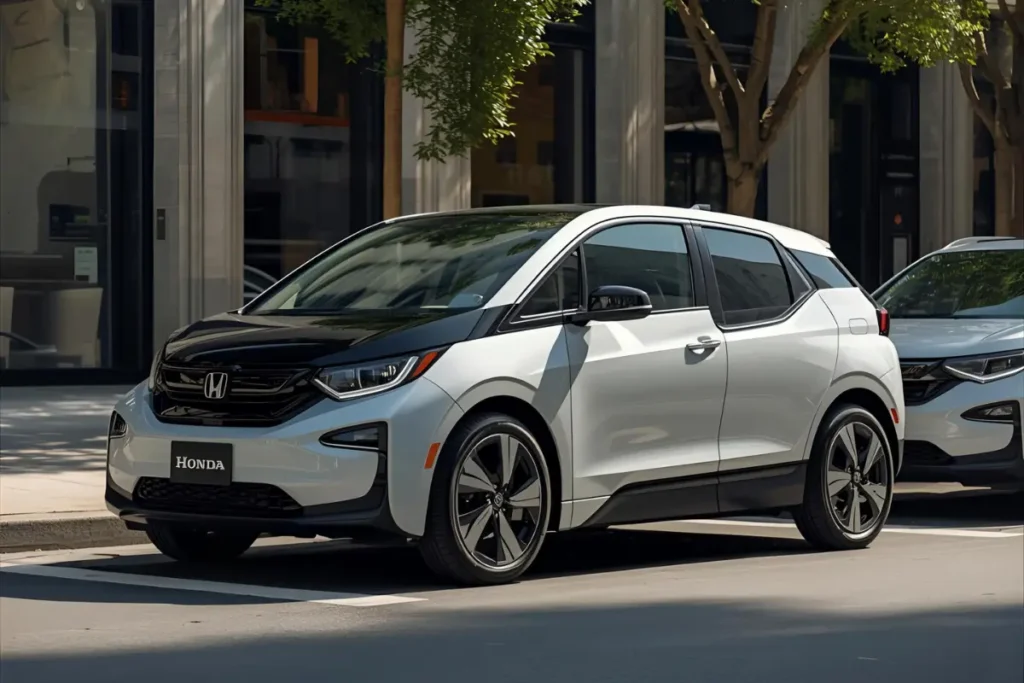
The 2022 Honda e blends everyday practicality with eco-conscious engineering, offering an urban EV experience centered on convenience, sustainability, and smart energy management. Designed primarily for city driving, the Honda e’s compact 35.5 kWh lithium-ion battery delivers responsive performance and respectable range — making it ideal for daily commutes and short-distance travel.
Battery Range and Real-World Efficiency
Official WLTP-rated range for the Honda e stands at 222 km for the base model and 210 km for the more powerful Advance trim. While these numbers may seem modest compared to larger EVs, they align perfectly with its role as a city-focused vehicle. In real-world conditions, most drivers achieve between 180–200 km per charge, depending on weather, driving style, and terrain.
Honda’s energy recuperation system uses adjustable regenerative braking levels to recover kinetic energy efficiently. The car’s Eco Mode further reduces power consumption by optimizing throttle response, HVAC output, and lighting systems.
| Charging Type | Power Output | Charge Time | Range Recovered |
|---|---|---|---|
| DC Fast Charging (CCS2) | 50 kW | 30 min (0–80%) | ~160 km |
| AC Home Charging (Type 2) | 6.6 kW | 4.1 hours (0–100%) | Full range |
| Standard Wall Plug (230V) | 2.3 kW | ~18 hours (0–100%) | Full range |
| Regenerative Braking | — | Continuous | Energy recovery during deceleration |
Charging Convenience and Smart Management
Charging the Honda e is designed to be effortless. The centrally mounted charging port on the hood ensures easy access from either side of the vehicle, and integrated LED indicators clearly display charging status. The system automatically balances voltage input to protect battery health, extending long-term efficiency.
Through the Honda+ app, owners can remotely schedule charging sessions to take advantage of off-peak electricity rates or preheat the cabin while plugged in. The thermal management system maintains optimal battery temperature even in cold or hot climates, preventing degradation and preserving performance consistency.
Charging & Efficiency Highlights:
- Fast charging (50 kW DC) reaches 80% in ~30 minutes
- 6.6 kW onboard charger supports efficient AC home charging
- Smart charging scheduler via Honda+ mobile app
- Regenerative braking system with adjustable levels
- Thermal battery management ensuring stable efficiency
Sustainability and Energy Use in Practice
In urban operation, the Honda e consumes approximately 17.8 kWh/100 km, which translates to some of the best real-world efficiency in its segment. The combination of lightweight construction, aerodynamic profile, and optimized powertrain calibration reduces unnecessary energy draw.
Additionally, Honda’s Eco Assist system guides drivers with visual cues to encourage efficient driving behavior. Blue or green lighting around the display indicates energy usage, helping drivers naturally adapt their habits.
Ultimately, the 2022 Honda e proves that electric mobility doesn’t need vast range to be effective. It embodies the essence of smart, sustainable design — perfect for cities where agility, fast charging, and environmental responsibility matter most.
Dimensions, Cabin Space, and Everyday Practicality
The 2022 Honda e has been designed with one clear mission: to maximize usability in compact urban environments. Despite its small footprint, the car provides impressive interior space and remarkable maneuverability. Honda’s engineers optimized every millimeter of the body structure to deliver functionality, comfort, and accessibility — all without compromising style.
Exterior Dimensions and Urban Proportions
Built on a dedicated EV platform, the Honda e’s proportions are perfectly tailored for city driving. The short overhangs and wide track provide a planted stance, while its compact size ensures effortless navigation through tight urban spaces.
| Specification | Measurement |
|---|---|
| Overall Length | 3,895 mm |
| Width | 1,750 mm |
| Height | 1,512 mm |
| Wheelbase | 2,530 mm |
| Ground Clearance | 125 mm |
| Turning Radius | 4.3 m |
| Cargo Capacity (Seats Up) | 171 L |
| Cargo Capacity (Seats Folded)** | 861 L |
The short wheelbase and tight turning circle make the Honda e exceptionally maneuverable — ideal for congested city centers and narrow streets. The flush-fitting doors and digital mirrors further reduce drag, improving efficiency while maintaining a sleek silhouette.
Cabin Space and Everyday Usability
Inside, the cabin offers more room than its exterior suggests. Thanks to the flat battery floor, passengers enjoy generous legroom and a spacious feel uncommon in compact EVs. The front seats are wide and supportive, while the rear bench comfortably accommodates two adults for short to medium journeys.
Cargo space, though modest, is intelligently designed. The rear hatch opening is wide for easy loading, and the underfloor compartment provides extra room for charging cables or small luggage. The 60/40 split-folding rear seats allow flexibility for carrying larger items.
Practical Highlights:
- Flat battery floor for maximized passenger space
- Tight 4.3 m turning radius for urban mobility
- Foldable rear seats expanding storage flexibility
- Centralized charging port for convenient access
- Low loading height enhancing everyday usability
Urban Convenience and Real-World Functionality
In day-to-day use, the 2022 Honda e excels at simplicity. Its keyless entry, smartphone-as-key feature, and wide-opening doors streamline every journey. The large glass area and upright seating position provide excellent visibility, while the digital side mirrors reduce blind spots and improve aerodynamics.
Despite its compact dimensions, the Honda e offers a refined sense of comfort during city commutes. Every touchpoint — from the soft-touch materials to the logical control layout — reinforces the car’s focus on human-centered design. It’s small in size, yet big in usability, making the 2022 Honda e one of the most practical and enjoyable electric cars for everyday urban life.
Common Issues, Reliability, and Battery Durability
As Honda’s first fully electric mass-production model for Europe and Japan, the 2022 Honda e was engineered with an emphasis on long-term reliability and predictable ownership. Built on a dedicated EV platform, it benefits from Honda’s decades-long experience in electrical systems and quality control. While still relatively new in the EV landscape, the Honda e has proven remarkably robust in both component longevity and battery health.
Mechanical and System Reliability
The Honda e’s electric powertrain is inherently simple, containing far fewer moving parts than traditional combustion systems. The permanent-magnet synchronous motor requires virtually no maintenance, and its sealed design prevents contamination or wear-related issues. Similarly, the single-speed reduction gearbox is engineered for lifetime operation under normal driving conditions.
Electrical systems — from the regenerative braking unit to the power inverter — have shown minimal reported failures. Early production vehicles experienced occasional infotainment software glitches, which were quickly resolved via over-the-air (OTA) updates. No widespread recalls or critical defects have been reported since its launch.
| Component | Expected Lifespan | Notes |
|---|---|---|
| Electric Motor | 10+ years / 250,000+ km | Virtually maintenance-free |
| Battery Pack | 8–10 years / 1,600+ charge cycles | Thermal management preserves efficiency |
| Inverter System | 10+ years | Passive cooling and low load stress |
| Suspension Components | 6–8 years | Light urban use reduces wear |
| Digital Cameras / Displays | 10+ years | Weather-sealed and replaceable modules |
Battery Health and Durability
The 35.5 kWh lithium-ion battery is liquid-cooled and monitored by a sophisticated Battery Management System (BMS). This system regulates charging speed, temperature, and voltage across individual cells, ensuring consistent performance over time. Real-world data indicates minimal capacity loss — typically less than 5% degradation after 3 years of daily use.
Reliability Insights:
- Liquid-cooled battery ensuring uniform temperature distribution
- OTA software updates resolving system-level issues remotely
- Simplified drivetrain architecture reducing long-term wear
- Regenerative braking minimizing mechanical stress
- Comprehensive 8-year / 160,000 km battery warranty
Real-World Ownership and Long-Term Confidence
Owners consistently report excellent reliability from their Honda e vehicles. The combination of durable motor design, rigid body structure, and premium electrical components results in minimal unplanned maintenance. Honda’s use of corrosion-resistant materials and sealed electrical connectors further enhances resilience in humid or coastal climates.
Even in colder European regions, the battery’s thermal control system maintains efficient charge retention and consistent range. The regenerative braking setup reduces brake pad wear, while the one-pedal driving mode decreases mechanical stress across the drivetrain.
In summary, the 2022 Honda e demonstrates that small electric cars can be both sophisticated and dependable. With minimal maintenance needs, excellent build quality, and proven component durability, it establishes itself as one of the most reliable compact EVs available today — a genuine long-term companion for modern urban life.
Maintenance, Ownership Costs, and Long-Term Usability
The 2022 Honda e is designed for simplicity — not only in operation but also in maintenance. Electric vehicles already require fewer service interventions than traditional cars, and Honda’s precise engineering takes that advantage even further. Every major system in the Honda e is optimized for durability, minimizing wear and reducing ownership costs over time.
Maintenance Schedule and Service Intervals
With no engine oil, timing belts, or exhaust system to maintain, the Honda e’s service routine is remarkably straightforward. The main checks involve the battery cooling system, brake fluid, and tire condition, along with routine inspections of suspension components and electronic systems.
| Maintenance Task | Recommended Interval | Notes |
|---|---|---|
| Brake Fluid Replacement | Every 3 years | Use DOT 4 brake fluid |
| Cabin Air Filter | Every 20,000 km | Keeps HVAC efficient |
| Coolant for Battery System | Every 5 years / 100,000 km | Essential for temperature regulation |
| Tire Rotation | Every 10,000 km | Ensures even wear |
| Brake Pads / Rotors | As needed (extended life) | Reduced wear due to regenerative braking |
| System Diagnostics | Annually | Software and BMS updates |
The Brake Regeneration System drastically reduces wear on pads and discs, meaning replacement may only be needed after 80,000 km or more — depending on driving style. Additionally, the Battery Management System (BMS) self-monitors performance, notifying the driver via the dashboard or Honda+ app if an inspection is required.
Ownership Costs and Long-Term Value
Ownership costs for the Honda e are exceptionally low. The electric drivetrain requires no oil changes or spark plugs, while fewer moving parts mean fewer potential failures. Annual maintenance costs are estimated at 40–50% lower than comparable petrol-powered hatchbacks.
Ownership Highlights:
- Minimal maintenance thanks to all-electric design
- Regenerative braking extends component lifespan
- Predictive BMS system ensures optimal battery care
- Low operating costs with fewer mechanical components
- Strong residual value supported by Honda reliability
Real-World Usability and Ownership Experience
Owners of the Honda e report consistent ease of ownership. The Honda+ app simplifies everyday use, allowing remote access to charging, climate control scheduling, and service updates. The car’s onboard diagnostics automatically check systems on startup, further minimizing service center visits.
The 8-year / 160,000 km battery warranty provides additional peace of mind, while OTA (over-the-air) updates keep the software current without physical servicing. Many components, including the electric motor and inverter, are expected to last the lifetime of the vehicle.
In practice, the 2022 Honda e offers an ownership experience defined by convenience and dependability. It eliminates the complexity of traditional maintenance and replaces it with intelligent, automated systems that keep the car running efficiently for years — embodying the future of low-maintenance, smart electric mobility.
Frequently Asked Questions About the 2022 Honda e
What is the driving range of the 2022 Honda e?
The 2022 Honda e offers a WLTP range of up to 222 km, depending on driving conditions and trim. In real-world city use, most owners achieve between 180–200 km per charge. The car’s efficient 35.5 kWh battery and regenerative braking system make it ideal for urban commutes, where short trips and frequent stops enhance its energy recovery efficiency.
How long does it take to charge the Honda e?
Charging times vary by method. Using a DC fast charger (50 kW), the battery can reach 80% in about 30 minutes. A home wallbox (6.6 kW) provides a full charge in roughly 4 hours, while a standard domestic plug (2.3 kW) requires about 18 hours. The Honda+ app allows users to schedule charging sessions for off-peak hours.
How much does it cost to charge the Honda e?
Charging costs depend on local electricity rates. On average, a full charge of the 35.5 kWh battery costs roughly €6–8 using home electricity. This translates to approximately €3–4 per 100 km, making it significantly cheaper to operate than most petrol vehicles. Public DC chargers may cost more per kWh, but they offer speed and convenience when traveling.
What kind of motor does the Honda e use?
The Honda e features a rear-mounted permanent-magnet synchronous motor, available in two power outputs: 100 kW (136 hp) and 113 kW (154 hp) for the Advance trim. Both versions deliver 315 Nm of instant torque, providing quick, linear acceleration and excellent traction.
How reliable is the 2022 Honda e?
Extremely reliable. Honda’s electric powertrain and Battery Management System (BMS) are designed for long-term durability. The liquid-cooled 35.5 kWh battery shows minimal degradation, typically below 5% after three years of regular use. The vehicle’s simplified drivetrain also means fewer mechanical parts to maintain or replace.
What warranty coverage does the Honda e offer?
The Honda e includes an 8-year / 160,000 km battery warranty, covering capacity loss and performance. The vehicle itself carries a 3-year / 100,000 km manufacturer warranty, extendable through Honda’s service plans. Most owners report minimal out-of-pocket expenses beyond routine checks during the first few years.
Does the 2022 Honda e support fast charging?
Yes. The Honda e supports DC fast charging via the CCS2 connector, allowing 0–80% charge in roughly 30 minutes at a 50 kW station. The charging port, located centrally on the hood, provides easy access from either side — a practical design feature for urban use.
How does the Honda e perform in cold weather?
Thanks to its liquid thermal management system, the Honda e maintains efficient battery performance in both cold and hot climates. Pre-conditioning features accessible via the Honda+ app allow drivers to warm the cabin and battery before departure, preserving range and comfort during winter driving.
What are the maintenance costs of the Honda e?
Maintenance costs are minimal compared to combustion cars. The vehicle requires no oil changes, and brake wear is reduced due to regenerative braking. Routine service typically involves coolant replacement, brake fluid checks, and software updates. Overall costs are estimated to be 40–50% lower than petrol equivalents.
Is the Honda e suitable for long trips?
While primarily designed for city use, the Honda e can handle occasional longer journeys with planning. With DC fast charging, drivers can extend range quickly during stops. However, its compact battery and limited motorway range make it best suited for daily commuting and urban adventures.