2021 Honda CR-V: Key Features, Everyday Performance
- 2021 Honda CR-V: Key Features, Everyday Performance
- What’s New in the 2021 Honda CR-V: Design, Platform, and Model Updates
- Platform and Chassis Improvements
- Exterior Design Updates
- Interior Enhancements and Functional Refinements
- Trim and Equipment Adjustments
- Highlights
- Engine Options and Performance: Turbo and Hybrid Power Explained
- 1.5-Liter Turbocharged Engine
- 2.0-Liter Two-Motor Hybrid System
- Driving Character and Efficiency
- Highlights
- Driving Experience and Handling Review: Comfort, Stability, and Control
- Ride Comfort and Suspension Setup
- Handling and Road Dynamics
- NVH (Noise, Vibration, and Harshness) Refinement
- Braking and Stability Systems
- Highlights
- Interior Design and Comfort: Space, Ergonomics, and Quality Feel
- Cabin Layout and Design Philosophy
- Seating Comfort and Space Efficiency
- Material Quality and Detailing
- Comfort and Climate Features
- Highlights
- Safety and Driver Assistance Systems: Honda Sensing in Detail
- Honda Sensing Suite: Standard Across All Trims
- Structural Safety and Passive Protection
- Driver Assistance Beyond Honda Sensing
- Crash Ratings and Safety Recognition
- Highlights
- Technology and Infotainment Review: Connectivity and Digital Convenience
- Infotainment System and Display Features
- Audio and Connectivity Options
- Digital Driver Interface and Smart Features
- Navigation and Voice Assistance
- Highlights
- Fuel Efficiency and Environmental Performance: Real-World Economy Results
- Real-World Fuel Economy
- Hybrid Efficiency and Drive Modes
- Aerodynamics and Efficiency Enhancements
- Emissions and Environmental Responsibility
- Highlights
- Dimensions and Practical Usability: Cargo, Space, and Versatility
- Exterior Dimensions and Space Efficiency
- Cabin Space and Passenger Comfort
- Cargo Design and Practical Storage
- Everyday Usability and Convenience
- Highlights
- Common Issues and Reliability: Owner Reports and Insights
- Build Quality and Component Durability
- Mechanical and Powertrain Concerns
- Electrical, Infotainment and Safety System Issues
- Recalls and Official Investigations
- Owner Satisfaction and Long-Term Ratings
- Highlights
- Maintenance and Ownership Experience: Longevity, Service, and Care
- Routine Maintenance and Service Intervals
- Reliability and Long-Term Durability
- Cost of Ownership and Service Support
- Practical Ownership Experience
- Highlights
- Frequently Asked Questions About the 2021 Honda CR-V
- What engine options are available for the 2021 Honda CR-V?
- Does the 2021 Honda CR-V come with all-wheel drive (AWD)?
- How fuel-efficient is the 2021 Honda CR-V?
- Is the 2021 CR-V a reliable SUV?
- What safety features are included as standard?
- How much cargo space does the 2021 CR-V have?
- Are there any common issues with the 2021 CR-V?
- What is the maintenance schedule for the CR-V?
- Does the CR-V have Apple CarPlay and Android Auto?
- Is the 2021 Honda CR-V worth buying?
The 2021 Honda CR-V continues to stand as one of the most well-rounded compact SUVs on the market, delivering an excellent balance of practicality, comfort, and technology. Built on Honda’s proven Global Compact Platform, it combines strong structural rigidity with efficient aerodynamics, offering a smooth and composed ride. The CR-V is powered by a 1.5-liter turbocharged engine paired with a continuously variable transmission (CVT), designed for both responsive acceleration and impressive fuel economy. For environmentally focused drivers, the CR-V Hybrid adds an advanced two-motor hybrid system that enhances efficiency without sacrificing power. Inside, the cabin emphasizes functionality and refinement, featuring premium materials, intuitive controls, and a spacious layout that accommodates families and professionals alike. Advanced safety and driver-assistance technologies from Honda’s Sensing Suite come standard, further reinforcing the CR-V’s reputation for reliability and value. In essence, the 2021 CR-V represents Honda’s formula for modern versatility: efficient performance, refined comfort, and intelligent design all in one compact SUV.
What’s New in the 2021 Honda CR-V: Design, Platform, and Model Updates
The 2021 Honda CR-V builds upon its already successful formula by refining design, technology, and safety while maintaining its reputation for reliability and practicality. Positioned as a continuation of the fifth generation introduced in 2017, the 2021 model benefits from subtle styling enhancements, upgraded materials, and expanded standard safety features. Honda’s aim with this iteration was to strengthen its appeal to both families and urban professionals seeking efficiency, comfort, and modern connectivity.
Platform and Chassis Improvements
The CR-V remains built on Honda’s Global Compact Platform, shared with models like the Civic and Accord. This architecture delivers excellent structural rigidity, improved crash protection, and superior noise insulation compared with earlier generations. The unibody design utilizes high-strength steel for enhanced torsional stiffness, improving ride comfort and handling stability.
The MacPherson strut front suspension and multi-link rear setup have been retuned for better balance between comfort and agility, while hydraulic bushings reduce vibration over uneven roads. The electric power steering system has also been recalibrated for smoother response and better on-center feel.
| Structural Element | Feature | Benefit |
|---|---|---|
| Platform | Global Compact Platform | Improved rigidity and refinement |
| Suspension | MacPherson (front), Multi-link (rear) | Balanced ride and handling |
| Materials | High-strength steel | Stronger, lighter body |
| Noise Insulation | Additional underbody damping | Quieter cabin experience |
Exterior Design Updates
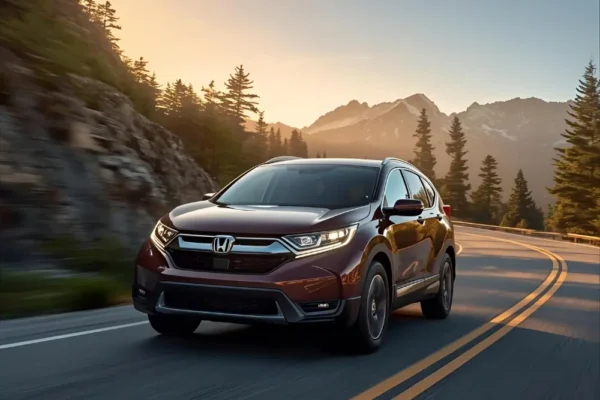
The 2021 model maintains the clean, sophisticated look that defines the CR-V lineup but incorporates small design updates for a more premium appearance. The front fascia now features a darker grille finish with a more pronounced chrome strip, while the LED headlamps and taillights receive subtle internal revisions for sharper definition. The rear bumper integrates sleeker reflectors, and new 18-inch alloy wheels are available across several trims.
The aerodynamic profile remains a highlight, with active shutter grilles and a streamlined roofline that reduce drag, contributing to improved fuel efficiency and stability at highway speeds.
Interior Enhancements and Functional Refinements
Inside, the 2021 CR-V focuses on usability and refinement. The center console layout has been redesigned for better storage, while premium soft-touch materials and metallic trim accents elevate perceived quality. Higher trims receive a wireless charging pad, heated steering wheel, and power-adjustable passenger seat, features previously reserved for the CR-V Hybrid.
Honda’s Acoustic Vehicle Alert System (AVAS) is now standard on hybrid models, emitting a soft sound at low speeds to alert pedestrians—an example of Honda’s commitment to safety and urban awareness.
Trim and Equipment Adjustments
The CR-V continues to be offered in LX, EX, EX-L, and Touring trims, while the Hybrid variant is available in EX, EX-L, and Touring configurations. All trims now include Honda Sensing as standard, bringing advanced driver-assistance features to the entire lineup.
| Trim Level | Key Additions for 2021 |
|---|---|
| LX | LED headlights, improved infotainment |
| EX | Wireless phone charger, keyless entry |
| EX-L | Power passenger seat, premium audio |
| Touring | Hands-free power tailgate, 19-inch wheels |
Highlights
- Refined exterior styling with LED lighting and aerodynamic upgrades
- Enhanced chassis rigidity for smoother, quieter driving
- Updated interior materials and comfort features
- Honda Sensing standard across all trims
- Expanded convenience features like wireless charging and power liftgate
The 2021 Honda CR-V maintains its position as a benchmark in the compact SUV class by combining subtle design evolution with major usability improvements. It exemplifies Honda’s approach to continuous refinement, offering a more premium experience while retaining the reliability and practicality that define the model’s legacy.
Engine Options and Performance: Turbo and Hybrid Power Explained
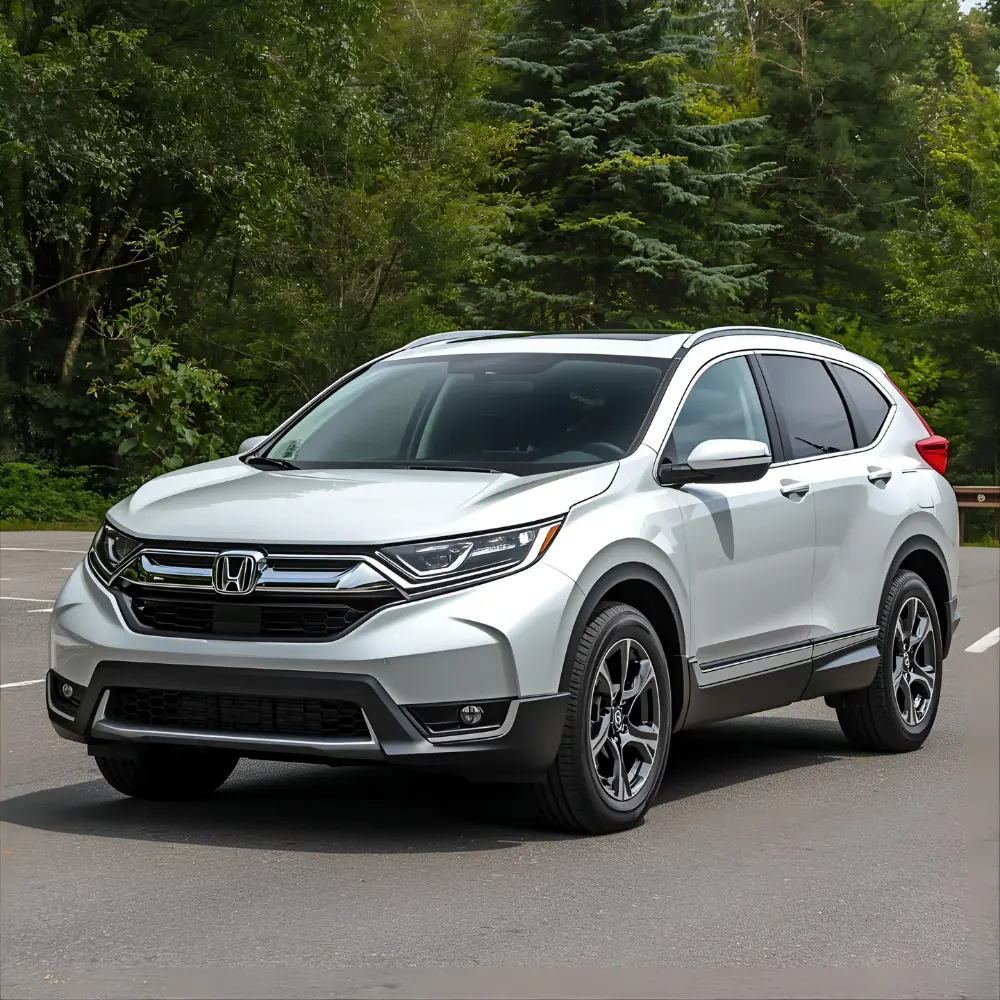
The 2021 Honda CR-V offers two distinct powertrains designed to satisfy different priorities: a responsive 1.5-liter turbocharged gasoline engine for everyday performance and an efficient two-motor hybrid system for those seeking superior fuel economy and lower emissions. Both options maintain Honda’s focus on smooth, dependable performance, blending refined engineering with practical usability.
1.5-Liter Turbocharged Engine
The standard engine across most trims is Honda’s 1.5-liter DOHC 4-cylinder turbocharged engine. It produces 190 horsepower at 5,600 rpm and 179 lb-ft (243 Nm) of torque between 2,000 and 5,000 rpm, providing strong low-end response and flexibility in various driving conditions. The engine’s direct injection system and variable valve timing (VTEC) enhance combustion efficiency while reducing emissions.
Power is routed through a continuously variable transmission (CVT) that simulates gear shifts under acceleration to deliver a more natural driving feel. Front-wheel drive (FWD) is standard, while Real Time AWD with Intelligent Control System™ is optional on all trims, automatically redistributing torque between the front and rear wheels as needed.
| Specification | Value |
|---|---|
| Engine Type | 1.5L DOHC Turbocharged I4 |
| Power Output | 190 hp @ 5,600 rpm |
| Torque | 179 lb-ft (243 Nm) @ 2,000–5,000 rpm |
| Transmission | CVT with simulated gear steps |
| Drivetrain | FWD / AWD (optional) |
| 0–100 km/h | ~8.5 seconds (FWD) |
The turbo engine delivers brisk performance for everyday driving and overtaking while remaining refined under load. Combined with precise throttle calibration and low noise levels, it reinforces the CR-V’s premium yet practical character.
2.0-Liter Two-Motor Hybrid System
For drivers prioritizing fuel efficiency, the CR-V Hybrid offers a sophisticated Intelligent Multi-Mode Drive (i-MMD) hybrid powertrain. It pairs a 2.0-liter Atkinson-cycle 4-cylinder engine with two electric motors—one acting as a propulsion motor and the other as a generator. The combined system output is 212 horsepower, making it both more powerful and efficient than the turbo variant.
The hybrid seamlessly transitions between EV Drive (electric-only), Hybrid Drive (engine + electric assist), and Engine Drive (direct engine power) modes, depending on speed and load conditions. The electronic CVT (e-CVT) provides smooth, linear acceleration without shift shock.
| Feature | Description |
|---|---|
| Engine Type | 2.0L Atkinson-cycle I4 + two-motor hybrid |
| Combined Power | 212 hp |
| Battery Type | Lithium-ion, 1.4 kWh |
| Transmission | e-CVT |
| Drivetrain | Standard AWD |
| Fuel Economy | Up to 40 mpg (5.9 L/100 km) combined |
The hybrid’s regenerative braking captures energy during deceleration, replenishing the battery and improving efficiency. Honda’s hybrid tuning prioritizes natural throttle feel, ensuring transitions between gas and electric power are barely noticeable.
Driving Character and Efficiency
Both powertrains emphasize refinement over raw sportiness. The turbocharged engine provides lively acceleration with smooth midrange torque, while the hybrid excels in city driving with silent electric operation and minimal fuel consumption. The hybrid’s instant torque from the electric motor delivers quick off-the-line performance, while its standard AWD system enhances traction in slippery conditions.
Highlights
- Responsive 1.5L turbo engine with strong low-end torque
- 212-hp hybrid system offering exceptional efficiency
- Standard AWD on hybrid models for added confidence
- Smooth CVT and e-CVT transmissions for refined driving
- Regenerative braking and seamless hybrid transitions
In summary, the 2021 Honda CR-V balances performance and economy through two well-engineered powertrains. Whether opting for the punchy turbo or the efficient hybrid, both deliver the reliability, refinement, and versatility that define Honda’s compact SUV legacy.
Driving Experience and Handling Review: Comfort, Stability, and Control
The 2021 Honda CR-V is engineered to deliver an exceptional balance between comfort, composure, and predictable handling. Designed for everyday versatility rather than outright sportiness, it stands out for its smooth ride, secure road manners, and impressive refinement in both urban and highway environments. Whether powered by the turbocharged or hybrid drivetrain, the CR-V remains one of the most composed compact SUVs in its segment.
Ride Comfort and Suspension Setup
The CR-V’s suspension system—comprising MacPherson struts in the front and a multi-link rear suspension—has been precisely tuned for compliance and stability. It absorbs bumps and imperfections with ease, providing a plush yet controlled ride. The addition of hydraulic bushings minimizes road vibration and harshness, while the chassis structure’s rigidity prevents unwanted body flex.
The 2021 CR-V Hybrid benefits further from its lower center of gravity due to the battery’s underfloor placement, improving cornering balance and reducing body roll. Both variants feature dual-pinion electric power steering (EPS) for consistent feedback and light effort in tight spaces, making the vehicle feel nimble despite its SUV proportions.
| Feature | Description | Benefit |
|---|---|---|
| Suspension | MacPherson strut / Multi-link | Smooth ride and stability |
| Steering | Dual-pinion electric assist | Balanced response and precision |
| AWD System | Real Time AWD with Intelligent Control | Enhanced traction and handling |
| Chassis Rigidity | High-strength steel platform | Reduced flex, better comfort |
Handling and Road Dynamics
The Real Time AWD with Intelligent Control System™ continuously monitors traction and can send up to 40% of torque to the rear wheels when slippage is detected. This enhances stability during cornering or on slippery surfaces. The system is proactive rather than reactive, adjusting torque even before wheelspin occurs, giving the driver a greater sense of confidence in adverse weather.
In daily driving, the CR-V feels composed and predictable. The steering is linear, the body stays flat through corners, and the suspension effectively isolates passengers from rough patches. Even during quick lane changes, the CR-V maintains stability with minimal pitch or roll, a result of Honda’s finely balanced weight distribution.
NVH (Noise, Vibration, and Harshness) Refinement
Honda engineers have placed a strong focus on cabin quietness. The 2021 CR-V uses active noise cancellation (ANC) and acoustic windshield glass to minimize engine and wind noise. Additional insulation around the floor and firewall contributes to an impressively refined cabin environment, rivaling more premium SUVs in comfort.
Hybrid models are especially quiet at low speeds, often operating in EV mode, where the electric motor drives the vehicle silently. During highway cruising, the engine sound remains subdued, and tire noise is well-controlled even on coarse asphalt.
Braking and Stability Systems
Braking performance is predictable, with progressive pedal feel and minimal fade over repeated stops. The hybrid variant’s regenerative braking system works seamlessly, blending friction and regenerative forces for consistent deceleration. The CR-V also includes Vehicle Stability Assist (VSA), Hill Start Assist, and Electronic Brake Distribution (EBD), ensuring safe performance across various driving conditions.
Highlights
- Comfort-oriented suspension with refined damping characteristics
- Real Time AWD ensures traction and stability in all weather
- Dual-pinion steering delivers light yet precise control
- Quiet cabin with advanced noise insulation and ANC
- Hybrid model benefits from a lower center of gravity and smooth EV operation
Overall, the 2021 Honda CR-V delivers a driving experience that prioritizes comfort, confidence, and composure. It feels light on its feet, secure in corners, and exceptionally smooth during long drives—a hallmark of Honda’s expertise in building balanced, user-friendly vehicles.
Interior Design and Comfort: Space, Ergonomics, and Quality Feel
The 2021 Honda CR-V delivers one of the most versatile and comfortable interiors in the compact SUV class. Honda’s approach to cabin design focuses on practicality, refinement, and ease of use. The result is an interior that feels premium yet functional, blending ergonomic simplicity with advanced comfort and material quality suitable for long journeys or daily commuting.
Cabin Layout and Design Philosophy
The interior of the CR-V embraces a driver-centric design, ensuring intuitive access to all major controls. The dashboard layout is clean and horizontal, providing excellent forward visibility. The soft-touch materials across the dash and door panels, combined with metallic or faux-wood accents depending on the trim, give the cabin a refined, upscale look.
The center console has been redesigned for 2021 to improve usability. It features sliding storage trays, deep compartments for larger items, and multiple USB ports for passenger convenience. The floating center armrest console is configurable, allowing easy reorganization between storage modes.
| Interior Element | Description | Function |
|---|---|---|
| Dashboard | Clean, horizontal layout | Enhances space and visibility |
| Center Console | Sliding and configurable design | Flexible storage |
| Steering Wheel | Leather-wrapped with multifunction controls | Comfort and control |
| Instrument Cluster | 7-inch digital display | Clear driver information |
Seating Comfort and Space Efficiency
The 2021 CR-V excels in comfort for both front and rear passengers. The front seats offer firm support with generous bolstering and available 10-way power adjustment including lumbar support on EX trims and higher. Heated front seats and a heated steering wheel add extra comfort in cold climates.
Rear passengers benefit from class-leading legroom and reclining seatbacks, along with wide-opening doors for easy ingress and egress. The flat rear floor improves comfort for the middle passenger, and the rear air vents ensure even climate control across the cabin.
| Seating Area | Headroom | Legroom | Shoulder Room |
|---|---|---|---|
| Front | 1,018 mm | 1,050 mm | 1,470 mm |
| Rear | 996 mm | 1,026 mm | 1,412 mm |
The cargo capacity remains one of the strongest selling points of the CR-V. With rear seats up, it offers 1,065 liters (37.6 cu ft) of space, expanding to 2,146 liters (75.8 cu ft) when folded flat. The low load floor and wide tailgate opening make loading bulky items easy.
Material Quality and Detailing
Honda has refined interior materials to feel softer and more tactile. Surfaces like the dashboard top, door panels, and armrests use high-quality padding, while switches and knobs operate with precise resistance. The available leather-trimmed seats in EX-L and Touring models feel supple and durable.
The Touring trim enhances ambiance with ambient lighting, piano black accents, and a hands-free power tailgate, making it the most luxurious CR-V to date.
Comfort and Climate Features
The CR-V’s dual-zone automatic climate control maintains cabin comfort with precision. Noise insulation improvements and active noise cancellation (ANC) provide a quiet ride, while the panoramic sunroof (available on higher trims) enhances openness. For families, rear door sunshades and ample cup holders contribute to daily usability.
Highlights
- Spacious, ergonomic cabin with class-leading rear legroom
- Premium soft-touch materials and practical storage solutions
- 10-way power driver seat, heated options, and strong lumbar support
- Flexible cargo capacity with easy-fold rear seats
- Quiet, refined ride with excellent climate and acoustic control
In essence, the 2021 Honda CR-V interior combines thoughtful design with genuine usability. It provides the comfort of a larger SUV in a compact footprint, proving that practicality and refinement can coexist seamlessly.
Safety and Driver Assistance Systems: Honda Sensing in Detail
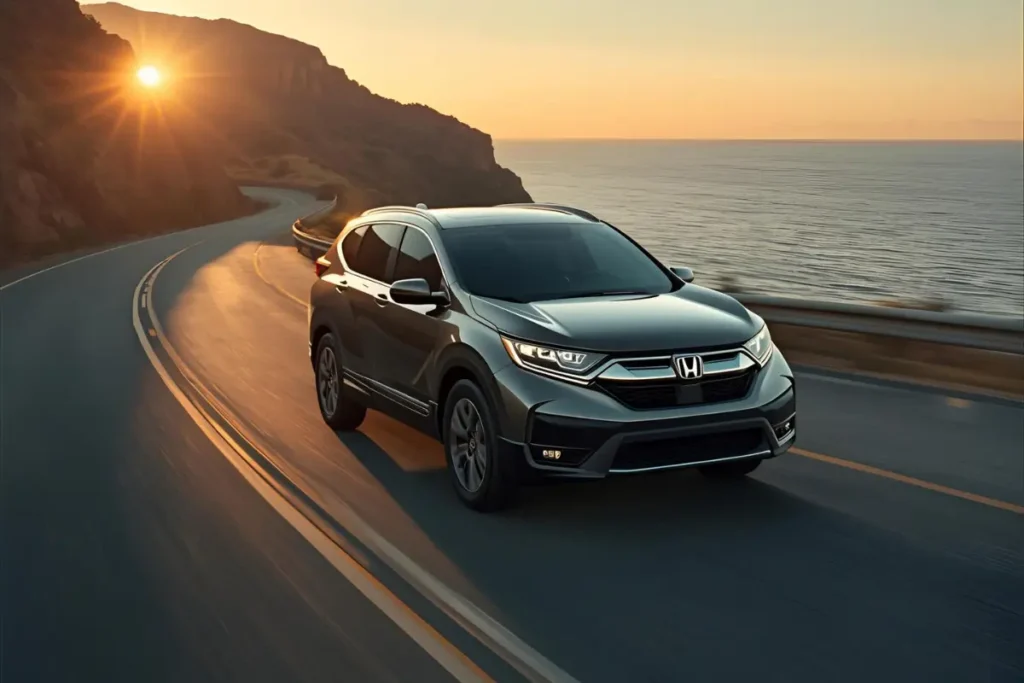
The 2021 Honda CR-V continues Honda’s strong commitment to safety by offering one of the most comprehensive driver-assistance suites in the segment. Every trim level comes standard with Honda Sensing, an advanced collection of safety and active driving aids designed to prevent accidents, protect occupants, and assist the driver in various conditions. Combined with a strong chassis and intelligent crash structure, the CR-V delivers exceptional safety performance for families and daily commuters alike.
Honda Sensing Suite: Standard Across All Trims
The Honda Sensing system integrates multiple radar and camera sensors that constantly monitor the road ahead. These systems assist the driver in maintaining awareness, lane discipline, and safe following distances.
| Honda Sensing Feature | Description | Function |
|---|---|---|
| Collision Mitigation Braking System (CMBS) | Detects obstacles ahead | Automatically applies brakes to avoid or reduce impact |
| Road Departure Mitigation (RDM) | Monitors road markings | Adjusts steering and braking to prevent unintentional lane departure |
| Adaptive Cruise Control (ACC) | Maintains set speed and distance | Automatically adjusts speed for traffic flow |
| Lane Keeping Assist System (LKAS) | Detects lane markings | Provides gentle steering corrections to stay centered |
| Forward Collision Warning (FCW) | Uses camera and radar | Alerts driver to potential front-end collisions |
| Lane Departure Warning (LDW) | Tracks lane boundaries | Visual and audio alerts for drifting without signal |
These features operate seamlessly to reduce driver fatigue during long trips and increase confidence in dense traffic conditions.
Structural Safety and Passive Protection
The CR-V’s foundation is built upon Honda’s Advanced Compatibility Engineering (ACE) body structure, which distributes crash energy evenly across the frame to protect occupants during frontal collisions. The design minimizes intrusion into the passenger compartment, enhancing survivability in severe impacts.
The vehicle also includes front, side, and curtain airbags, along with driver knee airbags on higher trims. Inside, active head restraints and seatbelt pretensioners further enhance occupant safety.
| Structural Component | Function | Safety Contribution |
|---|---|---|
| ACE Body Structure | Reinforced high-strength frame | Improved energy absorption |
| Airbag System | Front, side, curtain, driver knee | Comprehensive occupant protection |
| Seatbelt Technology | Pretensioners, load limiters | Optimized restraint and comfort |
| Head Restraints | Active front design | Reduces whiplash risk |
Driver Assistance Beyond Honda Sensing
Beyond the Honda Sensing suite, higher trims add additional layers of convenience and safety. Features such as the Blind Spot Information System (BSI) and Cross Traffic Monitor provide enhanced visibility around the vehicle. The Multi-Angle Rearview Camera with Dynamic Guidelines assists with parking, while Auto High-Beam Headlights adjust brightness automatically based on traffic.
The Hybrid variant adds Acoustic Vehicle Alerting System (AVAS) technology, which emits a gentle tone at low speeds to alert pedestrians of the vehicle’s presence—a critical safety feature for near-silent EV operation.
Crash Ratings and Safety Recognition
The 2021 Honda CR-V has achieved outstanding safety scores globally. It received a 5-Star Overall Rating from the National Highway Traffic Safety Administration (NHTSA) and earned the IIHS Top Safety Pick when equipped with specific headlights. These accolades reinforce its strong position as one of the safest compact SUVs in its class.
Highlights
- Honda Sensing standard on all trims for proactive protection
- Reinforced ACE body structure ensures strong crash performance
- Blind Spot Monitoring and Cross Traffic Alert enhance awareness
- 5-Star NHTSA safety rating and IIHS Top Safety Pick recognition
- Acoustic Vehicle Alerting System (AVAS) for hybrid pedestrian safety
In summary, the 2021 Honda CR-V exemplifies Honda’s philosophy that safety should never be optional. With advanced technology, intelligent engineering, and proven real-world protection, it provides peace of mind for every journey.
Technology and Infotainment Review: Connectivity and Digital Convenience
The 2021 Honda CR-V embraces practicality and modern connectivity with a technology suite designed for ease of use rather than excess complexity. While it doesn’t aim to overwhelm with flashy interfaces, it focuses on delivering intuitive digital convenience, seamless smartphone integration, and advanced connectivity that complements its everyday usability.
Infotainment System and Display Features
The CR-V’s infotainment system varies slightly by trim level, but all configurations are user-friendly and well-integrated into the cabin’s ergonomic design. The base LX trim includes a 5-inch color display, while higher trims (EX and above) feature a 7-inch Display Audio touchscreen that supports Apple CarPlay and Android Auto.
| Trim Level | Display Type | Key Features |
|---|---|---|
| LX | 5-inch LCD display | Bluetooth, USB audio, rear camera |
| EX / EX-L | 7-inch touchscreen | Apple CarPlay, Android Auto, voice recognition |
| Touring | 7-inch display + navigation | Satellite-linked navigation, HD radio, premium audio |
The touchscreen interface uses large icons and responsive menus for simplicity. The HondaLink system allows access to vehicle data, service reminders, and remote diagnostics through a connected smartphone. Additionally, voice recognition offers hands-free control of phone, audio, and navigation functions, ensuring driver focus remains on the road.
Audio and Connectivity Options
The EX-L and Touring trims include an upgraded 8-speaker sound system that delivers crisp audio quality, while the top-tier Touring model adds a 330-watt premium audio system with subwoofer. The CR-V also features multiple USB ports, a 12-volt power outlet, and an optional wireless charging pad for convenience on the go.
For passengers, Bluetooth streaming, Pandora compatibility, and SiriusXM radio ensure entertainment variety during long trips. The multi-angle rearview camera with normal, top-down, and wide modes is standard across all trims, enhancing both technology and safety integration.
Digital Driver Interface and Smart Features
The digital instrument cluster provides key vehicle information, including trip data, fuel economy, and driver assistance alerts. It features a 7-inch TFT display that dynamically changes based on drive mode or active safety systems.
Higher trims include remote engine start, dual-zone climate control, and smart entry with walk-away auto lock, making daily use effortless. The Hybrid variant adds energy flow monitoring, allowing drivers to visualize power delivery between the engine, battery, and wheels in real time.
| Smart Feature | Availability | Description |
|---|---|---|
| Remote Engine Start | EX and above | Preconditions cabin temperature |
| Wireless Charging Pad | EX-L and Touring | Cable-free phone charging |
| Smart Entry / Walk-Away Lock | Standard on EX+ | Automatic door locking/unlocking |
| Energy Flow Monitor | Hybrid only | Displays real-time hybrid operation |
Navigation and Voice Assistance
The Honda Satellite-Linked Navigation System™, available on the Touring trim, offers turn-by-turn directions with 3D map rendering and predictive traffic updates. Paired with Honda HD Digital Traffic, it helps drivers find the fastest routes in real-time.
Voice command functionality recognizes natural speech patterns, allowing commands such as “Find nearest gas station” or “Call home.” This integration of technology and convenience reflects Honda’s focus on accessibility and safety.
Highlights
- 7-inch touchscreen with Apple CarPlay and Android Auto
- Optional premium 330-watt audio and wireless phone charging
- Digital driver display with adaptive information view
- HondaLink app integration for remote access and diagnostics
- Satellite navigation and voice recognition on Touring trim
In summary, the 2021 Honda CR-V offers a smart, approachable blend of technology and usability. Its infotainment and connectivity systems are practical, refined, and seamlessly integrated into the driving experience—enhancing convenience without unnecessary complexity.
Fuel Efficiency and Environmental Performance: Real-World Economy Results
The 2021 Honda CR-V is engineered to deliver exceptional fuel economy without compromising practicality or performance. Whether equipped with the turbocharged gasoline engine or the hybrid powertrain, the CR-V demonstrates Honda’s commitment to balancing power, efficiency, and environmental responsibility. It stands among the most fuel-efficient compact SUVs in its class, appealing to both eco-conscious drivers and families seeking lower operating costs.
Real-World Fuel Economy
The 1.5-liter turbocharged engine provides impressive efficiency figures, thanks to its direct-injection technology, low-friction components, and aerodynamic body design. Paired with the continuously variable transmission (CVT), it delivers smooth acceleration while maintaining optimal engine load for reduced fuel use.
| Powertrain | Drivetrain | EPA City | EPA Highway | Combined |
|---|---|---|---|---|
| 1.5L Turbo I4 | FWD | 28 mpg | 34 mpg | 30 mpg |
| 1.5L Turbo I4 | AWD | 27 mpg | 32 mpg | 29 mpg |
| 2.0L Hybrid i-MMD | AWD | 40 mpg | 35 mpg | 38 mpg |
In real-world testing, most drivers report achieving close to 7.0 L/100 km combined in the turbo model and around 5.9 L/100 km with the hybrid. The Hybrid’s regenerative braking system plays a major role in achieving these figures, especially in stop-and-go city conditions.
Hybrid Efficiency and Drive Modes
The CR-V Hybrid uses Honda’s Intelligent Multi-Mode Drive (i-MMD) system to optimize efficiency through automatic switching between three modes:
- EV Drive: Fully electric propulsion at low speeds or light throttle.
- Hybrid Drive: Gasoline engine generates electricity for the electric motor.
- Engine Drive: Direct engine power during steady highway cruising.
This seamless transition between modes ensures maximum efficiency at all speeds without requiring driver input. The Eco Assist System, standard on all trims, provides visual feedback through green indicators on the instrument cluster to encourage fuel-efficient driving behavior.
| Drive Mode | Operation | Energy Source |
|---|---|---|
| EV Drive | Electric motor only | Battery |
| Hybrid Drive | Electric + engine assist | Battery and gasoline |
| Engine Drive | Engine powers wheels directly | Gasoline |
Aerodynamics and Efficiency Enhancements
The CR-V’s aerodynamic efficiency contributes significantly to its fuel economy. Active grille shutters automatically close at higher speeds to reduce drag, while an optimized underbody cover smooths airflow beneath the vehicle. The lightweight aluminum hood and low rolling resistance tires further improve efficiency.
The hybrid variant also uses electric power-assisted braking (EPB), which not only aids regenerative energy recovery but also improves brake control precision.
Emissions and Environmental Responsibility
The 2021 CR-V meets stringent ULEV3 (Ultra-Low Emission Vehicle) and LEV3-SULEV30 emission standards, underscoring Honda’s environmental leadership. The hybrid model produces significantly lower CO₂ emissions, averaging around 130 g/km, while the gasoline model emits roughly 155 g/km, depending on drivetrain configuration.
Honda’s manufacturing process for the CR-V also includes sustainability initiatives, such as energy-efficient production plants and the use of recycled materials in various components, aligning with the brand’s goal of achieving carbon neutrality by 2050.
Highlights
- Up to 38 mpg combined in Hybrid variant (5.9 L/100 km)
- Turbo engine delivers 30 mpg combined (7.0 L/100 km)
- Three drive modes (EV, Hybrid, Engine) for optimal efficiency
- ULEV3-compliant low-emission certification
- Aerodynamic and lightweight design improves real-world economy
In essence, the 2021 Honda CR-V proves that practicality and efficiency can coexist. It offers hybrid-level economy, gasoline reliability, and class-leading emissions performance—making it a smart, sustainable choice for modern drivers.
Dimensions and Practical Usability: Cargo, Space, and Versatility
The 2021 Honda CR-V continues to lead its class in practicality, offering a spacious, thoughtfully designed interior and versatile cargo solutions that make it ideal for families and daily commuters alike. Honda’s engineering philosophy focuses on maximizing usable space within a compact footprint, and the CR-V’s cabin layout perfectly reflects this approach.
Exterior Dimensions and Space Efficiency
Despite its compact SUV designation, the CR-V offers proportions that rival midsize models in usability. Built on Honda’s Global Compact Platform, the 2021 model efficiently uses every millimeter of space to provide generous legroom, wide door openings, and a large cargo bay.
| Specification | Measurement |
|---|---|
| Overall Length | 4,623 mm (182.0 in) |
| Width | 1,855 mm (73.0 in) |
| Height | 1,679 mm (66.1 in) |
| Wheelbase | 2,660 mm (104.7 in) |
| Ground Clearance | 208 mm (8.2 in) |
| Cargo Capacity (Seats Up) | 1,065 liters (37.6 cu ft) |
| Cargo Capacity (Seats Folded) | 2,146 liters (75.8 cu ft) |
The wide stance and long wheelbase contribute to a stable ride and a spacious cabin. The high ground clearance provides confidence on rough or uneven terrain, while the overall height remains manageable for urban garages.
Cabin Space and Passenger Comfort
Inside, the CR-V feels open and airy thanks to its large glass areas and upright seating position. Both front and rear occupants benefit from generous legroom and shoulder width, making long trips comfortable even for taller passengers. The rear seats recline and offer a near-flat folding function, enabling flexible cargo arrangements.
Rear-seat passengers enjoy easy access through wide-opening doors, while rear air vents, USB charging ports, and ample headroom enhance overall comfort.
| Seating Area | Headroom | Legroom | Shoulder Room |
|---|---|---|---|
| Front | 1,018 mm | 1,050 mm | 1,470 mm |
| Rear | 996 mm | 1,026 mm | 1,412 mm |
Cargo Design and Practical Storage
The CR-V’s cargo area is among the largest in the segment. The wide tailgate opening and low load floor make it exceptionally easy to load bulky items like strollers or furniture. The hands-free power tailgate (Touring trim) opens automatically when you wave your foot under the rear bumper—convenient when carrying groceries or luggage.
The two-level cargo floor adds flexibility, allowing the user to choose between a flat load surface or deeper storage for tall objects. Additionally, there are hidden underfloor compartments, side cubbies, and tie-down hooks to secure smaller items.
Everyday Usability and Convenience
Honda designed the CR-V with family and commuter convenience in mind. Features such as remote engine start, keyless entry, and walk-away auto-lock streamline daily use. The wide-opening rear doors simplify child-seat installation, while roof rails make it easy to carry bikes, kayaks, or a roof box for road trips.
Practical details like multiple cup holders, door pocket storage, and sliding center console trays reflect Honda’s thoughtful approach to everyday usability.
Highlights
- Class-leading cargo space with up to 2,146 liters of capacity
- Reclining and folding rear seats for versatile configurations
- Hands-free power tailgate with wide opening and low floor
- Spacious cabin layout with excellent rear legroom
- Smart storage solutions for daily convenience
In summary, the 2021 Honda CR-V stands as a benchmark for space efficiency and functionality. It manages to combine compact exterior dimensions with an expansive, practical interior that meets the needs of modern families, making it one of the most versatile SUVs in its class.
Common Issues and Reliability: Owner Reports and Insights
The 2021 Honda CR‑V retains much of Honda’s reputation for general reliability, yet several owners and data-analysis sources have reported noteworthy issues. Awareness of these helps prospective buyers make informed choices and current owners monitor potential warning signs.
Build Quality and Component Durability
Overall, the CR-V benefits from Honda’s robust construction within the “Global Compact Platform” and widespread use of high-strength steel in its structure. However, certain durability concerns have emerged. Some owners report premature wear or noise in areas such as suspension bushings, door seals or trim rattles, especially after extended use or travel on rough surfaces.
Although major drivetrain failures are not widespread on this model, the large volume of reported complaints suggests vigilance is warranted. According to one dataset, the PPMY (problems per thousand vehicles per year) value for the 2021 CR-V is about 0.45, indicating roughly 0.45 reported problems per thousand vehicles annually. Car Problem Zoo+1
Mechanical and Powertrain Concerns
One recurrent issue involves the 1.5-liter turbo gasoline engine in certain conditions. Some owners have reported instances of engine oil dilution—where unburned fuel mixes with engine oil—particularly during frequent short-trip driving in cold climates. REREV+1 While Honda has addressed some of these via software updates, the phenomenon remains a caution point especially in used-car inspections.
Another concern relates to the CVT (Continuously Variable Transmission) and all-wheel-drive variants: some drivers note hesitation or unusual feel under load, though widespread catastrophic failures are not documented. Motorverso+1
Electrical, Infotainment and Safety System Issues
Several complaints focus on electronics and driver assistance systems. For example:
- The infotainment system (Apple CarPlay/Android Auto) has been reported to hang, freeze or disconnect. Tüketici Raporları+1
- Safety systems such as automatic emergency braking or forward-collision mitigation have been flagged for “phantom” activations, i.e., braking intervention without clear cause. slotcar-today.com
- Battery drain when the vehicle is left idle for several days has been reported by a subset of owners. Tüketici Raporları+1
Recalls and Official Investigations
The 2021 CR-V has been subject to multiple recalls and investigations:
- A recall for faulty front passenger seat-weight sensors, which could cause improper air-bag deployment. AP News
- A broad investigation into potential power loss in AWD variants of CR-V (2018-2022) related to rear differential seizure; although the investigation was closed, the issue underscores AWD model risk. Reuters
- Numerous complaints reported to NHTSA in categories like “forward collision avoidance”, steering, and electrical systems. Car Problem Zoo+1
Owner Satisfaction and Long-Term Ratings
Despite these issues, many owners continue to report satisfaction with the CR-V’s reliability, comfort and everyday usability. Survey-based reliability ratings (e.g., from Consumer Reports) rate it around “better than average” for new-car reliability, although some owner commentary highlights the electronics/information-systems as weaker points. Tüketici Raporları
Highlights
- Engine oil dilution and fuel mixing reported in the 1.5L turbo variant under certain conditions.
- Electronic/infotainment malfunctions (such as CarPlay lag or disconnect) are among the most frequent complaints.
- Safety/driver-assist anomalies (e.g., phantom braking) have been noted.
- Recalls exist for seat-sensor airbag issues and AWD differential investigations.
- Overall structural build and mechanical reliability remain solid, true to Honda’s heritage.
Bottom line: The 2021 Honda CR-V remains a fundamentally reliable compact SUV with strong daily usability, but it is advisable to check for updated software, service records, outstanding recalls, and inspect infotainment/electrical systems if purchasing used.
Maintenance and Ownership Experience: Longevity, Service, and Care
The 2021 Honda CR-V exemplifies Honda’s tradition of low-cost ownership and mechanical longevity. Designed for minimal maintenance and long-term reliability, it appeals to owners who value dependability and predictable upkeep costs. Whether equipped with the 1.5-liter turbo engine or the hybrid powertrain, the CR-V’s service requirements are straightforward and supported by Honda’s extensive global network.
Routine Maintenance and Service Intervals
The Maintenance Minder system built into the CR-V’s i-MID display automatically tracks driving conditions and alerts the driver when service is due. Rather than fixed schedules, this system bases reminders on actual usage, optimizing maintenance intervals to extend component life.
| Service Item | Recommended Interval | Notes |
|---|---|---|
| Engine Oil & Filter | Every 10,000 km or 12 months | 0W-20 full synthetic oil |
| Air Filter | Every 20,000–25,000 km | Inspect at every oil change |
| Cabin Air Filter | Every 15,000–20,000 km | Essential for HVAC efficiency |
| Brake Fluid | Every 2 years | Replace regardless of mileage |
| Transmission Fluid (CVT) | Every 40,000–50,000 km | More frequent if towing or in harsh climates |
| Hybrid Battery Coolant | Every 4 years | Maintains thermal stability |
| Spark Plugs (1.5L Turbo) | Every 100,000 km | Iridium long-life plugs |
Brake pads on both gasoline and hybrid models last longer than average due to regenerative braking, particularly in urban conditions. Routine inspections of suspension bushings, AWD differential fluid, and engine mounts are recommended for vehicles driven in severe conditions.
Reliability and Long-Term Durability
Honda’s engineering prioritizes longevity. The 1.5L turbo engine, when maintained properly with high-quality oil, is known to exceed 250,000 km without major repairs. The CVT transmission, while not service-free, remains robust when serviced at proper intervals using genuine Honda CVT fluid.
Hybrid models use Honda’s Intelligent Multi-Mode Drive (i-MMD) system with minimal moving parts, resulting in fewer wear points. The lithium-ion battery pack is liquid-cooled and protected by an 8-year / 160,000 km warranty, ensuring peace of mind for hybrid owners.
Cost of Ownership and Service Support
The 2021 CR-V ranks among the lowest in maintenance cost within the compact SUV segment. Average annual maintenance expenses range between $400 and $600, depending on driving habits and service provider.
Honda’s global service network and the availability of affordable OEM parts contribute to lower ownership costs. Resale value remains exceptionally strong, with the CR-V holding an estimated 65–70% of its original value after three years, reflecting strong market confidence in its reliability.
| Ownership Aspect | Rating | Benefit |
|---|---|---|
| Annual Maintenance Cost | Low ($400–$600) | Predictable upkeep |
| Service Availability | Excellent | Global dealer network |
| Hybrid Battery Warranty | 8 years / 160,000 km | Long-term assurance |
| Resale Value (3 years) | 65–70% | Strong market demand |
| Reliability Rating | Above Average | Proven mechanical durability |
Practical Ownership Experience
Owners consistently praise the CR-V for its ease of maintenance, intuitive service reminders, and fuel economy. Many report that the SUV’s spacious interior, low running costs, and strong reliability record make it a long-term companion for family or business use.
Additionally, Honda provides HondaLink remote services for maintenance reminders, service appointments, and vehicle health updates—making upkeep even simpler for connected users.
Highlights
- Maintenance Minder system customizes service timing
- Long-life iridium spark plugs and synthetic oil reduce service frequency
- Hybrid components covered under extended warranty
- Low ownership cost and strong resale value
- High global parts availability ensures easy, affordable repairs
In summary, the 2021 Honda CR-V is a model of dependable ownership. Its smart maintenance features, low service costs, and robust design deliver confidence to long-term owners, solidifying its reputation as one of the most cost-effective and reliable SUVs on the market.
Frequently Asked Questions About the 2021 Honda CR-V
What engine options are available for the 2021 Honda CR-V?
The 2021 Honda CR-V offers two main powertrains: a 1.5-liter turbocharged gasoline engine producing 190 horsepower and a 2.0-liter hybrid system delivering a combined 212 horsepower. Both options are known for their efficiency, smooth performance, and reliability.
Does the 2021 Honda CR-V come with all-wheel drive (AWD)?
Yes. While front-wheel drive (FWD) is standard on most trims, the Real Time AWD with Intelligent Control System™ is available across the lineup and comes standard on all Hybrid variants, providing better traction and handling in slippery or uneven conditions.
How fuel-efficient is the 2021 Honda CR-V?
The turbocharged version achieves up to 30 mpg combined, while the Hybrid variant delivers around 38 mpg combined according to EPA ratings. Real-world figures are often close to these numbers, making the CR-V one of the most fuel-efficient SUVs in its class.
Is the 2021 CR-V a reliable SUV?
Yes. The 2021 CR-V maintains Honda’s long-standing reputation for reliability. Most owners report minimal mechanical issues, and both the engine and hybrid system are engineered for long-term durability. Regular maintenance helps prevent minor issues like CVT lag or infotainment resets.
What safety features are included as standard?
All trims include the Honda Sensing suite, featuring Collision Mitigation Braking, Lane Keeping Assist, Adaptive Cruise Control, Road Departure Mitigation, and Forward Collision Warning. Higher trims add Blind Spot Monitoring and Rear Cross Traffic Alert.
How much cargo space does the 2021 CR-V have?
With rear seats up, the CR-V offers 1,065 liters (37.6 cu ft) of cargo space, and when folded flat, it expands to 2,146 liters (75.8 cu ft). Its low loading height and wide tailgate opening make it easy to handle bulky items.
Are there any common issues with the 2021 CR-V?
Minor issues have been reported, such as infotainment screen lag, door seal noise, and in some cases, engine oil dilution in the 1.5L turbo variant during cold, short-distance drives. Honda has issued updates and service campaigns to address these concerns.
What is the maintenance schedule for the CR-V?
Honda’s Maintenance Minder system alerts owners when service is needed. In general, oil changes occur every 10,000 km or annually, brake fluid every 2 years, and transmission fluid every 40,000–50,000 km. Hybrid battery components are covered for 8 years / 160,000 km.
Does the CR-V have Apple CarPlay and Android Auto?
Yes. All EX trims and above include a 7-inch touchscreen with Apple CarPlay and Android Auto integration, allowing seamless smartphone connectivity. The base LX trim has Bluetooth and USB audio instead.
Is the 2021 Honda CR-V worth buying?
Absolutely. With its refined performance, excellent fuel economy, and reliable engineering, the 2021 CR-V is one of the most balanced compact SUVs available. It offers strong safety features, low running costs, and class-leading practicality—making it a top recommendation for long-term ownership.