
2021 Aston Martin DBS Coupe: Dynamic Features

- 2021 Aston Martin DBS Coupe: Dynamic Features
- Engine Performance Characteristics of the 2021 Aston Martin DBS Coupe
- Turbocharger configuration and boost response
- Powertrain specifications
- Transmission behavior and torque delivery
- Thermal control and powertrain durability
- Driving Dynamics and Handling Behavior in the 2021 DBS Coupe
- Steering calibration and cornering precision
- Traction control strategy and differential behavior
- Suspension geometry under dynamic load
- Dynamic behavior integration
- Aerodynamic Efficiency and High-Speed Stability in the 2021 DBS Coupe
- Airflow shaping and drag reduction
- Downforce generation and pressure balance
- Cooling integration within aerodynamic channels
- Aerodynamic integration
- Interior Craftsmanship and Material Quality in the 2021 DBS Coupe
- Material selection and surface detailing
- Seating architecture and ergonomic layout
- Acoustic refinement and cabin atmosphere
- Interior integration
- Infotainment Interface and Connectivity Features for the 2021 DBS Coupe
- Display configuration and user interaction
- Navigation and media processing functions
- Device integration and connectivity stability
- Connectivity components
- Chassis Engineering and Structural Rigidity in the 2021 DBS Coupe
- Bonded aluminum structural framework
- Platform geometry and load distribution
- Vibration isolation and structural reinforcement
- Structural integration
- Advanced Safety Systems and Driver Assistance in the 2021 DBS Coupe
- Sensor array and environmental monitoring
- Braking control and stability intervention
- Passive protection and structural safety
- Safety system integration
- Comfort, Ride Calibration, and NVH Isolation in the 2021 DBS Coupe
- Adaptive damping behavior and ride balance
- Noise insulation and vibration reduction
- Cabin air management and climate control
- Ride and comfort integration
- Practicality, Storage Solutions, and Cabin Usability in the 2021 DBS Coupe
- Control placement and ergonomic efficiency
- Cargo volume and interior organization
- Everyday usability and access design
- Usability integration
- Long-Term Ownership, Reliability Traits, and Maintenance Factors of the 2021 DBS Coupe
- Powertrain longevity and component stress
- Electrical system resilience and module stability
- Maintenance cycles and wear characteristics
- Long-term operational behavior
- Frequently Asked Questions About 2021 Aston Martin DBS Coupe
- How reliable is the 2021 Aston Martin DBS Coupe over long-term use?
- Is the DBS Coupe comfortable for long-distance grand touring?
- How does the DBS Coupe maintain high-speed stability?
- What driver-assistance systems are included in the DBS Coupe?
- What maintenance items should owners prioritize for reliable operation?
- Does the DBS Coupe retain structural rigidity over time?
The 2021 Aston Martin DBS Coupe represents one of the brand’s most powerful grand-touring designs, built around a lightweight bonded-aluminum architecture and a highly engineered aerodynamic profile. Its 5.2-liter V12 twin-turbo powertrain delivers exceptional performance supported by an 8-speed automatic transmission, reinforced mounts and adaptive chassis systems. The interior emphasizes driver-focused ergonomics with handcrafted materials, advanced infotainment integration and performance-oriented seating architecture. Combined with sophisticated Electronic Stability Control, optimized cooling channels and high-capacity braking hardware, the DBS Coupe provides controlled high-speed behavior suitable for extended touring and dynamic driving environments.
Engine Performance Characteristics of the 2021 Aston Martin DBS Coupe
The 2021 Aston Martin DBS Coupe is powered by a 5.2-liter V12 twin-turbo unit engineered for sustained high-output performance and rapid torque availability across the usable rpm band. Its calibration supports strong mid-range acceleration and stable thermal behavior under repeated high-load conditions. The long-tail keyword engine performance characteristics of the 2021 Aston Martin DBS Coupe reflects the model’s emphasis on forced-induction efficiency, lubrication control and power delivery stability.
Turbocharger configuration and boost response
The V12 employs twin turbochargers placed close to the exhaust outlets to minimize gas-travel distance, improving boost onset during transient acceleration. Compressor housings and exhaust volutes are shaped for low-pressure loss, helping maintain charge density. Intercoolers positioned within short routing channels regulate intake temperature, preserving torque across sustained acceleration phases.
Powertrain specifications
Key performance values of the 2021 Aston Martin DBS Coupe are shown below:
| Specification | Value |
|---|---|
| Engine | 5.2-liter V12 twin-turbo |
| Max Power | 715 hp at 6500 rpm |
| Max Torque | 900 Nm at 1800–5000 rpm |
| Transmission | 8-speed automatic |
| Drive Layout | RWD |
| Induction | Twin-turbo |
Transmission behavior and torque delivery
The 8-speed automatic transmission uses adaptive shift logic that interprets throttle angle, steering load and traction feedback. Smooth gear transitions dominate in touring operation, while high-demand scenarios activate more urgent downshifts to keep the engine within its optimal boost window. The rear-mounted transaxle aids weight distribution, reducing drivetrain inertia for improved responsiveness during high-speed acceleration.
Thermal control and powertrain durability
Cooling is handled through dual-flow radiator circuits, auxiliary heat exchangers and intercooler channels engineered for consistent temperature extraction. Oil-pressure regulation maintains lubrication stability during extended high-speed driving or lateral load. Forged internal components support long-term durability, and the reinforced crankcase reduces deflection under peak torque conditions. These measures sustain output repeatability during demanding performance use.
Driving Dynamics and Handling Behavior in the 2021 DBS Coupe
The 2022021 Aston Martin DBS Coupe is engineered for high-speed composure supported by advanced chassis electronics, balanced weight distribution and a rigid bonded-aluminum structure. Its dynamic character blends grand-touring stability with rapid directional response, emphasizing predictable grip behavior at both moderate and elevated velocities. The long-tail keyword driving dynamics and handling behavior in the 2021 DBS Coupe reflects the model’s focus on controlled rotation, precise steering input and consistent cornering performance.
Steering calibration and cornering precision
The Electronic Power Steering system delivers linear response across the steering range, ensuring stability at highway speeds and refined accuracy during technical inputs. Steering geometry is engineered for predictable turn-in behavior, and the front suspension bushings filter unnecessary vibration while preserving feedback. This combination allows the vehicle to maintain confident corner entry stability, especially when lateral load increases during faster transitions.
Traction control strategy and differential behavior
The Limited-Slip Differential works with traction-management algorithms to optimize torque distribution during acceleration out of corners. Intervention thresholds vary based on selected driving mode, enabling a more rear-biased feel under dynamic conditions while retaining stability on uneven surfaces. Electronic Stability Control monitors wheel speed, yaw rate and steering angle to apply subtle corrections without disturbing the vehicle’s natural rotation. This preserves agility while maintaining predictable behavior in high-speed scenarios.
Suspension geometry under dynamic load
The double-wishbone front layout and multi-link rear configuration support camber consistency during aggressive cornering. The Adaptive Damping System modulates stiffness in real time to manage body motion, reducing pitch under braking and roll during directional transitions. In its sportier settings, the suspension tightens body control without sacrificing grip balance, allowing the chassis to remain composed under significant load. Reinforced mounting points ensure geometry stability even during sustained performance driving.
Dynamic behavior integration
The handling character of the 2021 Aston Martin DBS Coupe emerges from the interplay between optimized steering calibration, adaptive damping and torque-managed traction control. These systems preserve high-speed stability while supporting agile direction change, allowing the vehicle to maintain consistent grip and steering precision across varied driving environments.
Aerodynamic Efficiency and High-Speed Stability in the 2021 DBS Coupe
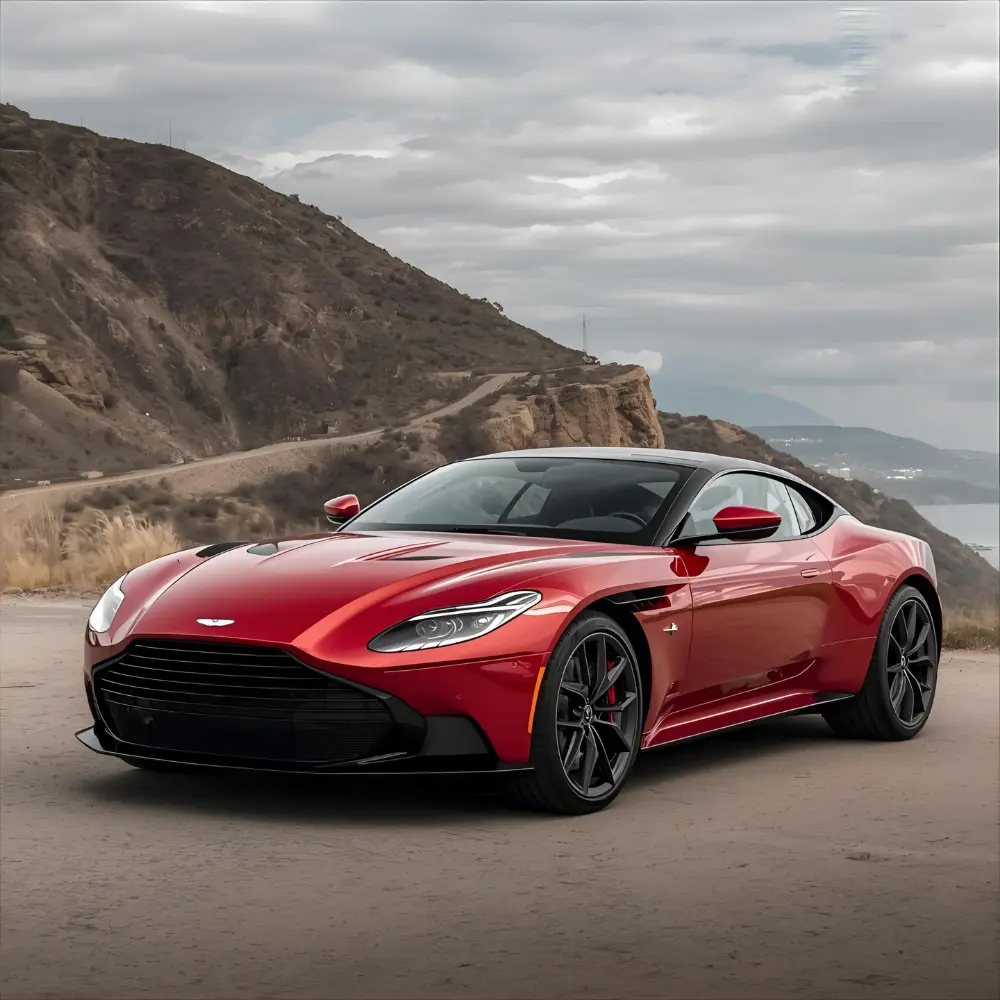
The 2021 Aston Martin DBS Coupe relies on an aerodynamically refined body structure designed to maintain stability at extreme velocities while minimizing drag. Its airflow strategy integrates pressure-management elements, cooling channels and underbody shaping that work together to stabilize the chassis during high-load operation. The long-tail keyword aerodynamic efficiency and high-speed stability in the 2021 DBS Coupe highlights the model’s focus on controlled downforce generation and efficient thermal routing.
Airflow shaping and drag reduction
The body is sculpted to reduce turbulence around the front fascia, channels and wheel arches. A low-profile splitter guides air beneath the chassis, decreasing frontal lift while shaping the pressure field around the nose. Side strakes manage air separation to prevent wake instability along the flanks, and the rear quarter design limits vortex formation. Underfloor smoothing elements further reduce drag by stabilizing airflow at high speeds.
Downforce generation and pressure balance
Integrated aerodynamic elements generate consistent downforce without relying on oversized external components. The rear diffuser accelerates airflow from beneath the vehicle, producing a low-pressure zone that stabilizes the rear axle. At the same time, air routed over the body maintains balanced pressure distribution across the roofline. These features work in conjunction with the vehicle’s weight distribution to ensure high-speed composure, allowing the chassis to remain settled during rapid directional input.
Cooling integration within aerodynamic channels
Airflow entering the primary intakes is split between cooling modules and aerodynamic routing paths. The radiators and auxiliary coolers receive high-velocity flow through optimized duct geometry, enabling efficient thermal extraction under sustained load from the V12 twin-turbo engine. Brake-cooling channels direct air toward the disc surfaces to maintain fade resistance during repeated high-speed deceleration. These systems integrate smoothly with aerodynamic surfaces to avoid additional drag.
Aerodynamic integration
The aerodynamic strategy of the 2021 Aston Martin DBS Coupe combines efficient drag management, balanced downforce and thermally optimized airflow distribution. These elements allow the vehicle to maintain stability at elevated speeds, preserve cooling performance under extreme conditions and deliver predictable chassis behavior during demanding high-speed operation.
Interior Craftsmanship and Material Quality in the 2021 DBS Coupe
The 2021 Aston Martin DBS Coupe interior combines handcrafted detailing with structural refinement, designed to support both high-performance driving and long-distance comfort. Materials are selected for durability under varying cabin temperatures and sunlight exposure, while the cabin layout prioritizes ergonomic precision. The long-tail keyword interior craftsmanship and material quality in the 2021 DBS Coupe reflects the model’s integration of artisanal construction techniques with engineered stability and tactile precision.
Material selection and surface detailing
Premium leather is applied across seats, dashboard surfaces and door panels, shaped using hand-stitched seams engineered to maintain tension over curved contours. Metal switchgear delivers firm tactile feedback, and optional carbon-fiber or wood veneer inserts are bonded to stable substrates to avoid distortion under thermal load. Upper-cabin materials receive UV-resistant finishing, ensuring long-term color retention in bright driving environments.
Seating architecture and ergonomic layout
Performance-oriented front seats include multi-way adjustment, integrated heating functions and bolstering designed to support the torso during dynamic motion. Their lightweight internal frame provides rigidity without adding unnecessary mass. The Electronic Power Steering column offers tilt and reach adjustment, aligning steering, pedal placement and console controls for natural operational flow. Rear seating provides limited passenger accommodation but functions effectively for additional cargo space during extended touring.
Acoustic refinement and cabin atmosphere
The cabin layout incorporates laminated glazing and targeted insulation positioned around the floorpan, firewall and bulkhead zones. These elements reduce high-frequency wind noise and limit resonance produced by the V12 twin-turbo engine during high-load driving. Door seals employ multi-lip construction to maintain consistent pressure even at elevated speeds, supporting stable interior acoustics.
Interior integration
The 2021 Aston Martin DBS Coupe cabin achieves its balance of luxury and functionality through precision-applied materials, ergonomic control alignment and acoustic treatments tailored for high-performance use. This combination provides a refined driving environment capable of supporting both dynamic operation and extended travel comfort.
Infotainment Interface and Connectivity Features for the 2021 DBS Coupe
The 2021 Aston Martin DBS Coupe incorporates an infotainment system engineered to deliver stable connectivity, clear functionality and intuitive control in a high-performance environment. Its interface integrates navigation, media processing and device compatibility while maintaining operational clarity even during dynamic driving. The long-tail keyword infotainment interface and connectivity features for the 2021 DBS Coupe highlights the model’s emphasis on digital usability within a performance-oriented cabin.
Display configuration and user interaction
The central display presents navigation, vehicle settings and multimedia functions through a layout optimized for rapid recognition. A rotary controller provides precise command input at higher speeds, while voice-activated functionality reduces manual interaction demands. High-contrast graphics remain visible under varying cabin light conditions, ensuring consistent usability regardless of driving environment.
Navigation and media processing functions
Navigation capabilities incorporate real-time route adaptation, integrating traffic data to support efficient long-distance travel. Media handling includes Bluetooth streaming, USB compatibility and device indexing for quick access to stored files. The system operates on independent processing modules that do not interfere with torque management or stability systems, preserving drivetrain responsiveness during dynamic use.
Device integration and connectivity stability
Multiple USB ports and enhanced Bluetooth protocols ensure reliable device pairing. Smartphone mirroring extends access to compatible applications through the central display. Noise-cancelling microphone integration maintains call clarity, and the electrical layout isolates infotainment components to prevent software updates or device communication from affecting core vehicle functions.
Connectivity components
Connectivity-related functionality in the 2021 Aston Martin DBS Coupe is supported by features such as high-bandwidth audio protocols, multi-port device support, real-time navigation data and stable voice-command processing. These systems enhance long-distance touring capability and maintain operational reliability during performance driving.
Chassis Engineering and Structural Rigidity in the 2021 DBS Coupe
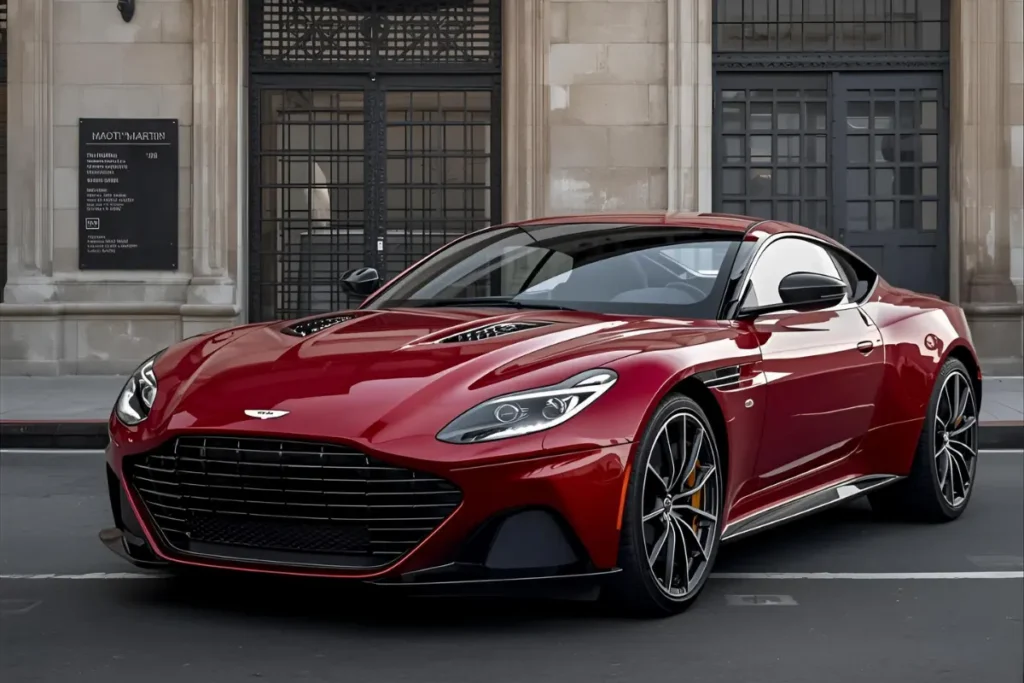
The 2021 Aston Martin DBS Coupe is built on a bonded aluminum architecture engineered to deliver exceptional stiffness while maintaining low mass. This structure supports the vehicle’s high-output performance and provides a stable foundation for precise handling behavior. The long-tail keyword chassis engineering and structural rigidity in the 2021 DBS Coupe emphasizes how reinforcement, load distribution and vibration control work together to maintain stability during aggressive driving.
Bonded aluminum structural framework
The chassis uses a combination of bonded joints, cast nodes and extruded sections that distribute stress evenly across the vehicle. Structural adhesive layers expand load-bearing surfaces, reducing localized flex under high torque from the V12 twin-turbo engine. Reinforced side sills and bulkhead components maintain alignment during torsional loading, ensuring predictable suspension response during rapid directional transitions or uneven surface contact.
Platform geometry and load distribution
The platform positions the engine in a front-mid layout, shifting mass toward the center of the vehicle to reduce yaw inertia. A rear-mounted transaxle contributes to balanced weight distribution, enhancing rotational stability during cornering. Suspension mounting points are reinforced to prevent geometry shift during high lateral load, allowing the double-wishbone front and multi-link rear systems to retain consistent camber characteristics at elevated speeds.
Vibration isolation and structural reinforcement
Convertible-style bracing is unnecessary in the coupe configuration, allowing the body to rely on strategically placed crossmembers and tunnel reinforcements to manage low-frequency vibration. These components limit resonance from drivetrain forces and reduce the likelihood of structural fatigue over long-term use. The bonded-aluminum platform also helps minimize noise transfer into the cabin by preventing panel flex and maintaining tight tolerances across structural joints.
Structural integration
The 2021 Aston Martin DBS Coupe maintains high rigidity through the combined effects of its bonded aluminum framework, torque-balanced layout and reinforced suspension architecture. These engineering elements work together to ensure stable handling, precise steering feedback and consistent chassis behavior during both high-performance driving and long-distance touring.
Advanced Safety Systems and Driver Assistance in the 2021 DBS Coupe
The 2021 Aston Martin DBS Coupe integrates a multi-layered safety architecture combining active intervention, chassis stability programs and reinforced structural components. Its systems are designed to enhance situational awareness, braking consistency and occupant protection under both routine and high-speed conditions. The long-tail keyword advanced safety systems and driver assistance in the 2021 DBS Coupe highlights how electronic and mechanical safeguards support controlled performance.
Sensor array and environmental monitoring
Proximity-detection hardware uses ultrasonic and radar-based modules positioned around the vehicle to identify nearby objects at low speeds or during lane changes. These modules operate through isolated electronic channels to maintain signal clarity and prevent interference with chassis controls. Electronic Stability Control evaluates wheel speed, steering input and yaw rate to apply targeted corrections when the vehicle approaches grip limits, preserving directional stability.
Braking control and stability intervention
The braking architecture features ventilated discs and multi-piston calipers engineered for consistent thermal behavior. Hydraulic modulation is governed by algorithms that adjust pressure to prevent wheel lock under rapid deceleration. Emergency Brake Assist increases system responsiveness when sudden pedal force is detected, improving stopping distance during developing hazards. Brake cooling paths maintain rotor temperature during repeated high-load use, ensuring predictable response.
Passive protection and structural safety
The bonded-aluminum structure integrates reinforced pillars, side-impact beams and controlled deformation zones designed to absorb collision forces while maintaining cabin integrity. Multi-stage front airbags and side-impact cushions deploy with timing calibrated to occupant positioning. Seatbelt pretensioners activate during rapid deceleration to secure occupants and distribute load across stronger body regions. These measures provide safety performance aligned with the DBS Coupe’s dynamic capability.
Safety system integration
The 2021 Aston Martin DBS Coupe combines electronic sensing, precise braking logic and rigid structural engineering to achieve a cohesive safety profile. These elements support confident chassis behavior and consistent protection in a range of driving environments.
Comfort, Ride Calibration, and NVH Isolation in the 2021 DBS Coupe
The 2021 Aston Martin DBS Coupe delivers long-distance refinement through carefully tuned suspension behavior, airflow management and vibration control engineered to match its high-performance capability. Ride quality remains stable across varying surfaces due to adaptive damper logic and structural stiffness. The long-tail keyword comfort, ride calibration, and NVH isolation in the 2021 DBS Coupe reflects the model’s emphasis on harmonizing dynamic response with acoustic and vibrational refinement.
Adaptive damping behavior and ride balance
The Adaptive Damping System adjusts damper stiffness according to steering input, body motion and vertical wheel travel. GT mode emphasizes compliance to absorb high-frequency surface irregularities, while Sport and Sport+ offer progressively firmer control for sharper steering response. The suspension bushings are engineered with compound-specific elasticity, preventing harsh impacts from reaching the cabin without compromising handling precision. These elements create a ride characteristic suitable for extended touring at elevated speeds.
Noise insulation and vibration reduction
Acoustic refinement is achieved through laminated glazing, multi-layer sealing and targeted insulation placed around the firewall, floorpan and bulkhead. These components reduce wind intrusion and limit engine-borne vibration from the V12 twin-turbo powertrain. Structural reinforcements prevent panel resonance, maintaining consistent NVH behavior even during hard acceleration. Continuous chassis rigidity ensures that vibration pathways remain minimized, preserving interior clarity and reducing fatigue during long journeys.
Cabin air management and climate control
The climate system regulates cabin temperature with adaptive airflow logic that compensates for the DBS Coupe’s high-output thermal environment. Vents are positioned to create uniform flow without disturbing acoustic balance, and the filtration system maintains air quality during extended travel. Pressure equalization within the cabin reduces wind buffeting at highway speeds, supporting a stable atmosphere that complements the vehicle’s refined ride characteristics.
Ride and comfort integration
The 2021 Aston Martin DBS Coupe achieves its comfort profile through coordinated chassis control, robust NVH management and adaptive climate integration. These systems work together to provide a balanced environment suitable for long-distance touring, ensuring that performance capability does not compromise ride stability or occupant comfort.
Practicality, Storage Solutions, and Cabin Usability in the 2021 DBS Coupe
The 2021 Aston Martin DBS Coupe balances its high-performance focus with functional cabin usability designed for everyday convenience. Its packaging strategy emphasizes ergonomic control placement, efficient interior organization and practical loading access suited to grand-touring demands. The long-tail keyword practicality, storage solutions, and cabin usability in the 2021 DBS Coupe highlights how spatial design and cabin logic support daily drivability.
Control placement and ergonomic efficiency
The cockpit layout groups frequently used controls within natural reach, allowing the driver to operate climate, navigation and media functions with minimal attention shift. The Electronic Power Steering column offers multi-axis adjustment, enabling a tailored driving position during extended travel. Buttons and switchgear use consistent mechanical resistance for uniform tactile feedback, supporting intuitive operation at both low and high speeds.
Cargo volume and interior organization
The rear luggage compartment is engineered with reinforced sidewalls to maintain structural shape while loaded with weekend bags or touring equipment. The hinge geometry of the rear deck is designed to avoid intrusion into the cargo area, improving loading access. Small-item storage throughout the cabin includes console recesses, door-pocket compartments and discreet spaces behind the front seats, offering versatile options for everyday use.
Everyday usability and access design
Frameless doors improve entry in tight spaces, and the cabin’s visibility is supported by a rear-view camera calibrated to match the vehicle’s sloping deck line. USB ports and device-integration points accommodate multiple electronics without disrupting cabin organization. The infotainment interface maintains clarity under direct sunlight, ensuring consistent operation during daily driving. These usability considerations help the DBS Coupe function beyond its performance-oriented nature.
Usability integration
The 2021 Aston Martin DBS Coupe supports practical operation through its organized cabin architecture, reinforced cargo design and intuitive control layout. These features allow the vehicle to function as a daily-usable grand-tourer while maintaining its high-performance identity.
Long-Term Ownership, Reliability Traits, and Maintenance Factors of the 2021 DBS Coupe
The 2021 Aston Martin DBS Coupe is engineered for sustained durability through robust component design, thermally stable powertrain systems and an electrical architecture protected against long-term stress. Its reliability profile focuses on managing heat, preserving structural alignment and minimizing wear under high-performance usage. The long-tail keyword long-term ownership, reliability traits, and maintenance factors of the 2021 DBS Coupe reflects the model’s emphasis on mechanical longevity and predictable service behavior.
Powertrain longevity and component stress
The 5.2-liter V12 twin-turbo engine uses forged internals, high-strength connecting components and reinforced crankcase architecture to withstand repeated high-load operation. Intercoolers regulate charge-air temperature, supporting thermal stability during extended high-speed driving. The 8-speed automatic transmission employs adaptive shifting to reduce unnecessary gear transitions, helping maintain clutch-pack integrity and minimizing heat accumulation over longer distances.
Electrical system resilience and module stability
The electrical system is divided into isolated networks that separate powertrain-control modules from comfort and infotainment functions. This separation reduces signal interference and preserves system reliability as components age. Heat-shielded wiring pathways prevent thermal degradation, while sealed sensor housings protect against moisture and environmental exposure. These measures allow electronic systems to retain accuracy over extended operational periods.
Maintenance cycles and wear characteristics
Routine service items include fluid replacement intervals, brake-system inspections and cooling-circuit checks essential for preserving powertrain health. High-performance braking components experience significant thermal load, making rotor and pad wear regular points of assessment. Suspension bushings and alignment points should be evaluated periodically due to the dynamic forces associated with grand-touring use. Convertible mechanisms are not present on the coupe, reducing maintenance complexity and long-term wear factors.
Long-term operational behavior
The 2021 Aston Martin DBS Coupe maintains reliability through a combination of thermally stable engine design, isolated electronic architecture and predictable maintenance cycles. These engineering strategies support consistent performance, extended component life and stable functionality over long-term ownership.
Frequently Asked Questions About 2021 Aston Martin DBS Coupe
How reliable is the 2021 Aston Martin DBS Coupe over long-term use?
The 2021 Aston Martin DBS Coupe uses a bonded aluminum structure and a reinforced V12 twin-turbo engine designed for long-term durability. Its cooling architecture stabilizes temperatures during sustained high-speed driving, while isolated control modules reduce electrical interference as components age. Regular service intervals, particularly oil replacement and brake inspections, help the vehicle maintain consistent performance. Owners who follow scheduled maintenance benefit from predictable component behavior and strong reliability over extended mileage.
Is the DBS Coupe comfortable for long-distance grand touring?
Comfort is supported by the Adaptive Damping System, laminated glazing and structural rigidity that limits vibration transfer into the cabin. The seats provide multi-way adjustment with bolstering tailored for extended drives, and interior insulation reduces wind noise at highway speeds. The climate-control system maintains uniform airflow, while the Electronic Power Steering column helps achieve an ergonomic driving posture. These characteristics make the DBS Coupe capable of delivering refined comfort during long-distance journeys.
How does the DBS Coupe maintain high-speed stability?
The aerodynamic profile incorporates a front splitter, rear diffuser and underfloor flow-management components that maintain balanced pressure distribution. The Electronic Stability Control system monitors axle behavior and applies targeted corrections when grip conditions change abruptly. High structural rigidity supports predictable chassis rotation during rapid directional inputs. These engineering elements allow the 2021 Aston Martin DBS Coupe to retain strong stability at elevated speeds.
What driver-assistance systems are included in the DBS Coupe?
The DBS Coupe integrates proximity sensors, radar-based monitoring and electronic systems such as Emergency Brake Assist and Electronic Stability Control. These features assist in low-speed maneuvering and enhance stability during dynamic conditions. Their calibration ensures consistent performance without interfering with the vehicle’s natural handling balance. Braking responsiveness is supported by algorithms that regulate hydraulic pressure during sudden pedal application.
What maintenance items should owners prioritize for reliable operation?
Essential maintenance tasks include regular oil and filter changes, brake-hardware inspections and cooling-system evaluation. The V12 twin-turbo engine requires stable thermal conditions, making coolant integrity a key factor for longevity. Suspension bushings and alignment should be reviewed periodically due to the dynamic forces associated with performance driving. Electrical connectors and sensor housings also benefit from routine checks to ensure accuracy and prevent moisture-related degradation.
Does the DBS Coupe retain structural rigidity over time?
The bonded-aluminum platform is engineered to distribute stress evenly, minimizing long-term deformation. Reinforced sills, cast nodes and bulkhead structures maintain alignment under repeated load cycles. Tunnel bracing and crossmembers help control low-frequency vibration, preventing fatigue-related flex. These elements allow the 2021 Aston Martin DBS Coupe to preserve torsional rigidity and predictable handling behavior throughout extended ownership.